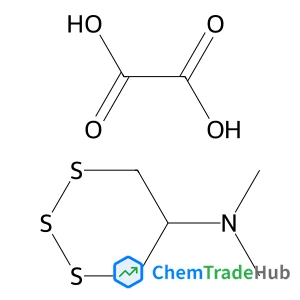
Oxalic acid compound with cyclohexylsulfamothioic O-acid (11)
CAS Number:
31895-22-4
Molecular Formula:
C7H13NO4S3
Nam Jung Heo, Ju Hyun Oh, Jeong Tae Lee, Qing He, Jonathan L. Sessler, Sung Kuk Kim
Calix[4]pyrroles 1 and 2, diametrically strapped with a phenanthroline via ester and amide linkages, respectively, have been synthesized as anion receptors. It was revealed by 1H NMR spectroscopic analysis that receptors 1 and 2 possessing both hydrogen bonding donors and acceptors were able to bind the bicarbonate anion (as its tetraethylammonium (TEA+) or sodium salt) in CDCl3, as well as in 15% aqueous DMSO with high affinity and selectivity over other anions. The amide-based receptor 2 contains additional potential hydrogen bonding donors relative to its ester-based congener 1. Nevertheless, in CDCl3 receptor 1 was found to display a higher affinity for all test anions than receptor 2. In contrast, in 15% aqueous DMSO solution the affinities of receptor 2 for anions, in particular chloride, bicarbonate, and dihydrogen phosphate, were enhanced, whereas those of receptor 1 were reduced dramatically with no appreciable interaction being seen in the case of most test anions considered in this study. These reversals in selectivity and affinities underscore the importance of solvent in regulating the recognition features of seemingly similiar anion binding agents.
Shuaijun Han, Xianying Gao, Qingsong Wu, Jingya Li, Dapeng Zou, Yangjie Wu
DOI: 10.1039/C8QO01281D
Yi Yang, Junjie Cai, Gen Luo, Yan Jiang, Yumei Su, Yang Su, Chaolin Li, Yubin Zheng, Jijiao Zeng, Yingle Liu
DOI: 10.1039/C9QO00066F
Yangju Lin, Chia-Chih Chang, Stephen L. Craig
DOI: 10.1039/C9QO00262F
Chunhui Zhou, Jinsong Hu, Yuan Wang, Changguang Yao, Priyanka Chakraborty, Huaifeng Li, Chao Guan, Mei-Hui Huang, Kuo-Wei Huang
DOI: 10.1039/C8QO00892B
Qiao-Chu Zhang, Xue Li, Xinghua Wang, Shi-Jun Li, Ling-Bo Qu, Donghui Wei
DOI: 10.1039/C8QO01370E
Jian Liu, Yu Wen, Fengjun He, Liang Gao, Lina Gao, Junwei Wang, Xiachang Wang, Yinan Zhang, Lihong Hu
DOI: 10.1039/C8QO01425F
Fan-Lin Zeng, Shuai-Qi He, Kai Sun, Rui Fu, Ling-Bo Qu
DOI: 10.1039/C9QO00091G
Xue-Qiang Chu, Danhua Ge, Zhi-Liang Shen
DOI: 10.1039/C8QO01346B
Jianhui Zhou, Guoxue He, Huihui Li, Qiaolan Yang, Run Wang, Yu Zhou
DOI: 10.1039/C9QO00048H
Waste containing (6-Bromo-2-naphthyl)oxy](dimethyl)(2-methyl-2-propanyl)silane (...
7-Fluoro-4-isoquinolinecarboxylic acid can be synthesized via a multi-step proce...
2,3,5,6-Tetrabromothieno[3,2-b]thiophene is a crystalline compound with a high m...
1-[4-(Benzylamino)-7,8-dihydro-5H-pyrano[4,3-d]pyrimidin-2-yl]-2-methyl-1H-indol...
The market for imidazo[5,1-d]-1,2,3,5-tetrazine-8-carboxylic acid, 3,4-dihydro-3...
3-(Triisopropylsilyl)propiolaldehyde is a synthetic organic compound with the CA...
6-Nitro-2H-1,4-benzoxazin-3(4H)-one (CAS: 81721-87-1) is subject to various regu...
Waste containing (3-Fluorophenyl)(4-{[(2-methyl-2-propanyl)oxy]carbonyl}-1-piper...
N,N'-4,4'-Biphenyldiyldiisonicotinamide is a white crystalline solid with a mole...
6-Bromo-8-fluoro-2-quinazolinol is primarily used in the pharmaceutical industry...

Organic Chemistry Frontiers publishes high-quality research from across organic chemistry. Emphases are placed on studies that make significant contributions to the field of organic chemistry by reporting either new or significantly improved protocols or methodologies. Topics include, but are not limited to the following: Organic synthesis Development of synthetic methodologies Catalysis Natural products Functional organic materials Supramolecular and macromolecular chemistry Physical and computational organic chemistry