












Pd-Catalyzed coupling reaction of cyclobutanols with propargylic carbonates
Literature Information
Publication Date
2019-04-01
DOI
10.1039/C9QO00192A
Impact Factor
5.281
Authors
Penglin Wu, Minqiang Jia
View Original
Abstract
An efficient approach of Pd-catalyzed ring opening coupling reaction of cyclobutanols with propargylic carbonates was realized to provide a series of multisubstituted δ-allenyl ketones. The reaction had a wide substrate scope with tolerance to different functional groups.
Related Literature
Poly(dopamine acrylamide)-co-poly(propargyl acrylamide)-modified titanium surfaces for ‘click’ functionalization
Li Qun Xu, Hua Jiang, Koon-Gee Neoh, En-Tang Kang, Guo Dong Fu
2012-01-30
Paper
DOI: 10.1039/C2PY00552B
Copper-free click chemistry on polymersomes: pre- vs. post-self-assembly functionalisation
Silvie A. Meeuwissen, Marjoke F. Debets, Jan C. M. van Hest
2011-12-20
Paper
DOI: 10.1039/C2PY00466F
A ‘smart’ approach towards the formation of multifunctional nano-assemblies by simple mixing of block copolymers having a common temperature sensitive segment
Mitsuhiro Ebara, Naokazu Idota, Ravin Narain
2012-02-15
Paper
DOI: 10.1039/C2PY00589A
Interaction energy and polymer density profile in nanocomposites: a coarse grain simulation based on interaction stress
Meysam Rahmat, Hossein Ghiasi, Pascal Hubert
2012-02-21
Paper
DOI: 10.1039/C2PY00532H
Synthesis and water sorption of standard and end-capped polylactides: the effect of morphology
Donghun Koo, An Du, Giuseppe R. Palmese, Richard A. Cairncross
2012-01-04
Paper
DOI: 10.1039/C2PY00549B
Highly sensitive detection of DNA-binding proteins based on a cationic conjugated polymervia a target-mediated fluorescence resonance energy transfer (TMFRET) strategy
Xingfen Liu, Lan Ouyang, Yanqin Huang, Xiaomiao Feng, Quli Fan, Wei Huang
2012-01-17
Paper
DOI: 10.1039/C2PY00499B
Fast and scalable production of hyperbranched polythioether-ynes by a combination of thiol-halogen click-like coupling and thiol-yne click polymerization
Jin Han, Bo Zhao, Aijin Tang, Yanqin Gao, Chao Gao
2011-10-25
Paper
DOI: 10.1039/C1PY00367D
Rapidly thiol-responsive degradable block copolymer nanocarriers with facile bioconjugation
Samuel Aleksanian, Behnoush Khorsand, Rolf Schmidt, Jung Kwon Oh
2012-04-18
Paper
DOI: 10.1039/C2PY20154B
You might also like
Compound Q&A
Are there alternatives to 1-(4-Chlorophenyl)-N-hydroxymethanimine (CAS: 3848-36-0) in synthesis?
When considering alternatives to 1-(4-Chlorophenyl)-N-hydroxymethanimine (CAS: 3...
3848-36-01-(4-Chlorophenyl)-N...
Compound Q&A
How should (1R,9S,10S,12S,14E,16S,19R,20R,21S,22R)-3,9,21-Trihydroxy-5,10,12,14,16,20,22-heptamethyl-23,24-dioxatetracyclo[17.3.1.1~6,9~.0~2,7~]tetracosa-2,5,7,14-tetraen-4-one (CAS: 183202-73-5) be stored?
This compound should be stored in a cool, dry place away from direct sunlight. I...
183202-73-5(1R,9S,10S,12S,14E,1...
Compound Q&A
How is 3-(4-Bromophenyl)-5-(2-fluorophenyl)-1,2,4-oxadiazole (CAS: 419553-16-5) typically synthesized?
3-(4-Bromophenyl)-5-(2-fluorophenyl)-1,2,4-oxadiazole is synthesized through a m...
419553-16-53-(4-Bromophenyl)-5-...
Compound Q&A
How is 5-Chloro-2-(4-chlorophenyl)-4-methyl-6-[3-(1-piperidinyl)propoxy]pyrimidine (CAS: 1639220-19-1) typically synthesized?
5-Chloro-2-(4-chlorophenyl)-4-methyl-6-[3-(1-piperidinyl)propoxy]pyrimidine (CAS...
1639220-19-15-Chloro-2-(4-chloro...
Compound Q&A
What industries use 2-Chloro-4-(difluoromethoxy)pyridine (CAS: 1206978-15-5)?
2-Chloro-4-(difluoromethoxy)pyridine is used in the pharmaceutical industry for ...
1206978-15-52-Chloro-4-(difluoro...
Compound Q&A
What regulatory guidelines apply to 3-Chloro-6-methylpyridazine (CAS: 1121-79-5)?
3-Chloro-6-methylpyridazine (CAS: 1121-79-5) is classified under the Globally Ha...
1121-79-53-Chloro-6-methylpyr...
Compound Q&A
Are there alternatives to Methyl 4,5-dimethyl-2-nitrobenzoate in synthesis?
Several alternatives can be used in the synthesis of Methyl 4,5-dimethyl-2-nitro...
90922-74-0Methyl 4,5-dimethyl-...
Compound Q&A
Are there alternatives to (2E,2'E)-3,3'-(1,4-Phenylene)bisacrylaldehyde in synthesis?
Alternatives to (2E,2'E)-3,3'-(1,4-Phenylene)bisacrylaldehyde include other acry...
63405-68-5(2E,2'E)-3,3'-(1,4-P...
Compound Q&A
What is 3-Amino-5-chloropyridin-2-ol hydrochloride (CAS: 1261906-29-9)?
3-Amino-5-chloropyridin-2-ol hydrochloride is an organic compound with the CAS n...
1261906-29-93-Amino-5-chloropyri...
Compound Q&A
What precautions should be taken when handling 6,7-Difluoro-2,3-dihydro-4H-chromen-4-one (CAS: 1092349-93-3)?
When handling 6,7-Difluoro-2,3-dihydro-4H-chromen-4-one, it is essential to wear...
1092349-93-36,7-Difluoro-2,3-dih...
Source Journal
Organic Chemistry Frontiers

CiteScore:
7.8
Self-citation Rate:
8.7%
Articles per Year:
724
Organic Chemistry Frontiers publishes high-quality research from across organic chemistry. Emphases are placed on studies that make significant contributions to the field of organic chemistry by reporting either new or significantly improved protocols or methodologies. Topics include, but are not limited to the following: Organic synthesis Development of synthetic methodologies Catalysis Natural products Functional organic materials Supramolecular and macromolecular chemistry Physical and computational organic chemistry
Recommended Compounds
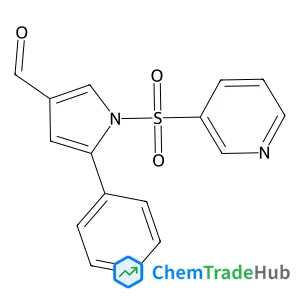
5-Phenyl-1-(pyridin-3-ylsulfonyl)-1H-pyrrole-3-carbaldehyde
CAS Number:
881676-90-0
Molecular Formula:
C16H12N2O3S
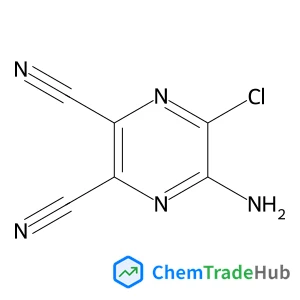
![6-Bromo-2,3-dihydro-1H-pyrido[2,3-b][1,4]oxazine structure](https://static.chemtradehub.com/structs/120/1203499-17-5-b4d1.webp "6-Bromo-2,3-dihydro-1H-pyrido[2,3-b][1,4]oxazine structure")
6-Bromo-2,3-dihydro-1H-pyrido[2,3-b][1,4]oxazine
CAS Number:
1203499-17-5
Molecular Formula:
C7H7BrN2O
Recommended Suppliers



Disclaimer
This page provides academic journal information for reference and research purposes only. We are not affiliated with any journal publishers and do not handle publication submissions. For publication-related inquiries, please contact the respective journal publishers directly.
If you notice any inaccuracies in the information displayed, please contact us at support@chemtradehub.com. We will promptly review and address your concerns.