












Synthesis and water sorption of standard and end-capped polylactides: the effect of morphology
Literature Information
Publication Date
2012-01-04
DOI
10.1039/C2PY00549B
Impact Factor
5.582
Authors
Donghun Koo, An Du, Giuseppe R. Palmese, Richard A. Cairncross
View Original
Abstract
This paper investigates the relationship between morphology and water sorption in polylactide (PLA) films. Standard PLAs and palmityl initiated end-capped PLAs were synthesized with various terminating end groups such as hydroxyl, acetoxy, and palmitoyl end groups. Results from wide angle X-ray scattering and atomic force microscopy were correlated with different sorption phenomena, suggesting that crystallization and microphase separation between amorphous PLA and hydrophobic end-group-rich domains reduced water sorption in PLA. The morphological changes were affected by end-group composition, molecular weight and stereoisomerism.
Related Literature
Poly(fluoroacrylate)s with tunable surface hydrophobicity via radical copolymerization of 2,2,2-trifluoroethyl α-fluoroacrylate and 2-(trifluoromethyl)acrylic acid
Sanjib Banerjee, Bhausaheb V. Tawade, Vincent Ladmiral, Lionel X. Dupuy, Bruno Améduri
2017-03-07
Paper
DOI: 10.1039/C7PY00209B
Synthetic strategies for the generation of ABCA' type asymmetric tetrablock terpolymers
Siddharth Chanpuriya, Marc A. Hillmyer, Frank S. Bates
2014-06-13
Paper
DOI: 10.1039/C4PY00614C
Ultra-sensitive detection of explosives in solution and film as well as the development of thicker film effectiveness by tetraphenylethene moiety in AIE active fluorescent conjugated polymer
Khama Rani Ghosh, Sukanta Kumar Saha
2014-06-11
Paper
DOI: 10.1039/C4PY00673A
Controlling the folding of conjugated polymers at the single molecule level via hydrogen bonding
Beiyue Shao, Xinju Zhu, Kyle N. Plunkett, David A. Vanden Bout
2017-01-06
Paper
DOI: 10.1039/C6PY01871H
6-Oxoverdazyl radical polymers with tunable electrochemical properties
2014-07-04
Communication
DOI: 10.1039/C4PY00829D
The living anionic polymerization of activated aziridines: a systematic study of reaction conditions and kinetics
Elisabeth Rieger, Tassilo Gleede, Katja Weber, Angelika Manhart, Manfred Wagner, Frederik R. Wurm
2017-04-06
Paper
DOI: 10.1039/C7PY00436B
Control over the assembly and rheology of supramolecular networks via multi-responsive double hydrophilic copolymers
Jérémy Brassinne, Charles-André Fustin, Jean-François Gohy
2017-01-30
Paper
DOI: 10.1039/C6PY02143C
Heterogeneous organocatalysts composed of microporous polymer networks assembled by Tröger's base formation
Mariolino Carta, Matthew Croad, Keith Bugler, Kadhum J. Msayib, Neil B. McKeown
2014-06-20
Paper
DOI: 10.1039/C4PY00608A
Naphthobisthiazole diimide-based n-type polymer semiconductors: synthesis, π-stacking, field-effect charge transport, and all-polymer solar cells
Selvam Subramaniyan, Taeshik Earmme, Nishit M. Murari, Samson A. Jenekhe
2014-07-02
Paper
DOI: 10.1039/C4PY00566J
You might also like
Compound Q&A
Are there alternatives to 1-(4-Chlorophenyl)-N-hydroxymethanimine (CAS: 3848-36-0) in synthesis?
When considering alternatives to 1-(4-Chlorophenyl)-N-hydroxymethanimine (CAS: 3...
3848-36-01-(4-Chlorophenyl)-N...
Compound Q&A
How should (1R,9S,10S,12S,14E,16S,19R,20R,21S,22R)-3,9,21-Trihydroxy-5,10,12,14,16,20,22-heptamethyl-23,24-dioxatetracyclo[17.3.1.1~6,9~.0~2,7~]tetracosa-2,5,7,14-tetraen-4-one (CAS: 183202-73-5) be stored?
This compound should be stored in a cool, dry place away from direct sunlight. I...
183202-73-5(1R,9S,10S,12S,14E,1...
Compound Q&A
How is 3-(4-Bromophenyl)-5-(2-fluorophenyl)-1,2,4-oxadiazole (CAS: 419553-16-5) typically synthesized?
3-(4-Bromophenyl)-5-(2-fluorophenyl)-1,2,4-oxadiazole is synthesized through a m...
419553-16-53-(4-Bromophenyl)-5-...
Compound Q&A
How is 5-Chloro-2-(4-chlorophenyl)-4-methyl-6-[3-(1-piperidinyl)propoxy]pyrimidine (CAS: 1639220-19-1) typically synthesized?
5-Chloro-2-(4-chlorophenyl)-4-methyl-6-[3-(1-piperidinyl)propoxy]pyrimidine (CAS...
1639220-19-15-Chloro-2-(4-chloro...
Compound Q&A
What industries use 2-Chloro-4-(difluoromethoxy)pyridine (CAS: 1206978-15-5)?
2-Chloro-4-(difluoromethoxy)pyridine is used in the pharmaceutical industry for ...
1206978-15-52-Chloro-4-(difluoro...
Compound Q&A
What regulatory guidelines apply to 3-Chloro-6-methylpyridazine (CAS: 1121-79-5)?
3-Chloro-6-methylpyridazine (CAS: 1121-79-5) is classified under the Globally Ha...
1121-79-53-Chloro-6-methylpyr...
Compound Q&A
Are there alternatives to Methyl 4,5-dimethyl-2-nitrobenzoate in synthesis?
Several alternatives can be used in the synthesis of Methyl 4,5-dimethyl-2-nitro...
90922-74-0Methyl 4,5-dimethyl-...
Compound Q&A
Are there alternatives to (2E,2'E)-3,3'-(1,4-Phenylene)bisacrylaldehyde in synthesis?
Alternatives to (2E,2'E)-3,3'-(1,4-Phenylene)bisacrylaldehyde include other acry...
63405-68-5(2E,2'E)-3,3'-(1,4-P...
Compound Q&A
What is 3-Amino-5-chloropyridin-2-ol hydrochloride (CAS: 1261906-29-9)?
3-Amino-5-chloropyridin-2-ol hydrochloride is an organic compound with the CAS n...
1261906-29-93-Amino-5-chloropyri...
Compound Q&A
What precautions should be taken when handling 6,7-Difluoro-2,3-dihydro-4H-chromen-4-one (CAS: 1092349-93-3)?
When handling 6,7-Difluoro-2,3-dihydro-4H-chromen-4-one, it is essential to wear...
1092349-93-36,7-Difluoro-2,3-dih...
Source Journal
Polymer Chemistry

CiteScore:
8.6
Self-citation Rate:
7.3%
Articles per Year:
457
Polymer Chemistry welcomes submissions in all areas of polymer science that have a strong focus on macromolecular chemistry. Manuscripts may cover a broad range of fields, yet no direct application focus is required.
Recommended Compounds
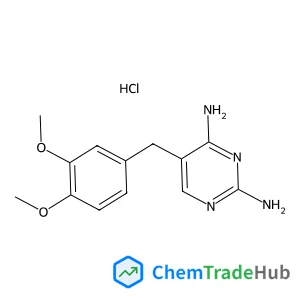
5-(3,4-Dimethoxybenzyl)-2,4-pyrimidinediamine hydrochloride (1:1)
CAS Number:
2507-23-5
Molecular Formula:
C13H17ClN4O2
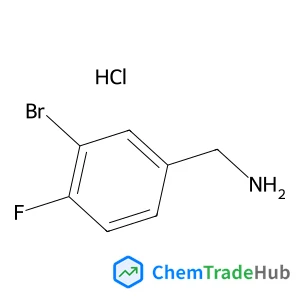
1-(3-Bromo-4-fluorophenyl)methanamine hydrochloride (1:1)
CAS Number:
202865-68-7
Molecular Formula:
C7H8BrClFN
Recommended Suppliers




Disclaimer
This page provides academic journal information for reference and research purposes only. We are not affiliated with any journal publishers and do not handle publication submissions. For publication-related inquiries, please contact the respective journal publishers directly.
If you notice any inaccuracies in the information displayed, please contact us at support@chemtradehub.com. We will promptly review and address your concerns.