


Preparation of hyperbranched polymers by oxa-Michael addition polymerization
Literature Information
Publication Date
2019-12-09
DOI
10.1039/C9PY01686D
Impact Factor
5.582
Authors
Qimin Jiang, YuanLiang Zhang, Yongzhuang Du, Maotong Tang, Li Jiang, Wenyan Huang, Hongjun Yang, Xiaoqiang Xue
View Original
Abstract
In this research, we developed an efficient approach to prepare hyperbranched polymers at room temperature via phosphazene-base t-BuP2 catalyzed oxa-Michael addition polymerization from commercially available trifunctional hydroxyl and diacrylate monomers. The branching structure of the obtained polymers and the polymerization process were investigated by nuclear magnetic resonance (NMR) spectroscopy and triple-detection size-exclusion chromatography (TD-SEC) analysis. It was revealed that acrylic double bond terminated branched polymers with high molecular weights and high degrees of branching (Mw.MALLS > 2.8 × 10⁵ g mol−1, DB ≥ 0.8) were produced by t-BuP2 catalyzed oxa-Michael addition polymerization of a trimethylolpropane (TMP) with a double molar 1,6-hexanediol diacrylate (HDDA) in DMF at room temperature, even at 0 °C. The study of the branching process showed that t-BuP2 catalyzed oxa-Michael addition branching polymerization is rapid, and that significant branched structures formed when the polymerization was performed at 3 min. Most importantly, the prepared branched polymers can be further post-functionalized via aza- or thio-Michael addition reactions, due to the polymers retaining the acrylic double bond functionality. This research provides a versatile and efficient method for the preparation of hyperbranched polymers from commercially available monomers, and it is feasible to prepare functional branched polymers for application in various fields.
Recommended Journals

Crystallography Reports

Russian Journal of Organic Chemistry

Russian Journal of Coordination Chemistry

Current Opinion in Solid State & Materials Science

Journal of Natural Medicines

Russian Chemical Bulletin

Current Opinion in Colloid & Interface Science

Acta Materialia

New Journal of Chemistry

Chemistry Education Research and Practice
Related Literature
Bioactive polycyclic polyprenylated acylphloroglucinols from Hypericum perforatum
Yi Guo, Na Zhang, Weiguang Sun, Xueyan Duan, Qing Zhang, Qun Zhou, Chunmei Chen, Hucheng Zhu, Zengwei Luo, Junjun Liu, Xiao-Nian Li, Yongbo Xue, Yonghui Zhang
2018-10-08
Paper
DOI: 10.1039/C8OB02067A
A novel peptide conformation: the γ-bend ribbon
Bruno Drouillat, Cristina Peggion, Barbara Biondi, Karen Wright, François Couty, Marco Crisma
2018-10-09
Paper
DOI: 10.1039/C8OB02279H
The base-catalysed cyclisation of phenyl N-(2-hydroxybenzyl)-N-methylcarbamates is concerted
Vojeslav Štěrba, Oldřich Hrabík, Jaromír Kaválek, Jaromír Mindl, Andrew Williams
2002-12-11
Paper
DOI: 10.1039/B209323P
First synthesis of 2′,3′-epimino-carbocyclic nucleosides
Minoru Ishikura, Atsushi Murakami, Nobuya Katagiri
2003-01-07
Communication
DOI: 10.1039/B210963H
Origins of the enantioselectivity of a palladium catalyst with BINOL–phosphoric acid ligands
2018-10-15
Paper
DOI: 10.1039/C8OB02271B
Total synthesis, structural revision and biological evaluation of γ-elemene-type sesquiterpenes
Changchun Yuan, Shangyong Zhong, Xingyi Li, Yanhong Wang, Miao-Miao Xun, Yunli Bai, Kongkai Zhu
2018-10-03
Paper
DOI: 10.1039/C8OB02005A
Cyclic arylopeptoid oligomers: synthesis and conformational propensities of peptide-mimetic aromatic macrocycles
Masahide Hayakawa, Ayaka Ohsawa, Kumi Takeda, Ryo Torii, Yoshiaki Kitamura, Hiroshi Katagiri
2018-09-10
Paper
DOI: 10.1039/C8OB01962B
Catalyst-free 1 : 2 annulation of quinolines with trifluoroacetylacetylenes: an access to functionalized oxazinoquinolines
K. V. Belyaeva, L. P. Nikitina, A. V. Afonin, A. V. Vashchenko, V. M. Muzalevskiy, V. G. Nenajdenko, B. A. Trofimov
2018-10-12
Communication
DOI: 10.1039/C8OB02379D
QM/MM calculations of kinetic isotope effects in the chorismate mutase active site
Sergio Martí, Vicent Moliner, Iñaki Tuñón, Ian H. Williams
2003-01-17
Paper
DOI: 10.1039/B210508J
You might also like
Compound Q&A
Is 4-Benzyl-2,2-dimethylmorpholine (CAS: 84761-04-6) safe?
4-Benzyl-2,2-dimethylmorpholine is generally considered safe when handled under ...
84761-04-64-Benzyl-2,2-dimethy...
Compound Q&A
What is (5,6-Dimethoxy-3-pyridinyl)boronic acid (CAS: 1346526-61-1)?
(5,6-Dimethoxy-3-pyridinyl)boronic acid is a chemical compound with the molecula...
1346526-61-1(5,6-Dimethoxy-3-pyr...
Compound Q&A
How is 1,1,3,3-Tetramethyl-1,3-bis(2-methyl-2-propanyl)disiloxane (CAS: 67875-55-2) typically synthesized?
1,1,3,3-Tetramethyl-1,3-bis(2-methyl-2-propanyl)disiloxane is synthesized throug...
67875-55-21,1,3,3-Tetramethyl-...
Compound Q&A
What are the main uses of (2R,4S)-1-Boc-4-methylpyrrolidine-2-carboxylic acid (CAS: 1018818-04-6)?
(2R,4S)-1-Boc-4-methylpyrrolidine-2-carboxylic acid is primarily used as a build...
1018818-04-6(2R,4S)-1-Boc-4-meth...
Compound Q&A
What precautions should be taken when handling 2,3-Dichloroacrylonitrile (CAS: 22410-58-8)?
When handling 2,3-Dichloroacrylonitrile, it is crucial to wear appropriate perso...
22410-58-82,3-Dichloroacryloni...
Compound Q&A
How should (S)-1-(o-Tolyl)ethanamine hydrochloride (CAS: 1332832-16-2) be stored?
(S)-1-(o-Tolyl)ethanamine hydrochloride should be stored in a cool, dry place to...
1332832-16-2(S)-1-(o-Tolyl)ethan...
Compound Q&A
What are the physical and chemical properties of Benzyl [1-(hydroxyamino)-1-imino-2-methyl-2-propanyl]carbamate (CAS: 518047-98-8)?
Benzyl [1-(hydroxyamino)-1-imino-2-methyl-2-propanyl]carbamate (CAS: 518047-98-8...
518047-98-8Benzyl [1-(hydroxyam...
Compound Q&A
What industries use 2-Methyloxazole-5-carbaldehyde (CAS: 885273-42-7)?
2-Methyloxazole-5-carbaldehyde is used in the pharmaceutical industry for the sy...
885273-42-72-Methyloxazole-5-ca...
Compound Q&A
What is the market or research trend for 2-Methyl-2-propanyl 4-[(1S)-1-hydroxyethyl]-1-piperidinecarboxylate (CAS: 389889-82-1)?
The market for 2-Methyl-2-propanyl 4-[(1S)-1-hydroxyethyl]-1-piperidinecarboxyla...
389889-82-12-Methyl-2-propanyl ...
Compound Q&A
Is 1-Butyl-3-methylpyridinium bromide (CAS: 26576-85-2) safe?
1-Butyl-3-methylpyridinium bromide is generally considered safe for laboratory u...
26576-85-21-Butyl-3-methylpyri...
Source Journal
Polymer Chemistry

CiteScore:
8.6
Self-citation Rate:
7.3%
Articles per Year:
457
Polymer Chemistry welcomes submissions in all areas of polymer science that have a strong focus on macromolecular chemistry. Manuscripts may cover a broad range of fields, yet no direct application focus is required.
Recommended Compounds
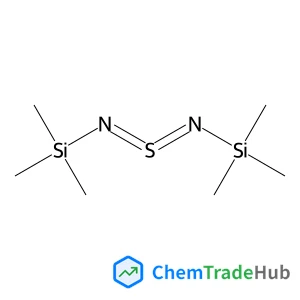
1,3-Bis(trimethylsilyl)-2lambda~4~-diazathia-1,2-diene
CAS Number:
18156-25-7
Molecular Formula:
C6H18N2SSi2
![2-benzyl-2,6-diazaspiro[3.3]heptane structure](https://static.chemtradehub.com/structs/119/1194508-28-5-ef9e.webp "2-benzyl-2,6-diazaspiro[3.3]heptane structure")
Recommended Suppliers




Disclaimer
This page provides academic journal information for reference and research purposes only. We are not affiliated with any journal publishers and do not handle publication submissions. For publication-related inquiries, please contact the respective journal publishers directly.
If you notice any inaccuracies in the information displayed, please contact us at support@chemtradehub.com. We will promptly review and address your concerns.