












Exploring exchange processes in proteins by paramagnetic perturbation of NMR spectra
Literature Information
Publication Date
2020-02-25
DOI
10.1039/C9CP06950J
Impact Factor
3.676
Authors
Cristina Cantarutti, Sofia Giorgetti, Loredana Marchese, Henriette Molinari, Neri Niccolai
View Original
Abstract
The effect of extrinsic paramagnetic probes on NMR relaxation rates for surface mapping of proteins and other biopolymers is a widely investigated and powerful NMR technique. Here we describe a new application of those probes. It relies on the setting of the relaxation delay to generate magnetization equilibrium and off-equilibrium conditions, in order to tailor the extent of steady state signal recovery with and without the water-soluble nitroxide Tempol. With this approach it is possible to identify signals whose relaxation is affected by exchange processes and, from the relative assignments, to map the protein residues involved in association or conformational interconversion processes on a micro-to-millisecond time scale. This finding is confirmed by the comparison with the results obtained from relaxation dispersion measurements. This simple and convenient method allows preliminary inspection to highlight regions where structural or chemical exchange events are operative, in order to focus on quantitative subsequent determinations by transverse relaxation dispersion experiments or analogous NMR relaxation studies, and/or to gain insights into the predictions of calculations.
Related Literature
Correction: Strengthening Pt/WOx interfacial interactions to increase the CO tolerance of Pt for hydrogen oxidation reaction
Lin Guo, Jinyu Zheng
2023-11-06
Correction
DOI: 10.1039/D3CC90365F
Facile synthesis of supported CuNi nano-clusters as an electrochemical CO2 reduction catalyst with broad potential range
Jiale Wang, Fan Li, Runhua Li, Qian Xiang, Wencong Zhang, Chengyi Song, Peng Tao, Wen Shang
2023-10-16
Communication
DOI: 10.1039/D3CC03758D
Yttrium atomically incorporated into Co(OH)F nanowires enables efficient electrochemical reduction of nitrate to ammonia
Zuan Yu, Tianlun Ren, Jiangwei Xie, Hongjie Yu, Kai Deng, Ziqiang Wang, Hongjing Wang, Liang Wang, You Xu
2023-10-28
Communication
DOI: 10.1039/D3CC03293K
A new dual functional H2S donor for fluorescence imaging and anti-inflammatory application
Shumei Huang, Zejun Li, Wenhui You, Guansheng Zheng, Huatang Zhang, Yin Jiang
2023-10-24
Communication
DOI: 10.1039/D3CC03881E
Trapping of soluble, KCl-stabilized Cu(i) hydrides with CO2 gives crystalline formates
Alexander Grasruck, Giorgio Parla, Lisha Lou, Jens Langer, Christian Neiß, Alberto Herrera, Sybille Frieß, Andreas Görling, Günter Schmid, Romano Dorta
2023-11-07
Communication
DOI: 10.1039/D3CC03033D
ATP-responsive Mn(ii)-based T1 contrast agent for MRI
Lawerence Kenning, Graeme J. Stasiuk
2023-09-19
Communication
DOI: 10.1039/D3CC03430E
Visible-light-mediated synthesis of non-anomeric S-aryl glycosides via a photoactive electron-donor–acceptor complex
Le Zhang, Shiyun He, Jinyu Hou, Meiling Ye, Jian Chen, Guanghui Lv, Tianle Huang, Zhongzhen Yang, Yong Wu
2023-10-27
Communication
DOI: 10.1039/D3CC03474G
Switchover from singlet oxygen to superoxide radical through a photoinduced two-step sequential energy transfer process
Shengsheng Yu, Rong-Xin Zhu, Kai-Kai Niu, Ning Han, Hui Liu, Ling-Bao Xing
2024-01-05
Edge Article
DOI: 10.1039/D3SC05820D
Na2Fe2Se2O: a double anti-perovskite with prevalence of anionic redox activity in Na-ion batteries
Mikhail V. Gorbunov, Thomas Doert, Daria Mikhailova
2023-10-25
Communication
DOI: 10.1039/D3CC04722A
You might also like
Compound Q&A
What are the main uses of (5-Sulfamoyl-3-pyridinyl)boronic acid (CAS: 951233-61-7)?
(5-Sulfamoyl-3-pyridinyl)boronic acid is primarily used in chemical synthesis, p...
951233-61-7(5-Sulfamoyl-3-pyrid...
Compound Q&A
How is Benzyl 2-methyl-2-(methylsulfonyl)-4-pentenoate (CAS: 1942858-50-5) typically synthesized?
Benzyl 2-methyl-2-(methylsulfonyl)-4-pentenoate is typically synthesized via est...
1942858-50-5Benzyl 2-methyl-2-(m...
Compound Q&A
What precautions should be taken when handling 8-Fluoroquinolin-6-ol (CAS: 209353-22-0)?
When handling 8-Fluoroquinolin-6-ol (CAS: 209353-22-0), it is important to use p...
209353-22-08-Fluoroquinolin-6-o...
Compound Q&A
What are the physical and chemical properties of 1,3-Dibromo-5-(2-methyl-2-propanyl)benzene (CAS: 129316-09-2)?
1,3-Dibromo-5-(2-methyl-2-propanyl)benzene (CAS: 129316-09-2) is a crystalline c...
129316-09-21,3-Dibromo-5-(2-met...
Compound Q&A
What industries use Ethyl 7-chloro-4-oxo-1-(1,3-thiazol-2-yl)-1,4-dihydro-1,8-naphthyridine-3-carboxylate (CAS: 174726-87-5)?
Ethyl 7-chloro-4-oxo-1-(1,3-thiazol-2-yl)-1,4-dihydro-1,8-naphthyridine-3-carbox...
174726-87-5Ethyl 7-chloro-4-oxo...
Compound Q&A
What precautions should be taken when handling Delta-7-Avenasterol (CAS: 23290-26-8)?
When handling Delta-7-Avenasterol (CAS: 23290-26-8), it is important to wear app...
23290-26-8Delta-7-Avenasterol
Compound Q&A
What precautions should be taken when handling N-({(5R)-3-[3-Fluoro-4-(4-morpholinyl)phenyl]-2-oxo-1,3-oxazolidin-5-yl}methyl)acetamide (CAS: 872992-20-6)?
Proper handling involves the use of personal protective equipment such as gloves...
872992-20-6N-({(5R)-3-[3-Fluoro...
Compound Q&A
What precautions should be taken when handling 2-Methyl-2-proanyl 4-[(2-aminophenyl)amino]-1-piperidinecarboxylate (CAS: 79099-00-6)?
When handling 2-Methyl-2-proanyl 4-[(2-aminophenyl)amino]-1-piperidinecarboxylat...
79099-00-62-Methyl-2-propanyl ...
Compound Q&A
What is N-Methyl-4-chlorobenzylamine hydrochloride (CAS: 65542-24-7)?
N-Methyl-4-chlorobenzylamine hydrochloride (CAS: 65542-24-7) is a organic compou...
65542-24-7N-Methyl-4-chloroben...
Compound Q&A
Is [2-(Dodecyloxy)ethoxy]acetic acid (CAS: 27306-90-7) safe?
[2-(Dodecyloxy)ethoxy]acetic acid (CAS: 27306-90-7) is generally considered safe...
27306-90-7[2-(Dodecyloxy)ethox...
Source Journal
Physical Chemistry Chemical Physics

CiteScore:
5.5
Self-citation Rate:
10.3%
Articles per Year:
3036
Physical Chemistry Chemical Physics (PCCP) is an international journal co-owned by 19 physical chemistry and physics societies from around the world. This journal publishes original, cutting-edge research in physical chemistry, chemical physics and biophysical chemistry. To be suitable for publication in PCCP, articles must include significant innovation and/or insight into physical chemistry; this is the most important criterion that reviewers and Editors will judge against when evaluating submissions. The journal has a broad scope and welcomes contributions spanning experiment, theory, computation and data science. Topical coverage includes spectroscopy, dynamics, kinetics, statistical mechanics, thermodynamics, electrochemistry, catalysis, surface science, quantum mechanics, quantum computing and machine learning. Interdisciplinary research areas such as polymers and soft matter, materials, nanoscience, energy, surfaces/interfaces, and biophysical chemistry are welcomed if they demonstrate significant innovation and/or insight into physical chemistry. Joined experimental/theoretical studies are particularly appreciated when complementary and based on up-to-date approaches.
Recommended Compounds
![2-Azaspiro[4.5]decane-3,8-dione structure](https://static.chemtradehub.com/structs/914/914780-96-4-e94b.webp "2-Azaspiro[4.5]decane-3,8-dione structure")
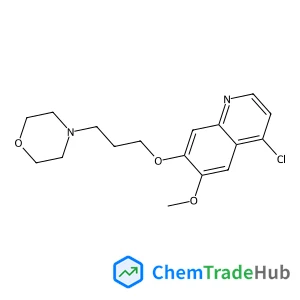
4-(3-((4-Chloro-6-methoxyquinolin-7-yl)oxy)propyl)morpholine
CAS Number:
205448-32-4
Molecular Formula:
C17H21ClN2O3
Recommended Suppliers






Disclaimer
This page provides academic journal information for reference and research purposes only. We are not affiliated with any journal publishers and do not handle publication submissions. For publication-related inquiries, please contact the respective journal publishers directly.
If you notice any inaccuracies in the information displayed, please contact us at support@chemtradehub.com. We will promptly review and address your concerns.