












Visible-light-mediated synthesis of non-anomeric S-aryl glycosides via a photoactive electron-donor–acceptor complex
Literature Information
Publication Date
2023-10-27
DOI
10.1039/D3CC03474G
Impact Factor
6.222
Authors
Le Zhang, Shiyun He, Jinyu Hou, Meiling Ye, Jian Chen, Guanghui Lv, Tianle Huang, Zhongzhen Yang, Yong Wu
View Original
Abstract
A visible-light-mediated glycosylation reaction between glycosyl redox-active esters and disulfides has been reported, through which a series of S-aryl glycosides were obtained in good yields with satisfactory stereoselectivity. The preliminary mechanistic studies revealed that this transformation proceeded via an EDA complex. Moreover, the potential application value was demonstrated in the late-stage functionalisation of drug molecules and a gram-scale experiment.
Recommended Journals
Related Literature
Cavity-based applications of metallo-supramolecular coordination cages (MSCCs)
Sarita Yadav, Palanisamy Kannan, Guanyinsheng Qiu
2020-07-20
Review Article
DOI: 10.1039/D0QO00681E
Organic micro/nanoscale materials for photonic barcodes
Yue Hou, Zhenhua Gao, Yong Sheng Zhao, Yongli Yan
2020-08-04
Highlight
DOI: 10.1039/D0QO00613K
Cascade cyclization versus chemoselective reduction: a solvent-controlled product divergence
Farnaz Jafarpour, Saideh Rajai-Daryasarei, Mohammad Hossein Gohari
2020-09-08
Research Article
DOI: 10.1039/D0QO00876A
Copper-catalyzed carbonylative synthesis of pyrrolidine-containing amides from γ,δ-unsaturated aromatic oxime esters
Youcan Zhang, Han-Jun Ai
2020-09-04
Research Article
DOI: 10.1039/D0QO00999G
A novel multicomponent quadruple/double quadruple domino reaction: highly efficient synthesis of polyheterocyclic architectures
Manickam Bakthadoss, Srinivasan Jayakumar, Selvakumar Raman, Anthonisamy Devaraj, Duddu S. Sharada
2018-12-12
Paper
DOI: 10.1039/C8OB02970A
Coupling of amides with ketones via C–N/C–H bond cleavage: a mild synthesis of 1,3-diketones
Yuanzhi Xia, Sunwoo Lee
2020-08-11
Research Article
DOI: 10.1039/D0QO00797H
Direct remote δ-C(sp2)–H olefination of β-aryl-substituted aliphatic aldehydes via palladium/enamine co-catalysis
Rajesh Kumar, Xiaofeng Zhang
2020-08-31
Research Article
DOI: 10.1039/D0QO00911C
Synthesis and application of α-carbonyl nitrile oxides
Li Zhou, Huating Yan, Xin-Qi Hao
2020-07-20
Research Article
DOI: 10.1039/D0QO00780C
You might also like
Compound Q&A
Is 2-(2-chloroacetamido)-3-phenylpropanoic acid (CAS: 7765-11-9) safe?
2-(2-Chloroacetamido)-3-phenylpropanoic acid (CAS: 7765-11-9) is generally consi...
7765-11-92-(2-chloroacetamido...
Compound Q&A
Is 2-(Benzyloxy)-5-bromobenzoic acid (CAS: 62176-31-2) safe?
2-(Benzyloxy)-5-bromobenzoic acid can be handled safely if appropriate precautio...
62176-31-22-(Benzyloxy)-5-brom...
Compound Q&A
What is (4-Methyl-1,2,5-oxadiazol-3-yl)methanamine hydrochloride (CAS: 1159825-48-5)?
(4-Methyl-1,2,5-oxadiazol-3-yl)methanamine hydrochloride is a chemical compound ...
1159825-48-5(4-Methyl-1,2,5-oxad...
Compound Q&A
What is 2-(5-Hexylthiophen-2-yl)-4,4,5,5-tetramethyl-1,3,2-dioxaborolane (CAS: 917985-54-7)?
2-(5-Hexylthiophen-2-yl)-4,4,5,5-tetramethyl-1,3,2-dioxaborolane (CAS: 917985-54...
917985-54-72-(5-Hexylthiophen-2...
Compound Q&A
Are there alternatives to 4-(8-Methyl-9H-1,3-dioxolo[4,5-h][2,3]benzodiazepin-5-yl)benzenamine (CAS: 102771-26-6) in synthesis?
While 4-(8-Methyl-9H-1,3-dioxolo[4,5-h][2,3]benzodiazepin-5-yl)benzenamine (CAS:...
102771-26-64-(8-Methyl-9H-1,3-d...
Compound Q&A
What is the market or research trend for tert-butyl 3-hydroxy-4,5,7,8-tetrahydro-2H-pyrazolo[3,4-d]azepine-6-carboxylate (CAS: 851376-80-2)?
The market for tert-butyl 3-hydroxy-4,5,7,8-tetrahydro-2H-pyrazolo[3,4-d]azepine...
851376-80-2tert-butyl 3-hydroxy...
Compound Q&A
How should waste containing 3,5-Diamino-1H-pyrazole-4-carbonitrile (CAS: 6844-58-2) be handled?
Waste containing 3,5-Diamino-1H-pyrazole-4-carbonitrile (CAS: 6844-58-2) should ...
6844-58-23,5-Diamino-1H-pyraz...
Compound Q&A
How is (6-Fluoro-3-pyridinyl)boronic acid (CAS: 351019-18-6) typically synthesized?
(6-Fluoro-3-pyridinyl)boronic acid can be synthesized through the reaction of 6-...
351019-18-6(6-Fluoro-3-pyridiny...
Compound Q&A
What industries use Dibenzyl carbonimidoylbiscarbamate (CAS: 10065-79-9)?
Dibenzyl carbonimidoylbiscarbamate (CAS: 10065-79-9) finds applications in vario...
10065-79-9Dibenzyl carbonimido...
Compound Q&A
What is the market or research trend for (beta,beta,2,3,4,5,6-~2~H_7_)Phenylalanine (CAS: 74228-83-4)?
The market for (beta,beta,2,3,4,5,6-~2~H_7_)Phenylalanine (CAS: 74228-83-4) is g...
74228-83-4(beta,beta,2,3,4,5,6...
Source Journal
Chemical Communications

CiteScore:
8.6
Self-citation Rate:
4.7%
Articles per Year:
2458
ChemComm publishes urgent research which is of outstanding significance and interest to experts in the field, while also appealing to the journal’s broad chemistry readership. Our communication format is ideally suited to short, urgent studies that are of such importance that they require accelerated publication. Our scope covers all topics in chemistry, and research at the interface of chemistry and other disciplines (such as materials science, nanoscience, physics, engineering and biology) where there is a significant novelty in the chemistry aspects. Major topic areas covered include: Analytical Chemistry Catalysis Chemical Biology and medicinal chemistry Computational Chemistry and Machine Learning Energy and sustainable chemistry Environmental Chemistry Green Chemistry Inorganic Chemistry Materials Chemistry Nanoscience Organic Chemistry Physical Chemistry Polymer Chemistry Supramolecular Chemistry
Recommended Compounds
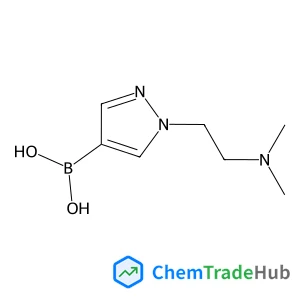
(1-(2-(Dimethylamino)ethyl)-1H-pyrazol-4-yl)boronic acid
CAS Number:
1086063-73-1
Molecular Formula:
C7H14BN3O2
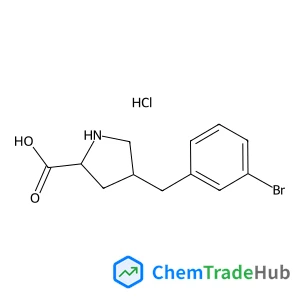
(2S,4R)-4-(3-Bromobenzyl)pyrrolidine-2-carboxylic acid hydrochloride
CAS Number:
1049734-10-2
Molecular Formula:
C12H15BrClNO2
![(1S)-1,5-Anhydro-2-O-alpha-L-arabinopyranosyl-1-[5-hydroxy-7-({6-O-[3-(4-hydroxy-3-methoxyphenyl)propanoyl]-beta-D-glucopyranosyl}oxy)-2-(4-hydroxyphenyl)-4-oxo-4H-chromen-6-yl]-D-glucitol structure](https://static.chemtradehub.com/structs/225/2252345-81-4-bcff.webp "(1S)-1,5-Anhydro-2-O-alpha-L-arabinopyranosyl-1-[5-hydroxy-7-({6-O-[3-(4-hydroxy-3-methoxyphenyl)propanoyl]-beta-D-glucopyranosyl}oxy)-2-(4-hydroxyphenyl)-4-oxo-4H-chromen-6-yl]-D-glucitol structure")
Recommended Suppliers





Disclaimer
This page provides academic journal information for reference and research purposes only. We are not affiliated with any journal publishers and do not handle publication submissions. For publication-related inquiries, please contact the respective journal publishers directly.
If you notice any inaccuracies in the information displayed, please contact us at support@chemtradehub.com. We will promptly review and address your concerns.