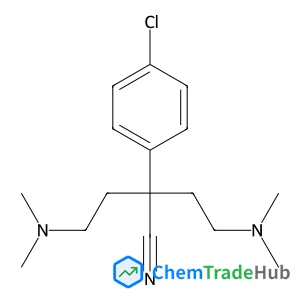
2-(4-Chlorophenyl)-4-(dimethylamino)-2-(2-(dimethylamino)ethyl)butanenitrile
CAS Number:
1246816-57-8
Molecular Formula:
C16H24ClN3
Pascal Didier, Jagannath Kuchlyan, Lara Martinez-Fernandez, Pauline Gosset, Jérémie Léonard, Yitzhak Tor, Roberto Improta, Yves Mély
The thienoguanine nucleobase (thGb) is an isomorphic fluorescent analogue of guanine. In aqueous buffer at neutral pH, thGb exists as a mixture of two ground-state H1 and H3 keto–amino tautomers with distinct absorption and emission spectra and high quantum yield. In this work, we performed the first systematic photophysical characterization of thGb as a function of pH (2 to 12). Steady-state and time-resolved fluorescence spectroscopies, supplemented with theoretical calculations, enabled us to identify three additional thGb forms, resulting from pH-dependent ground-state and excited-state reactions. Moreover, a thorough analysis allowed us to retrieve their individual absorption and emission spectra as well as the equilibrium constants which govern their interconversion. From these data, the complete photoluminescence pathway of thGb in aqueous solution and its dependence as a function of pH was deduced. As the identified forms differ by their spectra and fluorescence lifetime, thGb could be used as a probe for sensing local pH changes under acidic conditions.
Sandeep P. Patil, Sri Harsha Chilakamarri, Bernd Markert
DOI: 10.1039/C8CP01061G
Moses Cho, Joonho Park, Cafer T. Yavuz, Yousung Jung
DOI: 10.1039/C7CP07973G
Cloé Azarias, Isabelle Navizet, Paul Fleurat-Lessard, Boris Le Guennic, Jean-Alexandre Richard, Denis Jacquemin
DOI: 10.1039/C8CP01587B
Maria Wächtler
DOI: 10.1039/C8CP01007B
I. Alcón
DOI: 10.1039/C7CP08076J
DOI: 10.1039/C7CP08032H
Fenhong Song, Long Ma, Jing Fan, Qicheng Chen, Guangping Lei, Ben Q. Li
DOI: 10.1039/C8CP00956B
Yanchen Han, Shengjie Ling, Zeming Qi, Zhengzhong Shao, Xin Chen
DOI: 10.1039/C8CP00802G
Alexander Schmid, Ghislain M. Rupp, Jürgen Fleig
DOI: 10.1039/C7CP07845E
Riley J. Hickman, Robert A. Lang, Tao Zeng
DOI: 10.1039/C8CP01394B
This compound is mainly used as an intermediate in the synthesis of antipsychoti...
Waste containing 1-(D-Ribofuranosyl)-1,4-dihydro-3-pyridinecarboxamide (CAS: 191...
2-Methyl-2-propanyl 3-bromo-3-(hydroxymethyl)-1-azetidinecarboxylate (CAS: 20079...
N-(4-Chloro-2-pyridinyl)acetamide (CAS: 245056-66-0) is a chemical compound with...
5-Chloro-2-hydroxybenzoic acid, also known as 5-chlorosalicylic acid, is an arom...
When handling 1,1-Dichloro-1-fluoroethane (CAS: 1717-00-6), it is important to u...
Fmoc-(2S,3R)-3-phenylpyrrolidine-2-carboxylic acid is a white crystalline solid ...
4-Amino-5-bromo-2-pyridinecarboxylic acid is primarily used as a precursor in th...
Handling this compound should be done with personal protective equipment (PPE) i...
When handling 8-bromo-2,2-dimethyl-3,4-dihydro-2H-1,4-benzoxazin-3-one, use prop...

Physical Chemistry Chemical Physics (PCCP) is an international journal co-owned by 19 physical chemistry and physics societies from around the world. This journal publishes original, cutting-edge research in physical chemistry, chemical physics and biophysical chemistry. To be suitable for publication in PCCP, articles must include significant innovation and/or insight into physical chemistry; this is the most important criterion that reviewers and Editors will judge against when evaluating submissions. The journal has a broad scope and welcomes contributions spanning experiment, theory, computation and data science. Topical coverage includes spectroscopy, dynamics, kinetics, statistical mechanics, thermodynamics, electrochemistry, catalysis, surface science, quantum mechanics, quantum computing and machine learning. Interdisciplinary research areas such as polymers and soft matter, materials, nanoscience, energy, surfaces/interfaces, and biophysical chemistry are welcomed if they demonstrate significant innovation and/or insight into physical chemistry. Joined experimental/theoretical studies are particularly appreciated when complementary and based on up-to-date approaches.