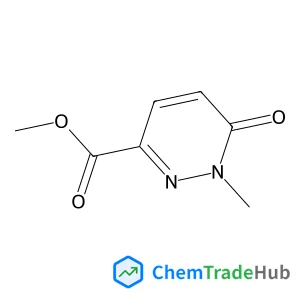
Methyl 1-methyl-6-oxo-1,6-dihydro-3-pyridazinecarboxylate
CAS Number:
74173-58-3
Molecular Formula:
C7H8N2O3
Harish Kumar Choudhary, Rajeev Kumar, Shital Patangrao Pawar, Uttandaraman Sundararaj, Balaram Sahoo
Using composites of polyvinylidene fluoride (PVDF) and carbon nanostructures embedded with Co-nanoparticles we demonstrate that electromagnetic shielding effectiveness depends strongly on the graphitic carbon concentration and the magnetic properties of Co-particles. Cobalt nanoparticles encapsulated by graphitic carbon embedded in an amorphous carbon-matrix were synthesized by a one-pot pyrolysis method at two different synthesis temperatures, TS = 800 °C (Co-800) and 1000 °C (Co-1000). We demonstrate that TS plays an important role in determining the structure, morphology and magnetic properties of the carbonaceous matrix, the graphite layer and the Co nanoparticles. Higher amounts of graphitic carbon and high saturation magnetization were observed for the Co-1000 sample than that for the Co-800 sample. We observed that the electromagnetic interference (EMI) shielding behavior of the PVDF-Co-1000 nanocomposite shows higher shielding effectiveness than that of the PVDF-Co-800 specimen. A more inhomogeneous dielectric medium in the PVDF-Co-1000 composite results in higher dielectric loss and impedance mismatch. A direct correlation between the shielding effectiveness with dielectric permittivity and magnetic permeability is demonstrated. The synergy between the multiple reflections at the interfaces and absorption of the microwave radiation in the conducting species confirms that a higher degree of graphitization and highly magnetic particles in nanocomposites are effectively superior for EMI shielding of microwave radiation.
Yusheng Chen, Anastasia Kuvayskaya, Maren Pink, Amar H. Flood
DOI: 10.1039/D3SC03685E
Joaquim Caner, Akira Matsumoto
DOI: 10.1039/D3SC05305A
Fang Yuan, Cuiling Zhang, Xianzhu Luo, Shasha Cheng, Yingxin Zhu, Yuezhong Xian
DOI: 10.1039/D3SC02022C
Bartłomiej Sadowski, Daniel T. Gryko
DOI: 10.1039/D3SC05272A
Ting Yao, Wei Xia, Shitao Han, Shuaiqiang Jia, Xue Dong, Min Wang, Jiapeng Jiao, Dawei Zhou, Jiahao Yang, Xueqing Xing, Chunjun Chen
DOI: 10.1039/D3SC04061E
Xiang Liu, Zixuan Hao, Chen Fang, Kun Pang, Jiaying Yan, Yingping Huang, Di Huang
DOI: 10.1039/D3SC05275C
Qiuhong Cheng, Aiyou Hao, Pengyao Xing
DOI: 10.1039/D3SC05212E
DOI: 10.1039/D3SC04126C
Liting Zheng, Qingqing Li, Ying Wu, Lichao Su, Wei Du, Jibin Song, Lanlan Chen, Huanghao Yang
DOI: 10.1039/D3SC04371A
Tuan D. Samdin, Chelsea R. Jones, Gretchen Guaglianone, Adam G. Kreutzer, J. Alfredo Freites, Michał Wierzbicki
DOI: 10.1039/D3SC05185D
3-(2-Bromoimidazo[2,1-b]thiazol-6-yl)propanoic acid hydrochloride is typically s...
2-Isopropyl-1,3-dioxane-5-carboxylic acid is typically synthesized by the carbox...
Alisporivir (CAS: 254435-95-5) is an antiviral medication used in the treatment ...
[1,2,4]triazolo[3,4-a]phthalazine (CAS: 234-80-0) is a crystalline compound with...
Regulatory guidelines for (2S)-5-Hydroxy-2-(4-hydroxyphenyl)-4-oxo-3,4-dihydro-2...
2,2-Difluorocyclohexanamine hydrochloride is generally safe when handled under p...
3-Nitro-2-phenylthiophene is primarily used in the synthesis of other organic co...
1-(Trifluoroacetyl)-4-piperidinecarbonitrile (CAS: 77940-79-5) is a colorless to...
Research and market trends for 1,3,6,8-Tetranitro-9H-carbazole (CAS: 4543-33-3) ...
Waste containing Dibenzo[b,d]thiophen-1-ylboronic acid (CAS: 1245943-60-5) shoul...

Physical Chemistry Chemical Physics (PCCP) is an international journal co-owned by 19 physical chemistry and physics societies from around the world. This journal publishes original, cutting-edge research in physical chemistry, chemical physics and biophysical chemistry. To be suitable for publication in PCCP, articles must include significant innovation and/or insight into physical chemistry; this is the most important criterion that reviewers and Editors will judge against when evaluating submissions. The journal has a broad scope and welcomes contributions spanning experiment, theory, computation and data science. Topical coverage includes spectroscopy, dynamics, kinetics, statistical mechanics, thermodynamics, electrochemistry, catalysis, surface science, quantum mechanics, quantum computing and machine learning. Interdisciplinary research areas such as polymers and soft matter, materials, nanoscience, energy, surfaces/interfaces, and biophysical chemistry are welcomed if they demonstrate significant innovation and/or insight into physical chemistry. Joined experimental/theoretical studies are particularly appreciated when complementary and based on up-to-date approaches.