












Vapour permeation measurements with free-standing nanomembranes
Literature Information
Publication Date
2019-06-25
DOI
10.1039/C9CP03038G
Impact Factor
3.676
Authors
Petr Dementyev, Timo Wilke, Daniil Naberezhnyi, Daniel Emmrich, Armin Gölzhäuser
View Original
Abstract
Mass transfer across porous materials with nanoscale thickness is of great interest in terms of both fundamentals of fluid dynamics and practical challenges of membrane separation. In particular, few-atom thick sieves are viewed as attractive candidates to achieve ultimate permeability without compromising membrane selectivity. In this work, we introduce a vacuum system for studying vapour and gas permeation in micrometre-sized samples of suspended nanometre-thick films. Steady-state permeation rates are measured with a mass-spectrometer directly connected to the downstream side of a membrane cell. A built-in nanoaperture is used as a reference to calibrate the detector in situ. A feed compartment is designed in a way that allows for preparing gaseous mixtures of variable composition, including vapours of volatile liquids. Room-temperature measurements with carbon nanomembranes confirm that this material is selective to water vapour and can efficiently separate it from mixtures with a variety of gases and organic compounds. We demonstrate that a high permeance for water is maintained regardless of the molar fraction and discuss its strong pressure dependence by invoking adsorption-related formalism.
Related Literature
Directed assembly and reactivity of olefins within a one-dimensional ladder-like coordination polymer based on a dinuclear Zn(ii) platform
Giannis S. Papaefstathiou, Ivan G. Georgiev, Tomislav Friščić, Leonard R. MacGillivray
2005-07-08
Communication
DOI: 10.1039/B504477D
Colloidal lithography with crosslinkable particles: fabrication of hierarchical nanopore arrays
Jun Hyuk Moon, Won Sun Kim, Jong-Wook Ha, Se Gyu Jang, Seung-Man Yang, Jung-Ki Park
2005-07-14
Communication
DOI: 10.1039/B507542D
Properties of composite proton-conducting membranes prepared from three-dimensionally ordered macroporous polyimide matrix and polyelectrolyte
Dai Yamamoto
2005-07-11
Communication
DOI: 10.1039/B505843K
A preliminary observation of additive thermodynamic contribution of pendant arms to the complexation of calixarene derivatives with mercury(ii)
Angela F. Danil de Namor, Samir Chahine, Eduardo E. Castellano, Oscar E. Piro, H. Donald Brooke Jenkins
2005-06-23
Communication
DOI: 10.1039/B505408G
Size dependent interaction of biofunctionalized CdS nanoparticles with tyrosine at different pH
Amiya Priyam, Anindita Chatterjee, Satyen K. Das, Abhijit Saha
2005-07-13
Communication
DOI: 10.1039/B505960G
Structural basis for bending of organic crystals
C. Malla Reddy, Ravi C. Gundakaram, Srinivas Basavoju, Michael T. Kirchner, K. Anantha Padmanabhan, Gautam R. Desiraju
2005-06-23
Communication
DOI: 10.1039/B505103G
Fluorescence properties of gold nanorods and their application for DNA biosensing
Chen-Zhong Li, Keith B. Male, Sabahudin Hrapovic, John H. T. Luong
2005-07-04
Communication
DOI: 10.1039/B504186D
Regioselective synthesis and zone selective deprotection of [60]fullerene tris-adducts with an e,e,e addition pattern
Florian Beuerle, Nikos Chronakis, Andreas Hirsch
2005-06-16
Communication
DOI: 10.1039/B504748J
Organic dyes containing thienylfluorene conjugation for solar cells
K. R. Justin Thomas, Ying-Chan Hsu, Kuo-Chuan Ho
2005-07-13
Communication
DOI: 10.1039/B506732D
Infrared spectrum and structure of the gold dihydroxide molecule
Xuefeng Wang, Lester Andrews
2005-07-12
Communication
DOI: 10.1039/B506970J
You might also like
Compound Q&A
How is 3-(2-Bromoimidazo[2,1-b]thiazol-6-yl)propanoic acid hydrochloride (CAS: 1187830-80-3) typically synthesized?
3-(2-Bromoimidazo[2,1-b]thiazol-6-yl)propanoic acid hydrochloride is typically s...
1187830-80-33-(2-Bromoimidazo[2,...
Compound Q&A
How is 2-Isopropyl-1,3-dioxane-5-carboxylic acid (CAS: 116193-72-7) typically synthesized?
2-Isopropyl-1,3-dioxane-5-carboxylic acid is typically synthesized by the carbox...
116193-72-72-Isopropyl-1,3-diox...
Compound Q&A
What is Alisporivir (CAS: 254435-95-5)?
Alisporivir (CAS: 254435-95-5) is an antiviral medication used in the treatment ...
254435-95-5Alisporivir
Compound Q&A
What are the physical and chemical properties of [1,2,4]triazolo[3,4-a]phthalazine (CAS: 234-80-0)?
[1,2,4]triazolo[3,4-a]phthalazine (CAS: 234-80-0) is a crystalline compound with...
234-80-0[1,2,4]triazolo[3,4-...
Compound Q&A
What regulatory guidelines apply to (2S)-5-Hydroxy-2-(4-hydroxyphenyl)-4-oxo-3,4-dihydro-2H-chromen-7-yl methyl beta-D-glucopyranosiduronate (CAS: 1985597-72-5)?
Regulatory guidelines for (2S)-5-Hydroxy-2-(4-hydroxyphenyl)-4-oxo-3,4-dihydro-2...
1985597-72-5(2S)-5-Hydroxy-2-(4-...
Compound Q&A
Is 2,2-Difluorocyclohexanamine hydrochloride (CAS: 921602-83-7) safe?
2,2-Difluorocyclohexanamine hydrochloride is generally safe when handled under p...
921602-83-72,2-Difluorocyclohex...
Compound Q&A
What are the main uses of 3-Nitro-2-phenylthiophene (CAS: 18150-94-2)?
3-Nitro-2-phenylthiophene is primarily used in the synthesis of other organic co...
18150-94-23-Nitro-2-phenylthio...
Compound Q&A
What is 1-(Trifluoroacetyl)-4-piperidinecarbonitrile (CAS: 77940-79-5)?
1-(Trifluoroacetyl)-4-piperidinecarbonitrile (CAS: 77940-79-5) is a colorless to...
77940-79-51-(Trifluoroacetyl)-...
Compound Q&A
What is the market or research trend for 1,3,6,8-Tetranitro-9H-carbazole (CAS: 4543-33-3)?
Research and market trends for 1,3,6,8-Tetranitro-9H-carbazole (CAS: 4543-33-3) ...
4543-33-31,3,6,8-Tetranitro-9...
Compound Q&A
How should waste containing Dibenzo[b,d]thiophen-1-ylboronic acid (CAS: 1245943-60-5) be handled?
Waste containing Dibenzo[b,d]thiophen-1-ylboronic acid (CAS: 1245943-60-5) shoul...
1245943-60-5Dibenzo[b,d]thiophen...
Source Journal
Physical Chemistry Chemical Physics

CiteScore:
5.5
Self-citation Rate:
10.3%
Articles per Year:
3036
Physical Chemistry Chemical Physics (PCCP) is an international journal co-owned by 19 physical chemistry and physics societies from around the world. This journal publishes original, cutting-edge research in physical chemistry, chemical physics and biophysical chemistry. To be suitable for publication in PCCP, articles must include significant innovation and/or insight into physical chemistry; this is the most important criterion that reviewers and Editors will judge against when evaluating submissions. The journal has a broad scope and welcomes contributions spanning experiment, theory, computation and data science. Topical coverage includes spectroscopy, dynamics, kinetics, statistical mechanics, thermodynamics, electrochemistry, catalysis, surface science, quantum mechanics, quantum computing and machine learning. Interdisciplinary research areas such as polymers and soft matter, materials, nanoscience, energy, surfaces/interfaces, and biophysical chemistry are welcomed if they demonstrate significant innovation and/or insight into physical chemistry. Joined experimental/theoretical studies are particularly appreciated when complementary and based on up-to-date approaches.
Recommended Compounds
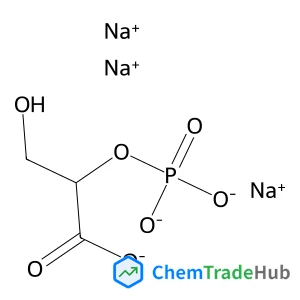
Sodium (1R)-1-carboxy-2-hydroxyethyl phosphate hydrate (2:1:1)
CAS Number:
70195-25-4
Molecular Formula:
C3H7Na2O8P

![Potassium trifluoro[(2-methoxyethoxy)methyl]borate(1-) structure](https://static.chemtradehub.com/structs/910/910251-13-7-2d3a.webp "Potassium trifluoro[(2-methoxyethoxy)methyl]borate(1-) structure")
Potassium trifluoro[(2-methoxyethoxy)methyl]borate(1-)
CAS Number:
910251-13-7
Molecular Formula:
C4H9BF3KO2

Recommended Suppliers





Disclaimer
This page provides academic journal information for reference and research purposes only. We are not affiliated with any journal publishers and do not handle publication submissions. For publication-related inquiries, please contact the respective journal publishers directly.
If you notice any inaccuracies in the information displayed, please contact us at support@chemtradehub.com. We will promptly review and address your concerns.