












The rich conformational landscape of perillyl alcohol revealed by broadband rotational spectroscopy and theoretical modelling
Literature Information
Publication Date
2019-07-02
DOI
10.1039/C9CP03028J
Impact Factor
3.676
Authors
Fan Xie, Nathan A. Seifert, Matthias Heger, Javix Thomas, Wolfgang Jäger, Yunjie Xu
View Original
Abstract
The rotational spectrum of perillyl alcohol, a naturally occurring, chiral, dietary monoterpene, was investigated using a chirped pulse Fourier transform microwave spectrometer and a cavity-based Fourier transform microwave spectrometer. To aid the assignment of the dense chirped pulse spectrum obtained, extensive theoretical conformational searches were carried out. In one approach, several one and two-dimensional scans along three dihedral angles associated with the rotational motions of the –OH, –CH2OH, and –C(CH2)CH3 groups were performed. These scans, combined with the equatorial and axial positions of the –C(CH2)CH3 group, resulted in 54 conformers. The same conformers were identified in the second approach where a semi-classical conformational search code was used. The relative stabilities of the conformers and the interconversion barriers among them were explored extensively at the DFT B3LYP-D3(BJ)/def2-TZVP and B3LYP-D3(BJ)/6-311++G(2d,p), as well as local MP2/aug-cc-pVQZ levels of theory, and 12 conformers were ultimately identified as possibly observable candidates in a molecular jet expansion. Rotational spectra of eight out of the 12 candidates were observed experimentally and analyzed. The non-observation of the remaining four conformers may be attributed to their low abundances. The study points out the importance of identifying all conformers of relevant abundance, even those which could not be detected experimentally, in order to properly benchmark the theoretical relative stabilities with the experimental ones. A comprehensive study of the conformational distribution of perillyl alcohol contributes to our understanding of its structural properties which may influence its functions.
Related Literature
Immobilization of hexa-arginine tagged esterase onto carboxylated gold nanoparticles
Tai Hwan Ha, Jin Young Jeong
2005-07-06
Communication
DOI: 10.1039/B504184H
Conformational diastereoisomerism in a chiral pretzelane
Yi Liu, Scott A. Vignon, Xiyun Zhang, K. N. Houk, J. Fraser Stoddart
2005-07-11
Communication
DOI: 10.1039/B507679J
Redox behaviour of Pd-based TWCs under dynamic conditions: analysis using dispersive XAS and mass spectrometry
A. Iglesias-Juez, A. Martínez-Arias, M. A. Newton, S. G. Fiddy, M. Fernández-García
2005-07-13
Communication
DOI: 10.1039/B502798E
cis-Dihydrodiol, arene oxide and phenolmetabolites of dictamnine: key intermediates in the biodegradation and biosynthesis of furoquinolinealkaloids
Colin R. O'Dowd, Jonathan G. Carroll, Pui L. Loke, Christopher C. R. Allen
2005-07-11
Communication
DOI: 10.1039/B506944K
Chemical instability of octadecylammonium monolayers
Robin H. A. Ras, Cliff T. Johnston, Robert A. Schoonheydt
2005-07-13
Communication
DOI: 10.1039/B504483A
Easy activation of two C–H bonds of an N-heterocyclic carbeneN-methyl group
Javier A. Cabeza, Ignacio del Río, Daniel Miguel, M. Gabriela Sánchez-Vega
2005-07-05
Communication
DOI: 10.1039/B506287J
Non-steady-state living polymerization: a new route to control cationic ring-opening polymerization (CROP) of oxetanevia an activation chain end (ACE) mechanism at ambient temperature
Hassen Bouchékif, Marcia I. Philbin, Eamon Colclough, Allan J. Amass
2005-06-15
Communication
DOI: 10.1039/B417076H
A novel nucleophilic approach to 1-alkyladenosines. A two-step synthesis of [1-15N]adenosine from inosine
Montserrat Terrazas, Xavier Ariza, Jaume Farràs, Jaume Vilarrasa
2005-07-07
Communication
DOI: 10.1039/B505183E
Regioselective synthesis and zone selective deprotection of [60]fullerene tris-adducts with an e,e,e addition pattern
Florian Beuerle, Nikos Chronakis, Andreas Hirsch
2005-06-16
Communication
DOI: 10.1039/B504748J
You might also like
Compound Q&A
How is 3-(2-Bromoimidazo[2,1-b]thiazol-6-yl)propanoic acid hydrochloride (CAS: 1187830-80-3) typically synthesized?
3-(2-Bromoimidazo[2,1-b]thiazol-6-yl)propanoic acid hydrochloride is typically s...
1187830-80-33-(2-Bromoimidazo[2,...
Compound Q&A
How is 2-Isopropyl-1,3-dioxane-5-carboxylic acid (CAS: 116193-72-7) typically synthesized?
2-Isopropyl-1,3-dioxane-5-carboxylic acid is typically synthesized by the carbox...
116193-72-72-Isopropyl-1,3-diox...
Compound Q&A
What is Alisporivir (CAS: 254435-95-5)?
Alisporivir (CAS: 254435-95-5) is an antiviral medication used in the treatment ...
254435-95-5Alisporivir
Compound Q&A
What are the physical and chemical properties of [1,2,4]triazolo[3,4-a]phthalazine (CAS: 234-80-0)?
[1,2,4]triazolo[3,4-a]phthalazine (CAS: 234-80-0) is a crystalline compound with...
234-80-0[1,2,4]triazolo[3,4-...
Compound Q&A
What regulatory guidelines apply to (2S)-5-Hydroxy-2-(4-hydroxyphenyl)-4-oxo-3,4-dihydro-2H-chromen-7-yl methyl beta-D-glucopyranosiduronate (CAS: 1985597-72-5)?
Regulatory guidelines for (2S)-5-Hydroxy-2-(4-hydroxyphenyl)-4-oxo-3,4-dihydro-2...
1985597-72-5(2S)-5-Hydroxy-2-(4-...
Compound Q&A
Is 2,2-Difluorocyclohexanamine hydrochloride (CAS: 921602-83-7) safe?
2,2-Difluorocyclohexanamine hydrochloride is generally safe when handled under p...
921602-83-72,2-Difluorocyclohex...
Compound Q&A
What are the main uses of 3-Nitro-2-phenylthiophene (CAS: 18150-94-2)?
3-Nitro-2-phenylthiophene is primarily used in the synthesis of other organic co...
18150-94-23-Nitro-2-phenylthio...
Compound Q&A
What is 1-(Trifluoroacetyl)-4-piperidinecarbonitrile (CAS: 77940-79-5)?
1-(Trifluoroacetyl)-4-piperidinecarbonitrile (CAS: 77940-79-5) is a colorless to...
77940-79-51-(Trifluoroacetyl)-...
Compound Q&A
What is the market or research trend for 1,3,6,8-Tetranitro-9H-carbazole (CAS: 4543-33-3)?
Research and market trends for 1,3,6,8-Tetranitro-9H-carbazole (CAS: 4543-33-3) ...
4543-33-31,3,6,8-Tetranitro-9...
Compound Q&A
How should waste containing Dibenzo[b,d]thiophen-1-ylboronic acid (CAS: 1245943-60-5) be handled?
Waste containing Dibenzo[b,d]thiophen-1-ylboronic acid (CAS: 1245943-60-5) shoul...
1245943-60-5Dibenzo[b,d]thiophen...
Source Journal
Physical Chemistry Chemical Physics

CiteScore:
5.5
Self-citation Rate:
10.3%
Articles per Year:
3036
Physical Chemistry Chemical Physics (PCCP) is an international journal co-owned by 19 physical chemistry and physics societies from around the world. This journal publishes original, cutting-edge research in physical chemistry, chemical physics and biophysical chemistry. To be suitable for publication in PCCP, articles must include significant innovation and/or insight into physical chemistry; this is the most important criterion that reviewers and Editors will judge against when evaluating submissions. The journal has a broad scope and welcomes contributions spanning experiment, theory, computation and data science. Topical coverage includes spectroscopy, dynamics, kinetics, statistical mechanics, thermodynamics, electrochemistry, catalysis, surface science, quantum mechanics, quantum computing and machine learning. Interdisciplinary research areas such as polymers and soft matter, materials, nanoscience, energy, surfaces/interfaces, and biophysical chemistry are welcomed if they demonstrate significant innovation and/or insight into physical chemistry. Joined experimental/theoretical studies are particularly appreciated when complementary and based on up-to-date approaches.
Recommended Compounds
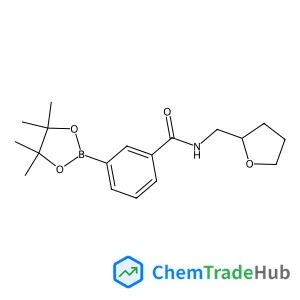
N-(Tetrahydro-2-furanylmethyl)-3-(4,4,5,5-tetramethyl-1,3,2-dioxaborolan-2-yl)benzamide
CAS Number:
1073355-06-2
Molecular Formula:
C18H26BNO4
Recommended Suppliers




Disclaimer
This page provides academic journal information for reference and research purposes only. We are not affiliated with any journal publishers and do not handle publication submissions. For publication-related inquiries, please contact the respective journal publishers directly.
If you notice any inaccuracies in the information displayed, please contact us at support@chemtradehub.com. We will promptly review and address your concerns.