


Easy activation of two C–H bonds of an N-heterocyclic carbeneN-methyl group
Literature Information
Publication Date
2005-07-05
DOI
10.1039/B506287J
Impact Factor
6.222
Authors
Javier A. Cabeza, Ignacio del Río, Daniel Miguel, M. Gabriela Sánchez-Vega
View Original
Abstract
The first trinuclear clusters containing NHC ligands are described; the compound [Ru3(Me2Im)(CO)11] (Me2Im = 1,3-dimethylimidazol-2-ylidene) is easily converted into [Ru3(µ-H)2(µ3-MeImCH)(CO)9] by a process involving the activation of two C–H bonds of a methyl group that is an example of degradation of a metal-coordinated NHC ligand under mild conditions.
Recommended Journals

Journal of Chemical Sciences

Bioorganic & Medicinal Chemistry

Cellulose

Journal of Asian Natural Products Research

Biocatalysis and Biotransformation

Topics in Catalysis

Acta Metallurgica Sinica-English Letters

Medicinal Chemistry Research

Polycyclic Aromatic Compounds

Critical Reviews in Solid State and Materials Sciences
Related Literature
Copper-mediated C(sp3)–H amination in a multiple C–N bond-forming strategy for the synthesis of N-heterocycles
Zeqiang Xie, Jiangling Peng, Qiang Zhu
2015-11-20
Research Article
DOI: 10.1039/C5QO00313J
Acceptorless dehydrogenative condensation of o-aminobenzamides with aldehydes to quinazolinones in water catalyzed by a water-soluble iridium complex [Cp*Ir(H2O)3][OTf]2
Lei Lu, Juan Ma
2015-10-06
Research Article
DOI: 10.1039/C5QO00255A
Direct borylation of benzyl alcohol and its analogues in the absence of bases
Zhi-Chao Cao, Fei-Xian Luo, Wen-Juan Shi
2015-09-10
Research Article
DOI: 10.1039/C5QO00243E
Efficient synthesis of 2-acylquinolines based on an aza-vinylogous Povarov reaction
Giulia Bianchini, Pascual Ribelles, M. Teresa Ramos, J. Carlos Menéndez
2016-02-15
Research Article
DOI: 10.1039/C6QO00037A
Rh(iii)-catalyzed redox-neutral annulation of azo and diazo compounds: one-step access to cinnolines
Peng Sun, Youzhi Wu, Yue Huang, Xiaoming Wu, Jinyi Xu, Hequan Yao, Aijun Lin
2015-11-26
Research Article
DOI: 10.1039/C5QO00331H
Non-covalent organocatalysis in asymmetric oxidative C(sp3)–H bond functionalization – broadening C–H bond coupling reactions
Sebastian Stockerl
2015-12-08
Highlight
DOI: 10.1039/C5QO00347D
Palladium-catalyzed intramolecular rearrangement of vinylidenecyclopropanes through C–C bond activation
Dong Pan, Gen-Qiang Chen, Xiang-Ying Tang, Min Shi
2015-04-29
Research Article
DOI: 10.1039/C5QO00127G
Reaction of alkenecarboxylic acids with isocyanates via rhodium(iii)-catalyzed C–H activation: a versatile route to cyclic imides
Yun Liu, Hai ning Wang, Wen bo Liu, Chao-Jun Li
2016-06-13
Research Article
DOI: 10.1039/C6QO00119J
Rhodium-catalyzed oxidative coupling of N-acyl anilines with alkynes using an acylamino moiety as the traceless directing group
Kaijun Geng, Zhoulong Fan, Ao Zhang
2016-01-14
Research Article
DOI: 10.1039/C5QO00387C
You might also like
Compound Q&A
How should 2-Methylbenzene-1,4-diamine dihydrochloride (CAS: 615-45-2) be stored?
2-Methylbenzene-1,4-diamine dihydrochloride (CAS: 615-45-2) should be stored in ...
615-45-22-Methylbenzene-1,4-...
Compound Q&A
Is (1S,4S)-2,5-Diazabicyclo[2.2.1]heptane dihydrobromide (CAS: 132747-20-7) safe?
(1S,4S)-2,5-Diazabicyclo[2.2.1]heptane dihydrobromide is generally considered sa...
132747-20-7(1S,4S)-2,5-Diazabic...
Compound Q&A
What industries use (6-Chloropyridazin-3-YL)methanamine (CAS: 871826-15-2)?
(6-Chloropyridazin-3-YL)methanamine finds applications in the pharmaceutical ind...
871826-15-2(6-Chloropyridazin-3...
Compound Q&A
What are the main uses of 2-Fluoro-3-methylphenol (CAS: 77772-72-6)?
2-Fluoro-3-methylphenol is primarily used in the synthesis of pharmaceuticals, p...
77772-72-62-Fluoro-3-methylphe...
Compound Q&A
What precautions should be taken when handling 3-Methoxy-4-nitrobenzonitrile (CAS: 177476-75-4)?
When handling 3-Methoxy-4-nitrobenzonitrile, it is important to wear appropriate...
177476-75-43-Methoxy-4-nitroben...
Compound Q&A
What precautions should be taken when handling 1,3-Oxazolo[4,5-b]pyridine-2(3H)-thione (CAS: 211949-57-4)?
When handling 1,3-Oxazolo[4,5-b]pyridine-2(3H)-thione (CAS: 211949-57-4), it is ...
211949-57-4[1,3]Oxazolo[4,5-b]p...
Compound Q&A
What regulatory guidelines apply to 4-Ethynylbenzamide (CAS: 90347-86-7)?
4-Ethynylbenzamide (CAS: 90347-86-7) falls under various regulatory guidelines i...
90347-86-74-Ethynylbenzamide
Compound Q&A
What are the main uses of 3-(2-Ethylphenyl)-2-thioxo-4-imidazolidinone (CAS: 186822-57-1)?
3-(2-Ethylphenyl)-2-thioxo-4-imidazolidinone is primarily used as an intermediat...
186822-57-13-(2-Ethylphenyl)-2-...
Compound Q&A
What is (2-Fluoro-6-methoxyphenyl)acetic acid (CAS: 500912-19-6)?
(2-Fluoro-6-methoxyphenyl)acetic acid, also known as 4-fluoro-3-methoxybenzoic a...
500912-19-6(2-Fluoro-6-methoxyp...
Compound Q&A
What is the market or research trend for 2-[4-(Hydroxymethyl)phenoxy]ethanol (CAS: 102196-18-9)?
Market trends for 2-[4-(Hydroxymethyl)phenoxy]ethanol (CAS: 102196-18-9) indicat...
102196-18-92-[4-(Hydroxymethyl)...
Source Journal
Chemical Communications

CiteScore:
8.6
Self-citation Rate:
4.7%
Articles per Year:
2458
ChemComm publishes urgent research which is of outstanding significance and interest to experts in the field, while also appealing to the journal’s broad chemistry readership. Our communication format is ideally suited to short, urgent studies that are of such importance that they require accelerated publication. Our scope covers all topics in chemistry, and research at the interface of chemistry and other disciplines (such as materials science, nanoscience, physics, engineering and biology) where there is a significant novelty in the chemistry aspects. Major topic areas covered include: Analytical Chemistry Catalysis Chemical Biology and medicinal chemistry Computational Chemistry and Machine Learning Energy and sustainable chemistry Environmental Chemistry Green Chemistry Inorganic Chemistry Materials Chemistry Nanoscience Organic Chemistry Physical Chemistry Polymer Chemistry Supramolecular Chemistry
Recommended Compounds
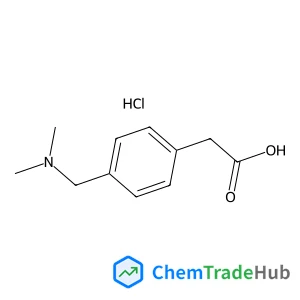
4-(Dimethylaminomethyl)phenylacetic acid hydrochloride
CAS Number:
99985-52-1
Molecular Formula:
C11H16ClNO2

Recommended Suppliers





Disclaimer
This page provides academic journal information for reference and research purposes only. We are not affiliated with any journal publishers and do not handle publication submissions. For publication-related inquiries, please contact the respective journal publishers directly.
If you notice any inaccuracies in the information displayed, please contact us at support@chemtradehub.com. We will promptly review and address your concerns.