













Noble gas dimers confined inside C70
Literature Information
Publication Date
2019-07-02
DOI
10.1039/C9CP03015H
Impact Factor
3.676
Authors
Sara Gómez, Albeiro Restrepo
View Original
Abstract
The potential energy surfaces for the interior rotation of a series of pairs of noble gas atoms encapsulated in the C70 cavity have been explored. He2@C70, Ne2@C70, Ar2@C70, HeNe@C70, HeAr@C70 and NeAr@C70 were chosen as case studies. Our calculations suggest stable minima with the two noble gas atoms lying along the symmetry axis of the fullerene. Transition states for the rotations are expected to occur when the two atoms are located in the symmetry plane perpendicular to the C5 axis. The energy barriers for the rotations are predicted to be in the 5–64 kcal mol−1 range, significantly increasing with the size of the noble gas atoms inside C70. These energy barriers lead to a wide range of rate constants, including those characteristic of very fast internal rotations, of the order of k = 2.40 × 10⁹ s−1 for He2@C70, and those describing very slow rotations, of the order of k = 1.80 × 10⁻³³ s−1 for Ar2@C70. It is mandatory to correct for the basis set superposition error to calculate accurate binding energies.
Related Literature
New synthesis of (Z,E)-2,7-bis(4-cyanobenzylidene)cycloheptan-1-one under stereospecific constraints induced by host–guest interactions
Arnaud Grandeury, Samuel Petit, Servane Coste, Gérard Coquerel, Cécile Perrio, Géraldine Gouhier
2005-07-12
Communication
DOI: 10.1039/B504989J
Axial bis(terpyridoxy)phosphorus(v) porphyrin: Modulation of PET and EET by Zn2+ or Cd2+ ions
P. Prashanth Kumar, G. Premaladha, Bhaskar G. Maiya
2005-06-24
Communication
DOI: 10.1039/B504029A
High-density doxorubicin-conjugated polymeric nanoparticlesvia ring-opening metathesis polymerization
Paul A. Bertin, DeeDee Smith, SonBinh T. Nguyen
2005-07-04
Communication
DOI: 10.1039/B504643B
On the CH⋯Cu agostic interaction: chiral copper(ii) compounds with ephedrine and pseudoephedrine derivatives
Miguel Castro, Julián Cruz, Horacio López-Sandoval, Norah Barba-Behrens
2005-06-24
Communication
DOI: 10.1039/B505554G
Kinetic isotope effects on thio-substituted biological phosphoryl transfer reactions from density-functional theory
Yun Liu, Xabier Lopez, Darrin M. York
2005-07-06
Communication
DOI: 10.1039/B502568K
Highly enantioselective organocatalysis of the Hajos–Parrish–Eder–Sauer–Wiechert reaction by the β-amino acid cispentacin
Stephen G. Davies, Ruth L. Sheppard, Andrew D. Smith, James E. Thomson
2005-06-30
Communication
DOI: 10.1039/B506780B
Regioselective synthesis and zone selective deprotection of [60]fullerene tris-adducts with an e,e,e addition pattern
Florian Beuerle, Nikos Chronakis, Andreas Hirsch
2005-06-16
Communication
DOI: 10.1039/B504748J
A preliminary observation of additive thermodynamic contribution of pendant arms to the complexation of calixarene derivatives with mercury(ii)
Angela F. Danil de Namor, Samir Chahine, Eduardo E. Castellano, Oscar E. Piro, H. Donald Brooke Jenkins
2005-06-23
Communication
DOI: 10.1039/B505408G
You might also like
Compound Q&A
How is 3-(2-Bromoimidazo[2,1-b]thiazol-6-yl)propanoic acid hydrochloride (CAS: 1187830-80-3) typically synthesized?
3-(2-Bromoimidazo[2,1-b]thiazol-6-yl)propanoic acid hydrochloride is typically s...
1187830-80-33-(2-Bromoimidazo[2,...
Compound Q&A
How is 2-Isopropyl-1,3-dioxane-5-carboxylic acid (CAS: 116193-72-7) typically synthesized?
2-Isopropyl-1,3-dioxane-5-carboxylic acid is typically synthesized by the carbox...
116193-72-72-Isopropyl-1,3-diox...
Compound Q&A
What is Alisporivir (CAS: 254435-95-5)?
Alisporivir (CAS: 254435-95-5) is an antiviral medication used in the treatment ...
254435-95-5Alisporivir
Compound Q&A
What are the physical and chemical properties of [1,2,4]triazolo[3,4-a]phthalazine (CAS: 234-80-0)?
[1,2,4]triazolo[3,4-a]phthalazine (CAS: 234-80-0) is a crystalline compound with...
234-80-0[1,2,4]triazolo[3,4-...
Compound Q&A
What regulatory guidelines apply to (2S)-5-Hydroxy-2-(4-hydroxyphenyl)-4-oxo-3,4-dihydro-2H-chromen-7-yl methyl beta-D-glucopyranosiduronate (CAS: 1985597-72-5)?
Regulatory guidelines for (2S)-5-Hydroxy-2-(4-hydroxyphenyl)-4-oxo-3,4-dihydro-2...
1985597-72-5(2S)-5-Hydroxy-2-(4-...
Compound Q&A
Is 2,2-Difluorocyclohexanamine hydrochloride (CAS: 921602-83-7) safe?
2,2-Difluorocyclohexanamine hydrochloride is generally safe when handled under p...
921602-83-72,2-Difluorocyclohex...
Compound Q&A
What are the main uses of 3-Nitro-2-phenylthiophene (CAS: 18150-94-2)?
3-Nitro-2-phenylthiophene is primarily used in the synthesis of other organic co...
18150-94-23-Nitro-2-phenylthio...
Compound Q&A
What is 1-(Trifluoroacetyl)-4-piperidinecarbonitrile (CAS: 77940-79-5)?
1-(Trifluoroacetyl)-4-piperidinecarbonitrile (CAS: 77940-79-5) is a colorless to...
77940-79-51-(Trifluoroacetyl)-...
Compound Q&A
What is the market or research trend for 1,3,6,8-Tetranitro-9H-carbazole (CAS: 4543-33-3)?
Research and market trends for 1,3,6,8-Tetranitro-9H-carbazole (CAS: 4543-33-3) ...
4543-33-31,3,6,8-Tetranitro-9...
Compound Q&A
How should waste containing Dibenzo[b,d]thiophen-1-ylboronic acid (CAS: 1245943-60-5) be handled?
Waste containing Dibenzo[b,d]thiophen-1-ylboronic acid (CAS: 1245943-60-5) shoul...
1245943-60-5Dibenzo[b,d]thiophen...
Source Journal
Physical Chemistry Chemical Physics

CiteScore:
5.5
Self-citation Rate:
10.3%
Articles per Year:
3036
Physical Chemistry Chemical Physics (PCCP) is an international journal co-owned by 19 physical chemistry and physics societies from around the world. This journal publishes original, cutting-edge research in physical chemistry, chemical physics and biophysical chemistry. To be suitable for publication in PCCP, articles must include significant innovation and/or insight into physical chemistry; this is the most important criterion that reviewers and Editors will judge against when evaluating submissions. The journal has a broad scope and welcomes contributions spanning experiment, theory, computation and data science. Topical coverage includes spectroscopy, dynamics, kinetics, statistical mechanics, thermodynamics, electrochemistry, catalysis, surface science, quantum mechanics, quantum computing and machine learning. Interdisciplinary research areas such as polymers and soft matter, materials, nanoscience, energy, surfaces/interfaces, and biophysical chemistry are welcomed if they demonstrate significant innovation and/or insight into physical chemistry. Joined experimental/theoretical studies are particularly appreciated when complementary and based on up-to-date approaches.
Recommended Compounds
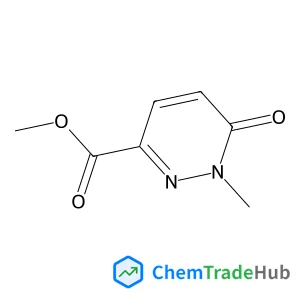
Methyl 1-methyl-6-oxo-1,6-dihydro-3-pyridazinecarboxylate
CAS Number:
74173-58-3
Molecular Formula:
C7H8N2O3

Methyl 1-(4-bromophenyl)cyclopentanecarboxylate
CAS Number:
1236357-64-4
Molecular Formula:
C13H15BrO2
Recommended Suppliers





Disclaimer
This page provides academic journal information for reference and research purposes only. We are not affiliated with any journal publishers and do not handle publication submissions. For publication-related inquiries, please contact the respective journal publishers directly.
If you notice any inaccuracies in the information displayed, please contact us at support@chemtradehub.com. We will promptly review and address your concerns.