













Complementary first and second derivative methods for ansatz optimization in variational Monte Carlo
Literature Information
Publication Date
2019-06-19
DOI
10.1039/C9CP02269D
Impact Factor
3.676
Authors
Leon Otis
View Original
Abstract
We present a comparison between a number of recently introduced low-memory wave function optimization methods for variational Monte Carlo in which we find that first and second derivative methods possess strongly complementary relative advantages. While we find that low-memory variants of the linear method are vastly more efficient at bringing wave functions with disparate types of nonlinear parameters to the vicinity of the energy minimum, accelerated descent approaches are then able to locate the precise minimum with less bias and lower statistical uncertainty. By constructing a simple hybrid approach that combines these methodologies, we show that all of these advantages can be had at once when simultaneously optimizing large determinant expansions, molecular orbital shapes, traditional Jastrow correlation factors, and more nonlinear many-electron Jastrow factors.
Related Literature
Doubly ortho-linked quinoxaline/triarylamine hybrid as a bifunctional, dipolar electroluminescent template for optoelectronic applications
Chien-Tien Chen, Jin-Sheng Lin, Murthy V. R. K. Moturu, Yi-Wen Lin, Wei Yi, Yu-Tai Tao, Chin-Hsiung Chien
2005-07-08
Communication
DOI: 10.1039/B506409K
Exclusive transition state stabilization in the supramolecular catalysis of Diels–Alder reaction by a uranyl salophen complex
Antonella Dalla Cort, Luigi Mandolini, Luca Schiaffino
2005-07-01
Communication
DOI: 10.1039/B504713G
GaS and GaSe nanowalls and their transformation to Ga2O3 and GaN nanowalls
S. R. C. Vivekchand
2005-07-11
Communication
DOI: 10.1039/B506676J
Superparamagnetic gadonanotubes are high-performance MRI contrast agents
Balaji Sitharaman, Kyle R. Kissell, Keith B. Hartman, Lesa A. Tran, Andrei Baikalov, Irene Rusakova, Yanyi Sun, Htet A. Khant, Steven J. Ludtke, Wah Chiu, Sabrina Laus, Éva Tóth, Lothar Helm, André E. Merbach, Lon J. Wilson
2005-07-08
Communication
DOI: 10.1039/B504435A
Supported hydrotalcites as highly active solid base catalysts
Ferry Winter, A. Jos van Dillen, Krijn P. de Jong
2005-07-08
Communication
DOI: 10.1039/B506173C
Formation of a long-lived charge-separated state of a zinc phthalocyanine-perylenediimide dyad by complexation with magnesium ion
Shunichi Fukuzumi, Kei Ohkubo, Javier Ortiz, Ana M. Gutiérrez, Fernando Fernández-Lázaro, Ángela Sastre-Santos
2005-06-28
Communication
DOI: 10.1039/B506412K
Fluorescence properties of gold nanorods and their application for DNA biosensing
Chen-Zhong Li, Keith B. Male, Sabahudin Hrapovic, John H. T. Luong
2005-07-04
Communication
DOI: 10.1039/B504186D
2,2-Dimethyl cyclopentanones by acid catalyzed ring expansion of isopropenylcyclobutanols. A short synthesis of (±)-α-cuparenone and (±)-herbertene
Angela M. Bernard, Angelo Frongia, Francesco Secci, Pier P. Piras
2005-06-23
Communication
DOI: 10.1039/B505707H
Photocatalytic overall water splitting under visible light by TaON and WO3 with an IO3−/I− shuttle redox mediator
Ryu Abe, Tsuyoshi Takata, Hideki Sugihara, Kazunari Domen
2005-06-24
Communication
DOI: 10.1039/B505646B
You might also like
Compound Q&A
How is 3-(2-Bromoimidazo[2,1-b]thiazol-6-yl)propanoic acid hydrochloride (CAS: 1187830-80-3) typically synthesized?
3-(2-Bromoimidazo[2,1-b]thiazol-6-yl)propanoic acid hydrochloride is typically s...
1187830-80-33-(2-Bromoimidazo[2,...
Compound Q&A
How is 2-Isopropyl-1,3-dioxane-5-carboxylic acid (CAS: 116193-72-7) typically synthesized?
2-Isopropyl-1,3-dioxane-5-carboxylic acid is typically synthesized by the carbox...
116193-72-72-Isopropyl-1,3-diox...
Compound Q&A
What is Alisporivir (CAS: 254435-95-5)?
Alisporivir (CAS: 254435-95-5) is an antiviral medication used in the treatment ...
254435-95-5Alisporivir
Compound Q&A
What are the physical and chemical properties of [1,2,4]triazolo[3,4-a]phthalazine (CAS: 234-80-0)?
[1,2,4]triazolo[3,4-a]phthalazine (CAS: 234-80-0) is a crystalline compound with...
234-80-0[1,2,4]triazolo[3,4-...
Compound Q&A
What regulatory guidelines apply to (2S)-5-Hydroxy-2-(4-hydroxyphenyl)-4-oxo-3,4-dihydro-2H-chromen-7-yl methyl beta-D-glucopyranosiduronate (CAS: 1985597-72-5)?
Regulatory guidelines for (2S)-5-Hydroxy-2-(4-hydroxyphenyl)-4-oxo-3,4-dihydro-2...
1985597-72-5(2S)-5-Hydroxy-2-(4-...
Compound Q&A
Is 2,2-Difluorocyclohexanamine hydrochloride (CAS: 921602-83-7) safe?
2,2-Difluorocyclohexanamine hydrochloride is generally safe when handled under p...
921602-83-72,2-Difluorocyclohex...
Compound Q&A
What are the main uses of 3-Nitro-2-phenylthiophene (CAS: 18150-94-2)?
3-Nitro-2-phenylthiophene is primarily used in the synthesis of other organic co...
18150-94-23-Nitro-2-phenylthio...
Compound Q&A
What is 1-(Trifluoroacetyl)-4-piperidinecarbonitrile (CAS: 77940-79-5)?
1-(Trifluoroacetyl)-4-piperidinecarbonitrile (CAS: 77940-79-5) is a colorless to...
77940-79-51-(Trifluoroacetyl)-...
Compound Q&A
What is the market or research trend for 1,3,6,8-Tetranitro-9H-carbazole (CAS: 4543-33-3)?
Research and market trends for 1,3,6,8-Tetranitro-9H-carbazole (CAS: 4543-33-3) ...
4543-33-31,3,6,8-Tetranitro-9...
Compound Q&A
How should waste containing Dibenzo[b,d]thiophen-1-ylboronic acid (CAS: 1245943-60-5) be handled?
Waste containing Dibenzo[b,d]thiophen-1-ylboronic acid (CAS: 1245943-60-5) shoul...
1245943-60-5Dibenzo[b,d]thiophen...
Source Journal
Physical Chemistry Chemical Physics

CiteScore:
5.5
Self-citation Rate:
10.3%
Articles per Year:
3036
Physical Chemistry Chemical Physics (PCCP) is an international journal co-owned by 19 physical chemistry and physics societies from around the world. This journal publishes original, cutting-edge research in physical chemistry, chemical physics and biophysical chemistry. To be suitable for publication in PCCP, articles must include significant innovation and/or insight into physical chemistry; this is the most important criterion that reviewers and Editors will judge against when evaluating submissions. The journal has a broad scope and welcomes contributions spanning experiment, theory, computation and data science. Topical coverage includes spectroscopy, dynamics, kinetics, statistical mechanics, thermodynamics, electrochemistry, catalysis, surface science, quantum mechanics, quantum computing and machine learning. Interdisciplinary research areas such as polymers and soft matter, materials, nanoscience, energy, surfaces/interfaces, and biophysical chemistry are welcomed if they demonstrate significant innovation and/or insight into physical chemistry. Joined experimental/theoretical studies are particularly appreciated when complementary and based on up-to-date approaches.
Recommended Compounds

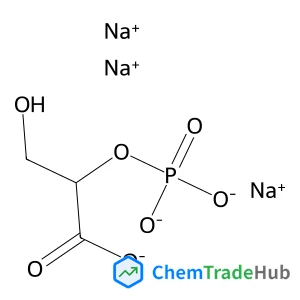
Sodium (1R)-1-carboxy-2-hydroxyethyl phosphate hydrate (2:1:1)
CAS Number:
70195-25-4
Molecular Formula:
C3H7Na2O8P
![[3-Fluoro-5-(2,2,2-trifluoroethoxy)phenyl]boronic acid structure](https://static.chemtradehub.com/structs/850/850589-55-8-a8ed.webp "[3-Fluoro-5-(2,2,2-trifluoroethoxy)phenyl]boronic acid structure")
[3-Fluoro-5-(2,2,2-trifluoroethoxy)phenyl]boronic acid
CAS Number:
850589-55-8
Molecular Formula:
C8H7BF4O3

Recommended Suppliers





Disclaimer
This page provides academic journal information for reference and research purposes only. We are not affiliated with any journal publishers and do not handle publication submissions. For publication-related inquiries, please contact the respective journal publishers directly.
If you notice any inaccuracies in the information displayed, please contact us at support@chemtradehub.com. We will promptly review and address your concerns.