













On the formation of phosphorous polycyclic aromatics hydrocarbons (PAPHs) in astrophysical environments
Literature Information
Publication Date
2019-03-25
DOI
10.1039/C9CP00547A
Impact Factor
3.676
Authors
Marco Fioroni, Robert E. Savage, Nathan J. DeYonker
View Original
Abstract
The formation of phosphorous-containing polycyclic aromatic hydrocarbons (PAPHs) in astrophysical contexts is proposed and analyzed by means of computational methods [B3LYP-D3BJ/ma-def2-TZVPP, MP2-F12, CCSD-F12b and CCSD(T)-F12b levels of theory]. A “bottom-up” approach based on a radical-neutral reaction scheme between acetylene (C2H2) and the CP radical was used investigating: (a) the synthesis of the first PAPH (C5H5P) “phosphinine”; (b) PAPH growth by addition of C2H2 to the C5H4P radical; (c) PAPH synthesis by addition reactions of one CP radical and nC2H2 to a neutral PAH. Results show: (I) the formation of the phosphinine radical has a strong thermodynamic tendency (−133.3 kcal mol−1) and kinetic barriers ≤5.4 kcal mol−1; (II) PAPH growth by nC2H2 addition on the radical phosphinine easily and exothermically produces radicals (1a- or 1-phospha-naphtalenes with kinetic barriers ≤7.1 kcal mol−1 and reaction free energies ≤−102.5 kcal mol−1); (III) the addition of a single CP + nC2H2 to a neutral benzene generates a complex chemistry where the main product is 2-phospha-naphtalene; (IV) because of the CP radical character, its barrierless addition to a PAH produces a resonant stabilized PAPH, becoming excellent candidates for addition reactions with neutral or radical hydrocarbons and PAHs; (V) the same energy trend between all four levels of theory continues a well-calibrated computational protocol to analyze complex organic reactions with astrochemical interest using electronic structure theory.
Recommended Journals
Related Literature
Second harmonic generation from multilayered hybrid polymer nanoassemblies enhanced by coupled surface plasmon resonance
Miki Ishifuji, Masaya Mitsuishi, Tokuji Miyashita
2007-10-24
Communication
DOI: 10.1039/B714832A
Smart oligopeptide gels: in situ formation and stabilization of gold and silver nanoparticles within supramolecular organogel networks
Sudipta Ray, Apurba Kumar Das, Arindam Banerjee
2006-06-01
Communication
DOI: 10.1039/B605498F
Molecular folding screen: folding and unfolding of 1,8-anthrylene–ethynylene oligomers by photochemical cycloaddition and thermal cycloreversion1
Shinji Toyota, Makoto Kuga, Akiko Takatsu, Michio Goichi, Tetsuo Iwanaga
2008-01-15
Communication
DOI: 10.1039/B717496A
Hybrid ceramic nanosieves: stabilizing nanopores with organic links
Ashima Sah, Robert Kreiter, Dave H. A. Blank, Jaap F. Vente, Johan E. ten Elshof
2008-02-01
Communication
DOI: 10.1039/B718082A
Regulation of α-chymotrypsin activity on the surface of substrate-functionalized gold nanoparticles
Chang-Cheng You, Rochelle R. Arvizo, Vincent M. Rotello
2006-06-02
Communication
DOI: 10.1039/B605508G
Synthesis of para-sulfonatocalix[4]arene-modified silver nanoparticles as colorimetric histidine probes
Dejun Xiong, Mingliang Chen, Haibing Li
2007-12-18
Communication
DOI: 10.1039/B716270G
Towards technomimetic spoked wheels: dynamic hexakis-heteroleptic coordination at a hexakis-terpyridine scaffold
Michael Schmittel, Prasenjit Mal
2008-01-09
Communication
DOI: 10.1039/B718185J
Direct evidence for an iron(iv)-oxo porphyrin π-cation radical as an active oxidant in catalytic oxygenation reactions
Ah-Rim Han, Yu Jin Jeong, Yaeun Kang, Jung Yoon Lee, Mi Sook Seo, Wonwoo Nam
2008-01-03
Communication
DOI: 10.1039/B716558G
You might also like
Compound Q&A
Are there alternatives to 1-(4-Chlorophenyl)-N-hydroxymethanimine (CAS: 3848-36-0) in synthesis?
When considering alternatives to 1-(4-Chlorophenyl)-N-hydroxymethanimine (CAS: 3...
3848-36-01-(4-Chlorophenyl)-N...
Compound Q&A
How should (1R,9S,10S,12S,14E,16S,19R,20R,21S,22R)-3,9,21-Trihydroxy-5,10,12,14,16,20,22-heptamethyl-23,24-dioxatetracyclo[17.3.1.1~6,9~.0~2,7~]tetracosa-2,5,7,14-tetraen-4-one (CAS: 183202-73-5) be stored?
This compound should be stored in a cool, dry place away from direct sunlight. I...
183202-73-5(1R,9S,10S,12S,14E,1...
Compound Q&A
How is 3-(4-Bromophenyl)-5-(2-fluorophenyl)-1,2,4-oxadiazole (CAS: 419553-16-5) typically synthesized?
3-(4-Bromophenyl)-5-(2-fluorophenyl)-1,2,4-oxadiazole is synthesized through a m...
419553-16-53-(4-Bromophenyl)-5-...
Compound Q&A
How is 5-Chloro-2-(4-chlorophenyl)-4-methyl-6-[3-(1-piperidinyl)propoxy]pyrimidine (CAS: 1639220-19-1) typically synthesized?
5-Chloro-2-(4-chlorophenyl)-4-methyl-6-[3-(1-piperidinyl)propoxy]pyrimidine (CAS...
1639220-19-15-Chloro-2-(4-chloro...
Compound Q&A
What industries use 2-Chloro-4-(difluoromethoxy)pyridine (CAS: 1206978-15-5)?
2-Chloro-4-(difluoromethoxy)pyridine is used in the pharmaceutical industry for ...
1206978-15-52-Chloro-4-(difluoro...
Compound Q&A
What regulatory guidelines apply to 3-Chloro-6-methylpyridazine (CAS: 1121-79-5)?
3-Chloro-6-methylpyridazine (CAS: 1121-79-5) is classified under the Globally Ha...
1121-79-53-Chloro-6-methylpyr...
Compound Q&A
Are there alternatives to Methyl 4,5-dimethyl-2-nitrobenzoate in synthesis?
Several alternatives can be used in the synthesis of Methyl 4,5-dimethyl-2-nitro...
90922-74-0Methyl 4,5-dimethyl-...
Compound Q&A
Are there alternatives to (2E,2'E)-3,3'-(1,4-Phenylene)bisacrylaldehyde in synthesis?
Alternatives to (2E,2'E)-3,3'-(1,4-Phenylene)bisacrylaldehyde include other acry...
63405-68-5(2E,2'E)-3,3'-(1,4-P...
Compound Q&A
What is 3-Amino-5-chloropyridin-2-ol hydrochloride (CAS: 1261906-29-9)?
3-Amino-5-chloropyridin-2-ol hydrochloride is an organic compound with the CAS n...
1261906-29-93-Amino-5-chloropyri...
Compound Q&A
What precautions should be taken when handling 6,7-Difluoro-2,3-dihydro-4H-chromen-4-one (CAS: 1092349-93-3)?
When handling 6,7-Difluoro-2,3-dihydro-4H-chromen-4-one, it is essential to wear...
1092349-93-36,7-Difluoro-2,3-dih...
Source Journal
Physical Chemistry Chemical Physics

CiteScore:
5.5
Self-citation Rate:
10.3%
Articles per Year:
3036
Physical Chemistry Chemical Physics (PCCP) is an international journal co-owned by 19 physical chemistry and physics societies from around the world. This journal publishes original, cutting-edge research in physical chemistry, chemical physics and biophysical chemistry. To be suitable for publication in PCCP, articles must include significant innovation and/or insight into physical chemistry; this is the most important criterion that reviewers and Editors will judge against when evaluating submissions. The journal has a broad scope and welcomes contributions spanning experiment, theory, computation and data science. Topical coverage includes spectroscopy, dynamics, kinetics, statistical mechanics, thermodynamics, electrochemistry, catalysis, surface science, quantum mechanics, quantum computing and machine learning. Interdisciplinary research areas such as polymers and soft matter, materials, nanoscience, energy, surfaces/interfaces, and biophysical chemistry are welcomed if they demonstrate significant innovation and/or insight into physical chemistry. Joined experimental/theoretical studies are particularly appreciated when complementary and based on up-to-date approaches.
Recommended Compounds
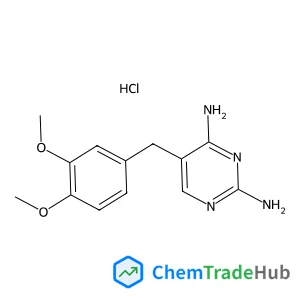
5-(3,4-Dimethoxybenzyl)-2,4-pyrimidinediamine hydrochloride (1:1)
CAS Number:
2507-23-5
Molecular Formula:
C13H17ClN4O2
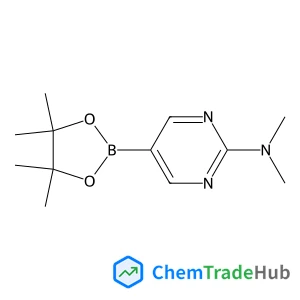
N,N-Dimethyl-5-(4,4,5,5-tetramethyl-1,3,2-dioxaborolan-2-yl)-2-pyrimidinamine
CAS Number:
1032759-30-0
Molecular Formula:
C12H20BN3O2
Recommended Suppliers






Disclaimer
This page provides academic journal information for reference and research purposes only. We are not affiliated with any journal publishers and do not handle publication submissions. For publication-related inquiries, please contact the respective journal publishers directly.
If you notice any inaccuracies in the information displayed, please contact us at support@chemtradehub.com. We will promptly review and address your concerns.