












Unprecedented twofold intramolecular hydroamination in diam(m)ine-dicarboxylatodichloridoplatinum(iv) complexes – ethane-1,2-diaminevs.ammine ligands
Literature Information
Publication Date
2008-01-09
DOI
10.1039/B715680D
Impact Factor
6.222
Authors
Michael R. Reithofer, Mathea S. Galanski, Vladimir B. Arion, Bernhard K. Keppler
View Original
Abstract
Reaction of (OC-6-13)-bis(2Z-3-carboxyacrylato)dichlorido(ethane-1,2-diamine)platinum(IV) and (OC-6-13)-diamminebis(2Z-3-carboxyacrylato)dichloridoplatinum(IV) with propylamine in the presence of 1,1′-carbonyl diimidazole afforded not the expected amides; instead, beside amide formation, a twofold intramolecular attack of the am(m)ine ligand at the CC bonds was observed involving either both (ethane-1,2-diamine) or only one (ammine) coordinated nitrogen atom(s).
Related Literature
Catalytic stereoselective benzylic C–H functionalizations by oxidative C–H activation and organocatalysis
Fides Benfatti, Montse Guiteras Capdevila, Luca Zoli, Elena Benedetto, Pier Giorgio Cozzi
2009-08-18
Communication
DOI: 10.1039/B910185C
Catalytic enantioselective synthesis of indolizino[8,7-b]indole alkaloid derivatives based on the tandem reaction of tertiary enamides
Xin-Ming Xu, Ming Xie, Jiazhu Li, Mei-Xiang Wang
2020-12-10
Research Article
DOI: 10.1039/D0QO01147A
A fluorescent chemodosimeter specific for cysteine: effective discrimination of cysteine from homocysteine
Honglin Li, Jiangli Fan, Jingyun Wang, Maozhong Tian, Jianjun Du, Shiguo Sun, Pingping Sun, Xiaojun Peng
2009-08-20
Communication
DOI: 10.1039/B907511A
Two diamino-substituted lithiocarbanions in one molecule
Ina Kamps, Andreas Mix, Raphael J. F. Berger, Beate Neumann, Hans-Georg Stammler, Norbert W. Mitzel
2009-08-20
Communication
DOI: 10.1039/B909561F
A sensitive and specific electrochemiluminescentl sensor for lead based on DNAzyme
Xi Zhu, Zhenyu Lin, Lifeng Chen, Bin Qiu, Guonan Chen
2009-08-21
Communication
DOI: 10.1039/B911191C
Gold nanoparticles supported on Cs2CO3 as recyclable catalyst system for selective aerobic oxidation of alcohols at room temperature
Babak Karimi, Farhad Kabiri Esfahani
2009-08-25
Communication
DOI: 10.1039/B908964K
An organocatalytic enantioselective ring-reorganization domino sequence of methyleneindolinones with 2-aminomalonates
Zhen-Zhen Xie, Lan Zheng, Zhi-Peng Ye, Zhi-Xiong Deng, Qing-Lan Zhao, Jun-An Xiao, Kai Chen, Hao-Yue Xiang, Xiao-Qing Chen, Hua Yang
2020-12-17
Research Article
DOI: 10.1039/D0QO01364A
You might also like
Compound Q&A
Are there alternatives to 1-(4-Chlorophenyl)-N-hydroxymethanimine (CAS: 3848-36-0) in synthesis?
When considering alternatives to 1-(4-Chlorophenyl)-N-hydroxymethanimine (CAS: 3...
3848-36-01-(4-Chlorophenyl)-N...
Compound Q&A
How should (1R,9S,10S,12S,14E,16S,19R,20R,21S,22R)-3,9,21-Trihydroxy-5,10,12,14,16,20,22-heptamethyl-23,24-dioxatetracyclo[17.3.1.1~6,9~.0~2,7~]tetracosa-2,5,7,14-tetraen-4-one (CAS: 183202-73-5) be stored?
This compound should be stored in a cool, dry place away from direct sunlight. I...
183202-73-5(1R,9S,10S,12S,14E,1...
Compound Q&A
How is 3-(4-Bromophenyl)-5-(2-fluorophenyl)-1,2,4-oxadiazole (CAS: 419553-16-5) typically synthesized?
3-(4-Bromophenyl)-5-(2-fluorophenyl)-1,2,4-oxadiazole is synthesized through a m...
419553-16-53-(4-Bromophenyl)-5-...
Compound Q&A
How is 5-Chloro-2-(4-chlorophenyl)-4-methyl-6-[3-(1-piperidinyl)propoxy]pyrimidine (CAS: 1639220-19-1) typically synthesized?
5-Chloro-2-(4-chlorophenyl)-4-methyl-6-[3-(1-piperidinyl)propoxy]pyrimidine (CAS...
1639220-19-15-Chloro-2-(4-chloro...
Compound Q&A
What industries use 2-Chloro-4-(difluoromethoxy)pyridine (CAS: 1206978-15-5)?
2-Chloro-4-(difluoromethoxy)pyridine is used in the pharmaceutical industry for ...
1206978-15-52-Chloro-4-(difluoro...
Compound Q&A
What regulatory guidelines apply to 3-Chloro-6-methylpyridazine (CAS: 1121-79-5)?
3-Chloro-6-methylpyridazine (CAS: 1121-79-5) is classified under the Globally Ha...
1121-79-53-Chloro-6-methylpyr...
Compound Q&A
Are there alternatives to Methyl 4,5-dimethyl-2-nitrobenzoate in synthesis?
Several alternatives can be used in the synthesis of Methyl 4,5-dimethyl-2-nitro...
90922-74-0Methyl 4,5-dimethyl-...
Compound Q&A
Are there alternatives to (2E,2'E)-3,3'-(1,4-Phenylene)bisacrylaldehyde in synthesis?
Alternatives to (2E,2'E)-3,3'-(1,4-Phenylene)bisacrylaldehyde include other acry...
63405-68-5(2E,2'E)-3,3'-(1,4-P...
Compound Q&A
What is 3-Amino-5-chloropyridin-2-ol hydrochloride (CAS: 1261906-29-9)?
3-Amino-5-chloropyridin-2-ol hydrochloride is an organic compound with the CAS n...
1261906-29-93-Amino-5-chloropyri...
Compound Q&A
What precautions should be taken when handling 6,7-Difluoro-2,3-dihydro-4H-chromen-4-one (CAS: 1092349-93-3)?
When handling 6,7-Difluoro-2,3-dihydro-4H-chromen-4-one, it is essential to wear...
1092349-93-36,7-Difluoro-2,3-dih...
Source Journal
Chemical Communications

CiteScore:
8.6
Self-citation Rate:
4.7%
Articles per Year:
2458
ChemComm publishes urgent research which is of outstanding significance and interest to experts in the field, while also appealing to the journal’s broad chemistry readership. Our communication format is ideally suited to short, urgent studies that are of such importance that they require accelerated publication. Our scope covers all topics in chemistry, and research at the interface of chemistry and other disciplines (such as materials science, nanoscience, physics, engineering and biology) where there is a significant novelty in the chemistry aspects. Major topic areas covered include: Analytical Chemistry Catalysis Chemical Biology and medicinal chemistry Computational Chemistry and Machine Learning Energy and sustainable chemistry Environmental Chemistry Green Chemistry Inorganic Chemistry Materials Chemistry Nanoscience Organic Chemistry Physical Chemistry Polymer Chemistry Supramolecular Chemistry
Recommended Compounds
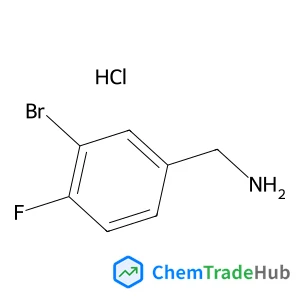
1-(3-Bromo-4-fluorophenyl)methanamine hydrochloride (1:1)
CAS Number:
202865-68-7
Molecular Formula:
C7H8BrClFN
Recommended Suppliers





Disclaimer
This page provides academic journal information for reference and research purposes only. We are not affiliated with any journal publishers and do not handle publication submissions. For publication-related inquiries, please contact the respective journal publishers directly.
If you notice any inaccuracies in the information displayed, please contact us at support@chemtradehub.com. We will promptly review and address your concerns.