












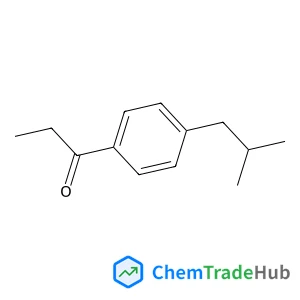
Cu-catalyzed regioselective carbomagnesiation of dienes and enynes with sec- and tert-alkyl Grignard reagents
Literature Information
Publication Date
2008-01-11
DOI
10.1039/B716678H
Impact Factor
6.222
Authors
Hirohisa Todo, Jun Terao, Hideyuki Watanabe, Hitoshi Kuniyasu, Nobuaki Kambe
View Original
Abstract
The carbomagnesiation of dienes and enynes with sec- and tert-alkyl Grignard reagents has been achieved by using copper salts as catalysts.
Related Literature
Efficient synthesis of a hetero[4]rotaxane by a “threading-stoppering-followed-by-clipping” approach
Jun Yin, Chunyan Chi, Jishan Wu
2010-04-08
Paper
DOI: 10.1039/C001343A
A triple-stranded helicate and mesocate from the same metal and ligand
Zhan Zhang, David Dolphin
2009-10-21
Communication
DOI: 10.1039/B913231G
Elaboration and properties of hierarchically structured optical thin films of MIL-101(Cr)
Patricia Horcajada, Christian Serre, Cédric Boissière, David Grosso, Clément Sanchez, Gérard Férey
2009-10-29
Communication
DOI: 10.1039/B915011K
Towards understanding secondary structure transitions: phosphorylation and metal coordination in model peptides
Malgorzata Broncel, Sara C. Wagner, Kerstin Paul, Christian P. R. Hackenberger, Beate Koksch
2010-03-29
Paper
DOI: 10.1039/C001458C
Acid–base properties of functionalised tripodal polyamines and their interaction with nucleotides and nucleic acids
Alejandra Sornosa-Ten, M. Teresa Albelda, Juan C. Frías, Enrique García-España, José M. Llinares, Ana Budimir, Ivo Piantanida
2010-03-26
Paper
DOI: 10.1039/C000124D
Salt, pH and thermoresponsive supramolecular hydrogel of N-(4-n-tetradecyloxybenzoyl)-l-carnosine
Amrita Pal, Saurabh Shrivastava, Joykrishna Dey
2009-10-06
Communication
DOI: 10.1039/B914665B
Silver-catalysed protodecarboxylation of carboxylic acids
Lukas J. Gooßen, Christophe Linder, Nuria Rodríguez, Paul P. Lange, Andreas Fromm
2009-10-28
Communication
DOI: 10.1039/B912509D
Organocatalytic kinetic resolution via intramolecular aldol reactions: Enantioselective synthesis of both enantiomers of chiral cyclohexenones
Liujuan Chen, Sanzhong Luo, Jiuyuan Li, Xin Li, Jin-Pei Cheng
2010-04-01
Paper
DOI: 10.1039/B927343C
Asymmetric synthesis of a tricyclic benzofuran motif: a privileged core structure in biologically active molecules
Henrik Sundén
2010-09-08
Communication
DOI: 10.1039/C0OB00331J
New facets of an old ligand: titanium and zirconium complexes of phenylenediamine bis(phenolate) in lactide polymerisation catalysis
Ayellet L. Zelikoff, Jacob Kopilov, Israel Goldberg, Geoffrey W. Coates, Moshe Kol
2009-10-02
Communication
DOI: 10.1039/B915211C
You might also like
Compound Q&A
What industries use (1R,3S)-1,3-Cyclopentanediol (CAS: 16326-97-9)?
(1R,3S)-1,3-Cyclopentanediol finds applications in various industries. In the ph...
16326-97-9(1R,3S)-1,3-Cyclopen...
Compound Q&A
What precautions should be taken when handling N'-[4-(Dimethylamino)phenyl]-N,N-dimethyl-1,4-benzenediamine (CAS: 637-31-0)?
When handling N'-[4-(Dimethylamino)phenyl]-N,N-dimethyl-1,4-benzenediamine, it i...
637-31-0N'-[4-(Dimethylamino...
Compound Q&A
Are there alternatives to 5-(2,4-Difluorophenyl)-2-methoxypyrimidine (CAS: 1352318-16-1) in synthesis?
There are several alternatives to 5-(2,4-Difluorophenyl)-2-methoxypyrimidine in ...
1352318-16-15-(2,4-Difluoropheny...
Compound Q&A
What regulatory guidelines apply to 1-(3-Methoxyphenoxy)propan-2-ol (CAS: 382141-68-6)?
1-(3-Methoxyphenoxy)propan-2-ol (CAS: 382141-68-6) must comply with the Globally...
382141-68-61-(3-Methoxyphenoxy)...
Compound Q&A
Is Tetrodotoxin Citrate (CAS: 18660-81-6) safe?
Tetrodotoxin Citrate is extremely dangerous and should be handled with extreme c...
18660-81-6Tetrodotoxin Citrate
Compound Q&A
What are the main uses of 2-Methyl-2-propanyl [(1R,3S)-3-hydroxycyclopentyl]carbamate (CAS: 225641-84-9)?
2-Methyl-2-propanyl [(1R,3S)-3-hydroxycyclopentyl]carbamate (CAS: 225641-84-9) i...
225641-84-92-Methyl-2-propanyl ...
Compound Q&A
How should waste containing 4-(2-Hydroxyhexafluoroisopropyl)Benzoic Acid (CAS: 16261-80-6) be handled?
Waste containing 4-(2-Hydroxyhexafluoroisopropyl)Benzoic Acid (CAS: 16261-80-6) ...
16261-80-64-(2-Hydroxyhexafluo...
Compound Q&A
How is 2-Methyl-2-proanyl {(2S)-1-[(benzyloxy)amino]-3-hydroxy-3-methyl-1-oxo-2-butanyl}carbamate (CAS: 102507-19-7) typically synthesized?
2-Methyl-2-proanyl {(2S)-1-[(benzyloxy)amino]-3-hydroxy-3-methyl-1-oxo-2-butanyl...
102507-19-72-Methyl-2-propanyl ...
Compound Q&A
What is Benzeneethanamine, α-ethyl-, hydrochloride (1:1) (CAS: 20735-15-3)?
Benzeneethanamine, α-ethyl-, hydrochloride (1:1) is an organic compound with the...
20735-15-3Benzeneethanamine, α...
Compound Q&A
Are there alternatives to 3-{(E)-[4-(Dimethylamino)phenyl]diazenyl}benzoic acid (CAS: 20691-84-3) in synthesis?
In the synthesis of compounds similar to 3-{(E)-[4-(Dimethylamino)phenyl]diazeny...
20691-84-33-{(E)-[4-(Dimethyla...
Source Journal
Chemical Communications

CiteScore:
8.6
Self-citation Rate:
4.7%
Articles per Year:
2458
ChemComm publishes urgent research which is of outstanding significance and interest to experts in the field, while also appealing to the journal’s broad chemistry readership. Our communication format is ideally suited to short, urgent studies that are of such importance that they require accelerated publication. Our scope covers all topics in chemistry, and research at the interface of chemistry and other disciplines (such as materials science, nanoscience, physics, engineering and biology) where there is a significant novelty in the chemistry aspects. Major topic areas covered include: Analytical Chemistry Catalysis Chemical Biology and medicinal chemistry Computational Chemistry and Machine Learning Energy and sustainable chemistry Environmental Chemistry Green Chemistry Inorganic Chemistry Materials Chemistry Nanoscience Organic Chemistry Physical Chemistry Polymer Chemistry Supramolecular Chemistry
Recommended Compounds
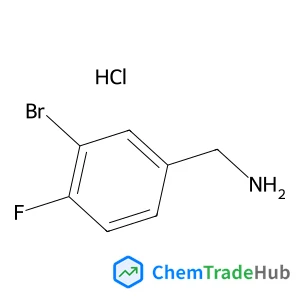
1-(3-Bromo-4-fluorophenyl)methanamine hydrochloride (1:1)
CAS Number:
202865-68-7
Molecular Formula:
C7H8BrClFN
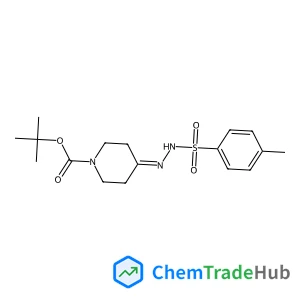
tert-Butyl 4-(2-(p-Tolylsulfonyl)hydrazono)piperidine-1-carboxylate
CAS Number:
1046478-89-0
Molecular Formula:
C17H25N3O4S
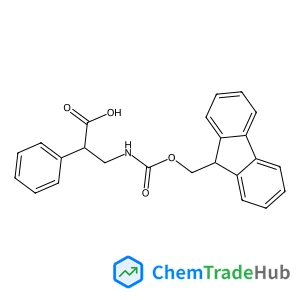
(S)-3-((((9H-Fluoren-9-yl)methoxy)carbonyl)amino)-2-phenylpropanoic acid
CAS Number:
1217663-60-9
Molecular Formula:
C24H21NO4
Recommended Suppliers




Disclaimer
This page provides academic journal information for reference and research purposes only. We are not affiliated with any journal publishers and do not handle publication submissions. For publication-related inquiries, please contact the respective journal publishers directly.
If you notice any inaccuracies in the information displayed, please contact us at support@chemtradehub.com. We will promptly review and address your concerns.