












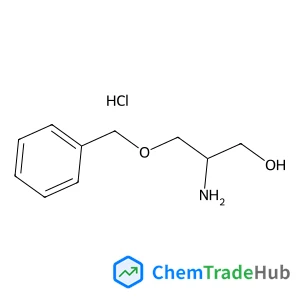
(R)-2-amino-3-(benzyloxy)propan-1-ol hydrochloride
CAS Number:
58577-95-0
Molecular Formula:
C10H16ClNO2
Zhongneng Zhou, Xueli Wang
N6-Methyladenine (6MeAde), the most abundant internal modification in mRNA, has proved to be an important epigenetic biomarker for gene regulation just like 5-methylcytosine in DNA. Recently, a unique UV-induced response of 6MeAde was reported, which makes it instructive and intriguing to reveal the excited state relaxation mechanism in this methylated adenine and its derivatives. In this work, we investigated 6MeAde and its ribose species N6-methyladenosine (6MeAdo) by using femtosecond time-resolved fluorescence up-conversion (FUC) and broadband transient absorption (TA) spectroscopy. Both 6MeAde and 6MeAdo exhibit a hundreds of femtoseconds lifetime, which originates from the efficient depletion of the ππ* (La) state. A several picoseconds lifetime is also observed and it should be attributed to the ππ* (Lb) state. Surprisingly, dual peak fluorescence emission is observed in 6MeAde and the long wavelength emission is ascribed to an intramolecular charge transfer (ICT) state. The lifetime of this ICT state is determined to be 107 ps. The kinetic isotope effect shows that the ICT state is closely associated with the solute–solvent H-bonding in aqueous solution. In 6MeAdo, the ICT state is apparently quenched and adenine-like excited state dynamics suggests that DNA/RNA containing such modification could still possess excellent photostability under UV irradiation. Our results contain an important insight for understanding excited state properties in epigenetic modified DNA/RNA.
Jayakumar Anjali, Vishal K. Jose, Jong-Min Lee
DOI: 10.1039/C9TA02525A
Yue Zhao, Juan Bai, Xin-Ru Wu, Pei Chen, Pu-Jun Jin, Hong-Chang Yao, Yu Chen
DOI: 10.1039/C9TA05334D
Sarah Di Nonno, Roland Ulber
DOI: 10.1039/D1AN00025J
Xiaoping Tao, Na Ta, Jianming Li, Xu Jin, Rengui Li, Can Li
DOI: 10.1039/C9TA03090E
Haiwei Li, Wingkei Ho, Shun Cheng Lee
DOI: 10.1039/C9TA03504D
Xingguang Xu, Bobby Pejcic, Charles Heath, Colin D. Wood
DOI: 10.1039/C8TA07760F
Nicole M. Ralbovsky, Randal J. Soukup, Justin P. Lomont, Mackenzie L. Lauro, Amanda Gulasarian, Anumita Saha-Shah, Michael A. Winters, Douglas D. Richardson, Sheng-Ching Wang, Ian Mangion, Joseph P. Smith
DOI: 10.1039/D1AN01797G
Katja A. Hall, R. Kenneth Marcus
DOI: 10.1039/C9JA00325H
Li Jin, Qingyuan Hu, Kun Yu, Yongyong Zhuang, Giuseppe Viola, Zhuo Xu, Xiaoyong Wei
DOI: 10.1039/C8TA10075F
Yu-Hui Gong, Juan Yang, Feng-Yi Cao, Jing Zhang, Han Cheng, Ren-Xi Zhuo, Xian-Zheng Zhang
DOI: 10.1039/C3TB20073F
Ethyl 4-chlorothieno[2,3-b]pyridine-5-carboxylate (CAS: 59713-58-5) can be synth...
5-Methyl-1H-indole-3-carbaldehyde (CAS: 52562-50-2) is subject to various regula...
(1,3-Dimethyl-2,4-dioxo-1,2,3,4-tetrahydro-5-pyrimidinyl)boronic acid is a white...
Waste containing Sulfocostunolide A (CAS: 1016983-51-9) should be handled with c...
When handling Murraxocin (CAS: 88478-44-8), ensure proper personal protective eq...
Formvar (CAS: 63148-64-1) is an alkyd resin characterized by a high molecular we...
(S)-4-benzyl-2-((benzyloxy)methyl)morpholine is generally safe when handled with...
Methyl 1-(5-bromo-2-pyrimidinyl)cyclopropanecarboxylate (CAS: 1447607-69-3) is p...
2-Methyl-1-phenyl-1-propanamine hydrochloride (CAS: 24290-47-9) is generally con...
3-(4-Bromophenyl)-2-methylpropanoic acid is synthesized through a multi-step pro...

Physical Chemistry Chemical Physics (PCCP) is an international journal co-owned by 19 physical chemistry and physics societies from around the world. This journal publishes original, cutting-edge research in physical chemistry, chemical physics and biophysical chemistry. To be suitable for publication in PCCP, articles must include significant innovation and/or insight into physical chemistry; this is the most important criterion that reviewers and Editors will judge against when evaluating submissions. The journal has a broad scope and welcomes contributions spanning experiment, theory, computation and data science. Topical coverage includes spectroscopy, dynamics, kinetics, statistical mechanics, thermodynamics, electrochemistry, catalysis, surface science, quantum mechanics, quantum computing and machine learning. Interdisciplinary research areas such as polymers and soft matter, materials, nanoscience, energy, surfaces/interfaces, and biophysical chemistry are welcomed if they demonstrate significant innovation and/or insight into physical chemistry. Joined experimental/theoretical studies are particularly appreciated when complementary and based on up-to-date approaches.
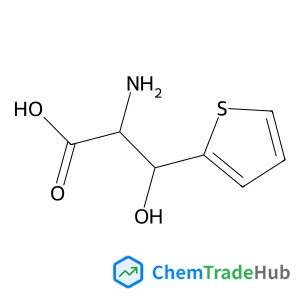
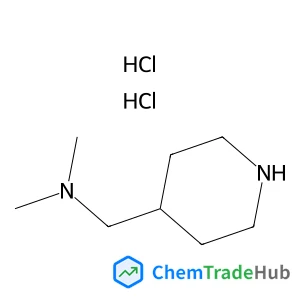
![Sodium 6-amino-3-[(E)-{4-[(E)-(4-aminophenyl)diazenyl]-2-methoxy-5-methylphenyl}diazenyl]-4-hydroxy-2-naphthalenesulfonate structure](https://static.chemtradehub.com/structs/294/2945-96-2-092f.webp "Sodium 6-amino-3-[(E)-{4-[(E)-(4-aminophenyl)diazenyl]-2-methoxy-5-methylphenyl}diazenyl]-4-hydroxy-2-naphthalenesulfonate structure")
![4-[(1-Methyl-1H-pyrrol-2-yl)methylene]-1,3(2H,4H)-isoquinolinedione structure](https://static.chemtradehub.com/structs/110/1104546-89-5-a600.webp "4-[(1-Methyl-1H-pyrrol-2-yl)methylene]-1,3(2H,4H)-isoquinolinedione structure")



