












Spatial separation of dual-cocatalysts on one-dimensional semiconductors for photocatalytic hydrogen production
Literature Information
Publication Date
2019-06-19
DOI
10.1039/C9TA03090E
Impact Factor
12.732
Authors
Xiaoping Tao, Na Ta, Jianming Li, Xu Jin, Rengui Li, Can Li
View Original
Abstract
Light-driven hydrogen production using semiconductor photocatalysts has gained much interest owing to their ability to store sunlight in the form of portable chemical fuel. The spatial separation of dual-cocatalysts onto different surfaces has been considered as a useful strategy for fabricating dynamic particulate photocatalysts to hinder charge recombination and reverse reactions. Herein, using one-dimensional (1D) semiconductors, CdSe nanorods as an example, we experimentally demonstrated that photogenerated electrons and holes can be effectively separated along different directions of a 1D semiconductor. Following this phenomenon, the reduction cocatalyst Pt and oxidation cocatalyst PdS were spatially deposited on different sites via an in situ photodeposition process, which drastically enhanced the photocatalytic activity for hydrogen production to more than 20 times, thus exhibiting an extremely high apparent quantum efficiency (AQE) of ∼45% at 420 nm. Further studies using photoluminescence spectroscopy indicated that the spatially separated dual-cocatalysts efficiently captured the photogenerated electrons and holes migrating to the surface, which greatly decreased the recombination of charge carriers and consequently led to superior photocatalytic performances. Our work provides an effective strategy for the rational construction of highly efficient photocatalyst systems based on (quasi) 1D semiconductors for artificial solar energy conversion.
Related Literature
Active droplet-array (ADA) microfluidics enables multiplexed complex bioassays for point of care testing
Zhujun Li, Feng Xiao
2018-02-05
Communication
DOI: 10.1039/C7CC09377B
Electroanalytical overview: the pungency of chile and chilli products determined via the sensing of capsaicinoids
Robert D. Crapnell, Craig E. Banks
2021-03-11
Critical Review
DOI: 10.1039/D1AN00086A
Ambient mass spectrometry of covalently bound organic monolayers
Radostina K. Manova, Frank W. Claassen, Teris A. van Beek
2012-12-11
Communication
DOI: 10.1039/C2CC37605A
Assembly of Zn/Cd coordination polymers containing helixes or polycatenane structures tuned by the tri-pyridyl–bis-amide ligands with different spacer: syntheses, structures, photoluminescent and photocatalytic properties
Xiuli Wang, Jingjing Huang, Lianli Liu, Guocheng Liu, Hongyan Lin, Juwen Zhang, Naili Chen, Yun Qu
2013-01-07
Paper
DOI: 10.1039/C2CE26892B
Isolation and structural characterization of a titanacyclopropane as key intermediate in the double aryl Grignard addition to 2-(arylethynyl)pyridine derivatives
Francesco Foschi, Torsten Roth, Markus Enders, Hubert Wadepohl, Eric Clot, Lutz H. Gade
2018-02-05
Communication
DOI: 10.1039/C8CC00478A
A universal nonfullerene electron acceptor matching with different band-gap polymer donors for high-performance polymer solar cells
Zhenghui Luo, Guanghao Li, Wei Gao, Kailong Wu, Zhi-Guo Zhang, Beibei Qiu, Haijun Bin, Lingwei Xue, Feng Liu, Yongfang Li, Chuluo Yang
2018-03-20
Paper
DOI: 10.1039/C7TA11339K
A carbon dot doped lanthanide coordination polymer nanocomposite as the ratiometric fluorescent probe for the sensitive detection of alkaline phosphatase activity
Weidi Sun, Xue Han, Fengli Qu, Rong-Mei Kong, Zilong Zhao
2021-04-01
Paper
DOI: 10.1039/D1AN00218J
Rational design of a boron-dipyrromethene-based fluorescent probe for detecting Pd2+ sensitively and selectively in aqueous media
Yannan Li, Li Yang, Mengqi Du, Guanjun Chang
2018-11-21
Paper
DOI: 10.1039/C8AN01155A
Low temperature surfactant-free synthesis of monodisperse β-NaGdF4 nanorods by a novel ion-exchange process and their luminescence properties
Lingfei Zhao, Ying Tao, Hongpeng You
2017-03-13
Paper
DOI: 10.1039/C7CE00097A
You might also like
Compound Q&A
How is Ethyl 4-chlorothieno[2,3-b]pyridine-5-carboxylate (CAS: 59713-58-5) typically synthesized?
Ethyl 4-chlorothieno[2,3-b]pyridine-5-carboxylate (CAS: 59713-58-5) can be synth...
59713-58-5Ethyl 4-chlorothieno...
Compound Q&A
What regulatory guidelines apply to 5-Methyl-1H-indole-3-carbaldehyde (CAS: 52562-50-2)?
5-Methyl-1H-indole-3-carbaldehyde (CAS: 52562-50-2) is subject to various regula...
52562-50-25-Methyl-1H-indole-3...
Compound Q&A
What are the physical and chemical properties of (1,3-Dimethyl-2,4-dioxo-1,2,3,4-tetrahydro-5-pyrimidinyl)boronic acid (CAS: 223418-73-3)?
(1,3-Dimethyl-2,4-dioxo-1,2,3,4-tetrahydro-5-pyrimidinyl)boronic acid is a white...
223418-73-3(1,3-Dimethyl-2,4-di...
Compound Q&A
How should waste containing Sulfocostunolide A (CAS: 1016983-51-9) be handled?
Waste containing Sulfocostunolide A (CAS: 1016983-51-9) should be handled with c...
1016983-51-9Sulfocostunolide A
Compound Q&A
What precautions should be taken when handling Murraxocin (CAS: 88478-44-8)?
When handling Murraxocin (CAS: 88478-44-8), ensure proper personal protective eq...
88478-44-8Murraxocin
Compound Q&A
What are the physical and chemical properties of Formvar (CAS: 63148-64-1)?
Formvar (CAS: 63148-64-1) is an alkyd resin characterized by a high molecular we...
63148-64-1Formvar(R)
Compound Q&A
Is (S)-4-benzyl-2-((benzyloxy)methyl)morpholine (CAS: 205242-66-6) safe?
(S)-4-benzyl-2-((benzyloxy)methyl)morpholine is generally safe when handled with...
205242-66-6(S)-4-benzyl-2-((ben...
Compound Q&A
What industries use Methyl 1-(5-bromo-2-pyrimidinyl)cyclopropanecarboxylate (CAS: 1447607-69-3)?
Methyl 1-(5-bromo-2-pyrimidinyl)cyclopropanecarboxylate (CAS: 1447607-69-3) is p...
1447607-69-3Methyl 1-(5-bromo-2-...
Compound Q&A
Is 2-Methyl-1-phenyl-1-propanamine hydrochloride (CAS: 24290-47-9) safe?
2-Methyl-1-phenyl-1-propanamine hydrochloride (CAS: 24290-47-9) is generally con...
24290-47-92-Methyl-1-phenyl-1-...
Compound Q&A
How is 3-(4-Bromophenyl)-2-methylpropanoic acid (CAS: 66735-01-1) typically synthesized?
3-(4-Bromophenyl)-2-methylpropanoic acid is synthesized through a multi-step pro...
66735-01-13-(4-Bromophenyl)-2-...
Source Journal
Journal of Materials Chemistry A

CiteScore:
19.5
Self-citation Rate:
4.7%
Articles per Year:
2211
Journal of Materials Chemistry A, B & C cover high quality studies across all fields of materials chemistry. The journals focus on those theoretical or experimental studies that report new understanding, applications, properties and synthesis of materials. The journals have a strong history of publishing quality reports of interest to interdisciplinary communities and providing an efficient and rigorous service through peer review and publication. The journals are led by an international team of Editors-in-Chief and Associate Editors who are all active researchers in their fields. Journal of Materials Chemistry A, B & C are separated by the intended application of the material studied. Broadly, applications in energy and sustainability are of interest to Journal of Materials Chemistry A, applications in biology and medicine are of interest to Journal of Materials Chemistry B, and applications in optical, magnetic and electronic devices are of interest to Journal of Materials Chemistry C. More than one Journal of Materials Chemistry journal may be suitable for certain fields and researchers are encouraged to submit their paper to the journal that they feel best fits for their particular article. Example topic areas within the scope of Journal of Materials Chemistry A are listed below. This list is neither exhaustive nor exclusive. Artificial photosynthesis Batteries Carbon dioxide conversion Catalysis Fuel cells Gas capture/separation/storage Green/sustainable materials Hydrogen generation Hydrogen storage Photocatalysis Photovoltaics Self-cleaning materials Self-healing materials Sensors Supercapacitors Thermoelectrics Water splitting Water treatment
Recommended Compounds
![2-Methyl-2-propanyl 1,6-diazaspiro[3.4]octane-6-carboxylate structure](https://static.chemtradehub.com/structs/115/1158749-79-1-81ee.webp "2-Methyl-2-propanyl 1,6-diazaspiro[3.4]octane-6-carboxylate structure")
2-Methyl-2-propanyl 1,6-diazaspiro[3.4]octane-6-carboxylate
CAS Number:
1158749-79-1
Molecular Formula:
C11H20N2O2
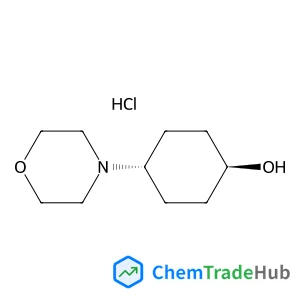
trans-4-(4-Morpholinyl)cyclohexanol hydrochloride (1:1)
CAS Number:
1588441-09-1
Molecular Formula:
C10H20ClNO2
![2-(Methylsulfonyl)-2,4,5,6-tetrahydropyrrolo[3,4-c]pyrazole structure](https://static.chemtradehub.com/structs/122/1226781-80-1-09d5.webp "2-(Methylsulfonyl)-2,4,5,6-tetrahydropyrrolo[3,4-c]pyrazole structure")
2-(Methylsulfonyl)-2,4,5,6-tetrahydropyrrolo[3,4-c]pyrazole
CAS Number:
1226781-80-1
Molecular Formula:
C6H9N3O2S
![Sodium 6-amino-3-[(E)-{4-[(E)-(4-aminophenyl)diazenyl]-2-methoxy-5-methylphenyl}diazenyl]-4-hydroxy-2-naphthalenesulfonate structure](https://static.chemtradehub.com/structs/294/2945-96-2-092f.webp "Sodium 6-amino-3-[(E)-{4-[(E)-(4-aminophenyl)diazenyl]-2-methoxy-5-methylphenyl}diazenyl]-4-hydroxy-2-naphthalenesulfonate structure")
Sodium 6-amino-3-[(E)-{4-[(E)-(4-aminophenyl)diazenyl]-2-methoxy-5-methylphenyl}diazenyl]-4-hydroxy-2-naphthalenesulfonate
CAS Number:
2945-96-2
Molecular Formula:
C24H21N6NaO5S
Recommended Suppliers





Disclaimer
This page provides academic journal information for reference and research purposes only. We are not affiliated with any journal publishers and do not handle publication submissions. For publication-related inquiries, please contact the respective journal publishers directly.
If you notice any inaccuracies in the information displayed, please contact us at support@chemtradehub.com. We will promptly review and address your concerns.