












Constructing Z-scheme SnO2/N-doped carbon quantum dots/ZnSn(OH)6 nanohybrids with high redox ability for NOx removal under VIS-NIR light
Literature Information
Publication Date
2019-06-04
DOI
10.1039/C9TA03504D
Impact Factor
12.732
Authors
Haiwei Li, Wingkei Ho, Shun Cheng Lee
View Original
Abstract
Photocatalysts with a wide optical response range and high oxidation ability are essential for their application in air pollution control. In this study, mesoporous SnO2/NCDs/ZnSn(OH)6 (NCDs = N-doped carbon quantum dots) Z-scheme nanohybrids were synthesized for the first time using an in situ strategy. The ternary Z-scheme catalysts showed significantly enhanced visible and near-infrared light-driven photocatalytic activities for nitric oxide (NO) removal (37%), while the toxic nitrogen dioxide (NO2) intermediate was suppressed completely. The Z-schematic transfer mechanism was confirmed through characterizing the intrinsic properties of the as-prepared sample. The NCDs, as an electron transport bridge, improve both the broad-spectrum light-harvesting ability and the rapid separation of photoinduced electrons. Compared with the binary counterparts, the SnO2/NCDs/ZnSn(OH)6 ternary nanohybrid can generate more reactive oxygen-containing radicals during the photocatalytic reaction, owing to its ability to supply sufficient free surface OH. This study provides insights into the heterogeneous photocatalytic Z-scheme reaction mechanism.
Related Literature
Two-dimensional IV–VA3 monolayers with enhanced charge mobility for high-performance solar cells
Meiqiu Xie, Yang Li, Xuhai Liu, Jianping Yang, Hui Li
2022-08-30
Communication
DOI: 10.1039/D2CP03269D
Excited state dynamics of normal dithienylethene molecules either isolated or deposited on an argon cluster
Aude Lietard, Giovanni Piani, Rodolphe Pollet, Jean-Michel Mestdagh
2022-04-06
Paper
DOI: 10.1039/D1CP05729D
Reaction dynamics of Diels–Alder reactions from machine learned potentials
Tom A. Young, Tristan Johnston-Wood, Hanwen Zhang, Fernanda Duarte
2022-08-10
Paper
DOI: 10.1039/D2CP02978B
Multi-channel photodissociation dynamics of 14N2 in its b′ 1Σ +u(ν = 20) state
2022-05-04
Paper
DOI: 10.1039/D2CP01148D
H atom scattering from W(110): A benchmark for molecular dynamics with electronic friction.
Oihana Galparsoro, Pascal Larrégaray
2022-08-25
Paper
DOI: 10.1039/D2CP01850K
Semi-empirical and linear-scaling DFT methods to characterize duplex DNA and G-quadruplexes in the presence of interacting small molecules
Sawssen Elleuchi, Khaled Jarraya
2022-03-25
Paper
DOI: 10.1039/D2CP00214K
A new ratiometric switch “two-way” detects hydrazine and hypochlorite via a “dye-release” mechanism with a PBMC bioimaging study
Lakshman Patra, Partha Pratim Das, Kakali Ghoshal, Saswati Gharami, James W. Walton, Maitree Bhattacharyya, Tapan Kumar Mondal
2022-09-02
Paper
DOI: 10.1039/D2CP02482A
Recent advances in dendrite-free lithium metal anodes for high-performance batteries
Xiang Zhang, Chunwen Sun
2022-08-05
Review Article
DOI: 10.1039/D2CP01655A
In silico capture of noble gas atoms with a light atom molecule
Stefan Mebs, Jens Beckmann
2022-08-15
Paper
DOI: 10.1039/D2CP02517E
You might also like
Compound Q&A
How is Ethyl 4-chlorothieno[2,3-b]pyridine-5-carboxylate (CAS: 59713-58-5) typically synthesized?
Ethyl 4-chlorothieno[2,3-b]pyridine-5-carboxylate (CAS: 59713-58-5) can be synth...
59713-58-5Ethyl 4-chlorothieno...
Compound Q&A
What regulatory guidelines apply to 5-Methyl-1H-indole-3-carbaldehyde (CAS: 52562-50-2)?
5-Methyl-1H-indole-3-carbaldehyde (CAS: 52562-50-2) is subject to various regula...
52562-50-25-Methyl-1H-indole-3...
Compound Q&A
What are the physical and chemical properties of (1,3-Dimethyl-2,4-dioxo-1,2,3,4-tetrahydro-5-pyrimidinyl)boronic acid (CAS: 223418-73-3)?
(1,3-Dimethyl-2,4-dioxo-1,2,3,4-tetrahydro-5-pyrimidinyl)boronic acid is a white...
223418-73-3(1,3-Dimethyl-2,4-di...
Compound Q&A
How should waste containing Sulfocostunolide A (CAS: 1016983-51-9) be handled?
Waste containing Sulfocostunolide A (CAS: 1016983-51-9) should be handled with c...
1016983-51-9Sulfocostunolide A
Compound Q&A
What precautions should be taken when handling Murraxocin (CAS: 88478-44-8)?
When handling Murraxocin (CAS: 88478-44-8), ensure proper personal protective eq...
88478-44-8Murraxocin
Compound Q&A
What are the physical and chemical properties of Formvar (CAS: 63148-64-1)?
Formvar (CAS: 63148-64-1) is an alkyd resin characterized by a high molecular we...
63148-64-1Formvar(R)
Compound Q&A
Is (S)-4-benzyl-2-((benzyloxy)methyl)morpholine (CAS: 205242-66-6) safe?
(S)-4-benzyl-2-((benzyloxy)methyl)morpholine is generally safe when handled with...
205242-66-6(S)-4-benzyl-2-((ben...
Compound Q&A
What industries use Methyl 1-(5-bromo-2-pyrimidinyl)cyclopropanecarboxylate (CAS: 1447607-69-3)?
Methyl 1-(5-bromo-2-pyrimidinyl)cyclopropanecarboxylate (CAS: 1447607-69-3) is p...
1447607-69-3Methyl 1-(5-bromo-2-...
Compound Q&A
Is 2-Methyl-1-phenyl-1-propanamine hydrochloride (CAS: 24290-47-9) safe?
2-Methyl-1-phenyl-1-propanamine hydrochloride (CAS: 24290-47-9) is generally con...
24290-47-92-Methyl-1-phenyl-1-...
Compound Q&A
How is 3-(4-Bromophenyl)-2-methylpropanoic acid (CAS: 66735-01-1) typically synthesized?
3-(4-Bromophenyl)-2-methylpropanoic acid is synthesized through a multi-step pro...
66735-01-13-(4-Bromophenyl)-2-...
Source Journal
Journal of Materials Chemistry A

CiteScore:
19.5
Self-citation Rate:
4.7%
Articles per Year:
2211
Journal of Materials Chemistry A, B & C cover high quality studies across all fields of materials chemistry. The journals focus on those theoretical or experimental studies that report new understanding, applications, properties and synthesis of materials. The journals have a strong history of publishing quality reports of interest to interdisciplinary communities and providing an efficient and rigorous service through peer review and publication. The journals are led by an international team of Editors-in-Chief and Associate Editors who are all active researchers in their fields. Journal of Materials Chemistry A, B & C are separated by the intended application of the material studied. Broadly, applications in energy and sustainability are of interest to Journal of Materials Chemistry A, applications in biology and medicine are of interest to Journal of Materials Chemistry B, and applications in optical, magnetic and electronic devices are of interest to Journal of Materials Chemistry C. More than one Journal of Materials Chemistry journal may be suitable for certain fields and researchers are encouraged to submit their paper to the journal that they feel best fits for their particular article. Example topic areas within the scope of Journal of Materials Chemistry A are listed below. This list is neither exhaustive nor exclusive. Artificial photosynthesis Batteries Carbon dioxide conversion Catalysis Fuel cells Gas capture/separation/storage Green/sustainable materials Hydrogen generation Hydrogen storage Photocatalysis Photovoltaics Self-cleaning materials Self-healing materials Sensors Supercapacitors Thermoelectrics Water splitting Water treatment
Recommended Compounds
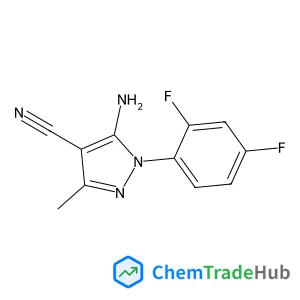
5-Amino-1-(2,4-difluorophenyl)-3-methyl-1H-pyrazole-4-carbonitrile
CAS Number:
1020057-92-4
Molecular Formula:
C11H8F2N4
Recommended Suppliers





Disclaimer
This page provides academic journal information for reference and research purposes only. We are not affiliated with any journal publishers and do not handle publication submissions. For publication-related inquiries, please contact the respective journal publishers directly.
If you notice any inaccuracies in the information displayed, please contact us at support@chemtradehub.com. We will promptly review and address your concerns.