












Attenuated total reflection Fourier-transform infrared spectral discrimination in human bodily fluids of oesophageal transformation to adenocarcinoma
Literature Information
Publication Date
2019-10-31
DOI
10.1039/C9AN01749F
Impact Factor
4.616
Authors
Ishaan Maitra, Camilo L. M. Morais, Katherine M. Ashton, Ravindra S. Date, Francis L. Martin
View Original
Abstract
Diagnostic tools for the detection of early-stage oesophageal adenocarcinoma (OAC) are urgently needed. Our aim was to develop an accurate and inexpensive method using biofluids (plasma, serum, saliva or urine) for detecting oesophageal stages through to OAC (squamous; inflammatory; Barrett's; low-grade dysplasia; high-grade dysplasia; OAC) using attenuated total reflection Fourier-transform infrared (ATR-FTIR) spectroscopy. ATR-FTIR spectroscopy coupled with variable selection methods, with successive projections or genetic algorithms (GA) combined with quadratic discriminant analysis (QDA) were employed to identify spectral biomarkers in biofluids for accurate diagnosis in a hospital setting of different stages through to OAC. Quality metrics (Accuracy, Sensitivity, Specificity and F-score) and biomarkers of disease were computed for each model. For plasma, GA-QDA models using 15 wavenumbers achieved 100% classification for four classes. For saliva, PCA-QDA models achieved 100% for the inflammatory stage and high-quality metrics for other classes. For serum, GA-QDA models achieved 100% performance for the OAC stage using 13 wavenumbers. For urine, PCA-QDA models achieved 100% performance for all classes. Selected wavenumbers using a Student's t-test (95% confidence interval) identified a differentiation of the stages on each biofluid: plasma (929 cm−1 to 1431 cm−1, associated with DNA/RNA and proteins); saliva (1000 cm−1 to 1150 cm−1, associated with DNA/RNA region); serum (1435 cm−1 to 1573 cm−1, associated with methyl groups of proteins and Amide II absorption); and, urine (1681 cm−1 to 1777 cm−1, associated with a high frequency vibration of an antiparallel β-sheet of Amide I and stretching vibration of lipids). Our methods have demonstrated excellent efficacy for a rapid, cost-effective method of diagnosis for specific stages to OAC. These findings suggest a potential diagnostic tool for oesophageal cancer and could be translated into clinical practice.
Related Literature
Internal conversion outcompetes autodetachment from resonances in the deprotonated tetracene anion continuum
James N. Bull, Christopher W. West, Jan R. R. Verlet
2015-11-18
Paper
DOI: 10.1039/C5CP05388A
First principles study of organic sensitizers for dye sensitized solar cells: effects of anchoring groups on optoelectronic properties and dye aggregation
Santhanamoorthi Nachimuthu, Wei-Chieh Chen, Jyh-Chiang Jiang
2015-11-27
Paper
DOI: 10.1039/C5CP04877J
Fluorescence of N-acylated dansylamide with a long hydrophobic tail: sensitive response to premicellar aggregation of sodium deoxycholate
Alok Kumar Tripathi, Monalisa Mohapatra, Ashok Kumar Mishra
2015-10-12
Paper
DOI: 10.1039/C5CP04263A
Single water solvation dynamics in the 4-aminobenzonitrile–water cluster cation revealed by picosecond time-resolved infrared spectroscopy
Mitsuhiko Miyazaki, Takashi Nakamura, Matthias Wohlgemuth, Roland Mitrić, Otto Dopfer, Masaaki Fujii
2015-10-08
Paper
DOI: 10.1039/C5CP05400A
Fe– and Co–P4-embedded graphenes as electrocatalysts for the oxygen reduction reaction: theoretical insights
Liyan Feng, Yuejie Liu, Jingxiang Zhao
2015-10-22
Paper
DOI: 10.1039/C5CP05551B
Programmable diode/resistor-like behavior of nanostructured vanadium pentoxide xerogel thin film
Zhenni Wan, Robert B. Darling, M. P. Anantram
2015-10-26
Communication
DOI: 10.1039/C5CP04755B
Facile synthesis of highly conductive sulfur-doped reduced graphene oxide sheets
Jitao Li, Gangyi Zhu, Junfeng Lu, Yueyue Wang, Zengliang Shi, Chunxiang Xu
2015-11-20
Paper
DOI: 10.1039/C5CP05475C
Unveiling the peculiar hydrogen bonding behavior of solvated N-heterocyclic carbenes
2015-11-11
Paper
DOI: 10.1039/C5CP05369B
You might also like
Compound Q&A
How should waste containing 6-Chloro-5-(2'-hydroxy-3'-methoxy-4-biphenylyl)-3-(3-methoxyphenyl)-1H-pyrrolo[3,2-d]pyrimidine-2,4(3H,5H)-dione (CAS: 1346607-05-3) be handled?
Waste containing 6-Chloro-5-(2'-hydroxy-3'-methoxy-4-biphenylyl)-3-(3-methoxyphe...
1346607-05-36-Chloro-5-(2'-hydro...
Compound Q&A
What are the main uses of (3alpha,5alpha)-3-Hydroxypregnane-11,20-dione (CAS: 23930-19-0)?
(3alpha,5alpha)-3-Hydroxypregnane-11,20-dione is primarily used in the pharmaceu...
23930-19-0(3alpha,5alpha)-3-Hy...
Compound Q&A
What is the market or research trend for 4-Amino-6-chloro-2-pyridinecarboxylic acid (CAS: 546141-56-4)?
The market for 4-Amino-6-chloro-2-pyridinecarboxylic acid (CAS: 546141-56-4) is ...
546141-56-44-Amino-6-chloro-2-p...
Compound Q&A
Are there alternatives to (2-Benzoylethyl)trimethylammonium chloride (CAS: 24472-88-6) in synthesis?
Alternatives to (2-Benzoylethyl)trimethylammonium chloride (CAS: 24472-88-6) in ...
24472-88-6(2-Benzoylethyl)trim...
Compound Q&A
Is N-[4-Nitro-3-(trifluoromethyl)phenyl]acetamide (CAS: 393-12-4) safe?
N-[4-Nitro-3-(trifluoromethyl)phenyl]acetamide (CAS: 393-12-4) is generally safe...
393-12-4N-[4-Nitro-3-(triflu...
Compound Q&A
Are there alternatives to [(4R,5R,6S)-5-hydroxy-10-imino-3,7-dioxa-1,9-diazatricyclo[6.4.0.02,6]dodeca-8,11-dien-4-yl]methyl dihydrogen phosphate (CAS: 39679-56-6) in synthesis?
Alternative reagents such as other phosphates or similar functional groups can b...
39679-56-6[(4R,5R,6S)-5-hydrox...
Compound Q&A
Are there alternatives to N,N'-Bis(3-aminopropyl)-1,3-propanediamine (CAS: 4605-14-5) in synthesis?
There are alternatives to N,N'-Bis(3-aminopropyl)-1,3-propanediamine (CAS: 4605-...
4605-14-5N,N'-Bis(3-aminoprop...
Compound Q&A
What precautions should be taken when handling Aluminium trihexadecanoate (CAS: 555-35-1)?
When handling Aluminium trihexadecanoate, it is important to use appropriate per...
555-35-1Aluminium trihexadec...
Compound Q&A
What is (1,1-Dioxido-3-oxo-1,2-benzothiazol-2(3H)-yl)acetic acid (CAS: 52188-11-1)?
(1,1-Dioxido-3-oxo-1,2-benzothiazol-2(3H)-yl)acetic acid is a chemical compound ...
52188-11-1(1,1-Dioxido-3-oxo-1...
Compound Q&A
Are there alternatives to 5,5-dimethyloxolan-2-one (CAS: 3123-97-5) in synthesis?
Several alternatives to 5,5-dimethyloxolan-2-one (CAS: 3123-97-5) can be used in...
3123-97-55,5-dimethyloxolan-2...
Source Journal
Analyst

CiteScore:
7.8
Self-citation Rate:
5.6%
Articles per Year:
653
Analyst publishes analytical and bioanalytical research that reports premier fundamental discoveries and inventions, and the applications of those discoveries, unconfined by traditional discipline barriers.
Recommended Compounds
![Benzo[b]naphtho[2,1-d]thiophene structure](https://static.chemtradehub.com/structs/239/239-35-0-ff90.webp "Benzo[b]naphtho[2,1-d]thiophene structure")

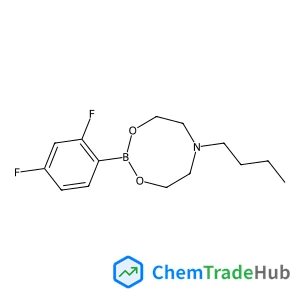
6-Butyl-2-(2,4-difluorophenyl)-1,3,6,2-dioxazaborocane
CAS Number:
1190988-98-7
Molecular Formula:
C14H20BF2NO2
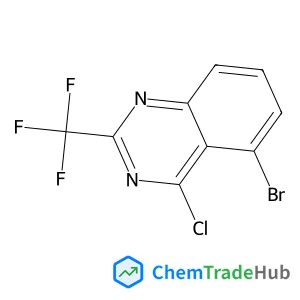
5-Bromo-4-chloro-2-(trifluoromethyl)quinazoline
CAS Number:
2089311-03-3
Molecular Formula:
C9H3BrClF3N2
Recommended Suppliers




Disclaimer
This page provides academic journal information for reference and research purposes only. We are not affiliated with any journal publishers and do not handle publication submissions. For publication-related inquiries, please contact the respective journal publishers directly.
If you notice any inaccuracies in the information displayed, please contact us at support@chemtradehub.com. We will promptly review and address your concerns.