












![6-Bromo-3-ethyl-3H-imidazo[4,5-b]pyridine structure](https://static.chemtradehub.com/structs/103/1033202-59-3-2a8f.webp "6-Bromo-3-ethyl-3H-imidazo[4,5-b]pyridine structure")
Primer remodeling amplification-activated multisite-catalytic hairpin assembly enabling the concurrent formation of Y-shaped DNA nanotorches for the fluorescence assay of ochratoxin A
Literature Information
Publication Date
2019-04-01
DOI
10.1039/C9AN00316A
Impact Factor
4.616
Authors
Jingfeng Wang, Yu Wang, Su Liu, Haiwang Wang, Xue Zhang, Xiaolei Song, Jinghua Yu
View Original
Abstract
DNA can be configured into unique high-order structures due to its significantly high programmability, such as a three-way junction-based structure (denoted Y-shaped DNA), for further applications. Herein, we report a label-free fluorescent signal-on biosensor based on the target-driven primer remodeling rolling circle amplification (RCA)-activated multisite-catalytic hairpin assembly (CHA) enabling the concurrent formation of Y-shaped DNA nanotorches (Y-DNTs) for ultrasensitive detection of ochratoxin A (OTA). Two kinds of masterfully-designed probes, termed Complex I and II, were pre-prepared by the combination of a circular template (CT) with an OTA aptamer (S1), a substrate probe (S2) and hairpin probe 1 (HP1), respectively. Target OTA specifically binds to Complex I, resulting in the release of the remnant element in S2 and successive remodeling into a mature primer for RCA by phi29 DNA polymerase, thus a usable primer-CT complex is produced, which actuates primary RCA. Then, numerous Complex II probes can anneal with the first-generation RCA product (RP) with multiple sites to activate the CHA process. With the participation of endonuclease IV (Endo IV) and phi29, HP1 as a pre-primer containing a tetrahydrofuran abasic site mimic (AP site) in Complex II is converted into a mature primer to initiate additional rounds of RCA. So, countless Y-DNTs are formed concurrently containing a G-quadruplex structure that enables the N-methylmesoporphyrin IX (NMM) to be embedded, generating remarkably strong fluorescence signals. The biosensor was demonstrated to enable rapid and accurate highly efficient and selective detection of OTA with an improved detection limit of as low as 0.0002 ng mL−1 and a widened dynamic range of over 4 orders of magnitude. Meanwhile, this method was proven to be capable of being used to analyze actual samples. Therefore, this proposed strategy may be established as a useful and practical platform for the ultrasensitive detection of mycotoxins in food safety testing.
Related Literature
Ti2O3/TiO2 heterophase junctions with enhanced charge separation and spatially separated active sites for photocatalytic CO2 reduction
Min Xu, Rui Yan, Haonan Li, Ning Sun, Yang Qu
2020-02-04
Paper
DOI: 10.1039/C9CP05147C
Electronic structure, ion diffusion and cation doping in the Na4VO(PO4)2 compound as a cathode material for Na-ion batteries
Pablo A. Aparicio
2020-03-03
Paper
DOI: 10.1039/C9CP05559B
Biological control of S-nitrosothiol reactivity: potential role of sigma-hole interactions
Niloufar Hendinejad, Qadir K. Timerghazin
2020-03-02
Paper
DOI: 10.1039/C9CP06377C
Correction: Isomer-specific cryogenic ion vibrational spectroscopy of the D2 tagged Cs+(HNO3)(H2O)n=0–2 complexes: ion-driven enhancement of the acidic H-bond to water
Sayoni Mitra, Chinh H. Duong, Mark A. Johnson
2020-03-04
Correction
DOI: 10.1039/D0CP90054K
Defect engineering, microstructural examination and improvement of ultrafast third harmonic generation in GaZnO nanostructures: a study of e-beam irradiation
Albin Antony, Poornesh P., I. V. Kityk, K. Ozga, J. Jedryka, G. Myronchuk, Suresh D. Kulkarni, Ganesh Sanjeev, Vikash Chandra Petwal, Vijay Pal Verma, Jishnu Dwivedi
2020-01-21
Paper
DOI: 10.1039/C9CP06323D
Intramolecular hydrogen tunneling in 2-chloromalonaldehyde trapped in solid para-hydrogen
Michèle Chevalier, Justinas Ceponkus, Claudine Crépin
2020-02-13
Paper
DOI: 10.1039/C9CP06866J
Extended short-range order determines the overall structure of liquid gallium
Anatolii V. Mokshin, Ramil M. Khusnutdinoff, Bulat N. Galimzyanov, Vadim V. Brazhkin
2020-01-31
Paper
DOI: 10.1039/C9CP05219D
Correction: Kinetics and dynamics of the C(3P) + H2O reaction on a full-dimensional accurate triplet state potential energy surface
Jun Li, Changjian Xie, Hua Guo
2020-02-07
Correction
DOI: 10.1039/D0CP90032J
Phase transition and mechanical properties of cesium bismuth silver halide double perovskites (Cs2AgBiX6, X = Cl, Br, I): a DFT approach
Javad Beheshtian
2020-02-05
Paper
DOI: 10.1039/C9CP05342E
You might also like
Compound Q&A
What is the market or research trend for N-(4-Methoxybenzyl)-2-pyridinamine (CAS: 52818-63-0)?
N-(4-Methoxybenzyl)-2-pyridinamine (CAS: 52818-63-0) is increasingly being used ...
52818-63-0N-(4-Methoxybenzyl)-...
Compound Q&A
What precautions should be taken when handling Ethyl 4-(2-chlorophenyl)-1,3-thiazole-2-carboxylate (CAS: 1050507-06-6)?
When handling Ethyl 4-(2-chlorophenyl)-1,3-thiazole-2-carboxylate, appropriate p...
1050507-06-6Ethyl 4-(2-chlorophe...
Compound Q&A
What regulatory guidelines apply to diethyldiselane (CAS: 628-39-7)?
Diethyldiselane (CAS: 628-39-7) is classified under the Globally Harmonized Syst...
628-39-7Diethyldiselane
Compound Q&A
What is the market or research trend for oxocopper (CAS: 12053-18-8)?
The market for oxocopper (CAS: 12053-18-8) is primarily driven by its use in cat...
12053-18-8oxocopper; oxo-(oxoc...
Compound Q&A
What is the market or research trend for 5-{[(2-Methyl-2-propanyl)oxy]carbonyl}-5-azaspiro[2.4]heptane-7-carboxylic acid?
The market for 5-{[(2-Methyl-2-propanyl)oxy]carbonyl}-5-azaspiro[2.4]heptane-7-c...
1268519-54-55-{[(2-Methyl-2-prop...
Compound Q&A
What is 2-(1-Pyrrolidinyl)-4-pyridinamine (CAS: 35981-63-6)?
2-(1-Pyrrolidinyl)-4-pyridinamine is a chemical compound with the CAS number 359...
35981-63-62-(1-Pyrrolidinyl)-4...
Compound Q&A
What are the physical and chemical properties of 2-(3-Pyridinyl)-1-azabicyclo[2.2.2]octane (CAS: 91556-75-1)?
2-(3-Pyridinyl)-1-azabicyclo[2.2.2]octane (CAS: 91556-75-1) is a crystalline sol...
91556-75-12-(3-Pyridinyl)-1-az...
Compound Q&A
How is (S)-Alpha-allyl-proline hydrochloride (CAS: 129704-91-2) typically synthesized?
(S)-Alpha-allyl-proline hydrochloride is usually synthesized via a Wittig reacti...
129704-91-2(S)-Alpha-allyl-prol...
Compound Q&A
What is 3-Methyl-1,2-oxazole-5-carboxylic acid (CAS: 4857-42-5)?
3-Methyl-1,2-oxazole-5-carboxylic acid (CAS: 4857-42-5) is an organic compound w...
4857-42-53-Methyl-1,2-oxazole...
Compound Q&A
How is Lys-SMCC-DM1 (CAS: 1281816-04-3) typically synthesized?
Lys-SMCC-DM1 is synthesized via a multi-step process involving the coupling of S...
1281816-04-3Lys-SMCC-DM1
Source Journal
Analyst

CiteScore:
7.8
Self-citation Rate:
5.6%
Articles per Year:
653
Analyst publishes analytical and bioanalytical research that reports premier fundamental discoveries and inventions, and the applications of those discoveries, unconfined by traditional discipline barriers.
Recommended Compounds
![(4aR,5S,6R,8aS)-5-[2-(3-Furyl)ethyl]-8a-(hydroxymethyl)-5,6-dimethyl-3,4,4a,5,6,7,8,8a-octahydro-1-naphthalenecarboxylic acid structure](https://static.chemtradehub.com/structs/184/18411-75-1-d4cd.webp "(4aR,5S,6R,8aS)-5-[2-(3-Furyl)ethyl]-8a-(hydroxymethyl)-5,6-dimethyl-3,4,4a,5,6,7,8,8a-octahydro-1-naphthalenecarboxylic acid structure")
(4aR,5S,6R,8aS)-5-[2-(3-Furyl)ethyl]-8a-(hydroxymethyl)-5,6-dimethyl-3,4,4a,5,6,7,8,8a-octahydro-1-naphthalenecarboxylic acid
CAS Number:
18411-75-1
Molecular Formula:
C20H28O4
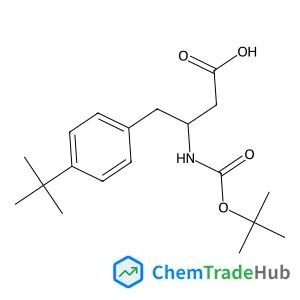
(S)-3-((tert-Butoxycarbonyl)amino)-4-(4-(tert-butyl)phenyl)butanoic acid
CAS Number:
403661-85-8
Molecular Formula:
C19H29NO4
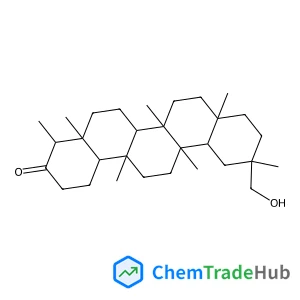
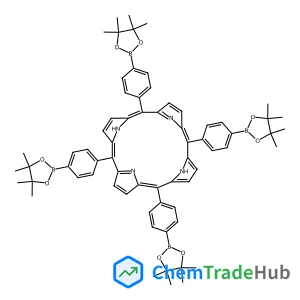
5,10,15,20-tetrakis(4-boronic acid pinacol ester phenyl) porphyrin
CAS Number:
1332748-00-1
Molecular Formula:
C68H74B4N4O8
Recommended Suppliers




Disclaimer
This page provides academic journal information for reference and research purposes only. We are not affiliated with any journal publishers and do not handle publication submissions. For publication-related inquiries, please contact the respective journal publishers directly.
If you notice any inaccuracies in the information displayed, please contact us at support@chemtradehub.com. We will promptly review and address your concerns.