












Intramolecular hydrogen tunneling in 2-chloromalonaldehyde trapped in solid para-hydrogen
Literature Information
Publication Date
2020-02-13
DOI
10.1039/C9CP06866J
Impact Factor
3.676
Authors
Michèle Chevalier, Justinas Ceponkus, Claudine Crépin
View Original
Abstract
The internal dynamics of a 2-chloromalonaldehyde (2-ClMA) molecule, possessing a strong internal hydrogen bond (IHB), was examined by means of matrix isolation spectroscopy in a soft host: para-hydrogen (pH2). 2-ClMA is a chlorinated derivative of malonaldehyde (MA), a model molecule in hydrogen transfer studies, better suited to low temperature experiments than its parent molecule. The infrared absorption spectra of 2-ClMA isolated in pH2 exhibit temperature dependent structures which are explained as transitions occurring from split vibrational levels induced by hydrogen tunneling. The doublet components associated with higher and lower energy levels are changing reversibly with the increase/decrease of the matrix temperature. The ground state splitting is measured to be 7.9 ± 0.1 cm−1. The presence of oH2 impurities in the pH2 matrix close to the neighborhood of the 2-ClMA molecule is found to quench the H tunneling. The data provide a powerful insight into the dynamical picture of intramolecular hydrogen tunneling in a molecule embedded in a very weakly perturbing environment.
Related Literature
How controlled and versatile is N-carboxy anhydride (NCA) polymerization at 0 °C? Effect of temperature on homo-, block- and graft (co)polymerization
Gijs J. M. Habraken, Maloes Peeters, Carin H. J. T. Dietz, Cor E. Koning
2010-01-27
Paper
DOI: 10.1039/B9PY00337A
Microplasma synthesized gold nanoparticles for surface enhanced Raman spectroscopic detection of methylene blue
Xuanhe Li, Wei-Hung Chiang, Kuan Chang, Hujun Xu
2021-11-12
Paper
DOI: 10.1039/D1RE00446H
Dispersion nitroxide mediated polymerization of methyl methacrylate in supercritical carbon dioxide using in situ formed stabilizers
Bruno Grignard, Trang Phan, Denis Bertin, Didier Gigmes, Christine Jérôme, Christophe Detrembleur
2010-04-13
Communication
DOI: 10.1039/C0PY00066C
Development of a continuous-flow system with immobilized biocatalysts towards sustainable bioprocessing
Apisit Naramittanakul, Supacha Buttranon, Atitsa Petchsuk, Pimchai Chaiyen
2021-07-13
Minireview
DOI: 10.1039/D1RE00189B
Highly permeable polymers for gas separation membranes
Peter M. Budd, Neil B. McKeown
2010-01-04
Review Article
DOI: 10.1039/B9PY00319C
Highly effective production of levulinic acid and γ-valerolactone through self-circulation of solvent in a continuous process
Guoqiang Ding
2021-06-30
Paper
DOI: 10.1039/D1RE00208B
Increasing saturation: development of broadly applicable photocatalytic Csp2–Csp3 cross-couplings of alkyl trifluoroborates and (hetero)aryl bromides for array synthesis
Melda Sezen-Edmonds, Eric M. Simmons, Cullen L. Cavallaro
2021-07-08
Paper
DOI: 10.1039/D1RE00192B
Catalytic ceramic oxygen ionic conducting membrane reactors for ethylene production
Song Lei, Ao Wang, Jian Xue, Haihui Wang
2021-05-20
Review Article
DOI: 10.1039/D1RE00136A
Steps, hops and turns: examining the effects of channel shapes on mass transfer in continuous electrochemical reactors
Hamish R. Stephen, Sarah Boyall, Christiane Schotten, Richard A. Bourne, Nikil Kapur, Charlotte E. Willans
2022-01-06
Communication
DOI: 10.1039/D1RE00530H
Towards 4th industrial revolution efficient and sustainable continuous flow manufacturing of active pharmaceutical ingredients
Cloudius R. Sagandira, Sinazo Nqeketo, Kanyisile Mhlana, Thembela Sonti, Sibongiseni Gaqa, Paul Watts
2021-12-30
Review Article
DOI: 10.1039/D1RE00483B
You might also like
Compound Q&A
What precautions should be taken when handling lithium chloride hydrate (1:1:1) (CAS: 16712-20-2)?
When handling lithium chloride hydrate (1:1:1) (CAS: 16712-20-2), it is importan...
16712-20-2Lithium chloride hyd...
Compound Q&A
Is 4-(4H-1,2,4-Triazol-4-yl)piperidine (CAS: 690261-92-8) safe?
4-(4H-1,2,4-Triazol-4-yl)piperidine is generally considered safe for use in phar...
690261-92-84-(4H-1,2,4-Triazol-...
Compound Q&A
How should waste containing 1,3-Thiazole-2-carboxamide (CAS: 16733-85-0) be handled?
Waste containing 1,3-Thiazole-2-carboxamide (CAS: 16733-85-0) should be collecte...
16733-85-01,3-Thiazole-2-carbo...
Compound Q&A
What regulatory guidelines apply to 5-(Difluoromethyl)-2-fluorobenzonitrile (CAS: 934175-58-3)?
5-(Difluoromethyl)-2-fluorobenzonitrile (CAS: 934175-58-3) is subject to regulat...
934175-58-35-(Difluoromethyl)-2...
Compound Q&A
How is Methyl 3-acetamido-2-thiophenecarboxylate (CAS: 22288-79-5) typically synthesized?
Methyl 3-acetamido-2-thiophenecarboxylate can be synthesized by the reaction of ...
22288-79-5Methyl 3-acetamido-2...
Compound Q&A
What is 4-Isoquinolinecarbonitrile (CAS: 34846-65-6)?
4-Isoquinolinecarbonitrile is a chemical compound with the CAS number 34846-65-6...
34846-65-64-Isoquinolinecarbon...
Compound Q&A
How should Methyl 1H-1,2,3-triazole-4-carboxylate (CAS: 877309-59-6) be stored?
Store Methyl 1H-1,2,3-triazole-4-carboxylate (CAS: 877309-59-6) in a cool, dry p...
877309-59-6Methyl 1H-1,2,3-tria...
Compound Q&A
What regulatory guidelines apply to 6-Bromo[1,3]thiazolo[5,4-b]pyridin-2-amine (CAS: 1160791-13-8)?
6-Bromo[1,3]thiazolo[5,4-b]pyridin-2-amine (CAS: 1160791-13-8) is subject to the...
1160791-13-86-Bromo[1,3]thiazolo...
Compound Q&A
Is (2S,3S)-2-Ammonio-3-(3,4-dihydroxyphenyl)-3-hydroxypropanoate (CAS: 23651-95-8) safe?
(2S,3S)-2-Ammonio-3-(3,4-dihydroxyphenyl)-3-hydroxypropanoate (CAS: 23651-95-8) ...
23651-95-8(2S,3S)-2-Ammonio-3-...
Compound Q&A
What are the physical and chemical properties of 7-bromo-3-methyl-3,4-dihydroquinazolin-4-one (CAS: 1293987-84-4)?
7-Bromo-3-methyl-3,4-dihydroquinazolin-4-one is a solid with a crystalline form....
1293987-84-47-bromo-3-methyl-3,4...
Source Journal
Physical Chemistry Chemical Physics

CiteScore:
5.5
Self-citation Rate:
10.3%
Articles per Year:
3036
Physical Chemistry Chemical Physics (PCCP) is an international journal co-owned by 19 physical chemistry and physics societies from around the world. This journal publishes original, cutting-edge research in physical chemistry, chemical physics and biophysical chemistry. To be suitable for publication in PCCP, articles must include significant innovation and/or insight into physical chemistry; this is the most important criterion that reviewers and Editors will judge against when evaluating submissions. The journal has a broad scope and welcomes contributions spanning experiment, theory, computation and data science. Topical coverage includes spectroscopy, dynamics, kinetics, statistical mechanics, thermodynamics, electrochemistry, catalysis, surface science, quantum mechanics, quantum computing and machine learning. Interdisciplinary research areas such as polymers and soft matter, materials, nanoscience, energy, surfaces/interfaces, and biophysical chemistry are welcomed if they demonstrate significant innovation and/or insight into physical chemistry. Joined experimental/theoretical studies are particularly appreciated when complementary and based on up-to-date approaches.
Recommended Compounds
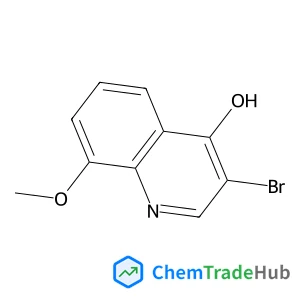
![[(2R)-6,6-Dimethyl-2-morpholinyl]methanol hydrochloride (1:1) structure](https://static.chemtradehub.com/structs/141/1416444-88-6-e06a.webp "[(2R)-6,6-Dimethyl-2-morpholinyl]methanol hydrochloride (1:1) structure")
[(2R)-6,6-Dimethyl-2-morpholinyl]methanol hydrochloride (1:1)
CAS Number:
1416444-88-6
Molecular Formula:
C7H16ClNO2
Recommended Suppliers






Disclaimer
This page provides academic journal information for reference and research purposes only. We are not affiliated with any journal publishers and do not handle publication submissions. For publication-related inquiries, please contact the respective journal publishers directly.
If you notice any inaccuracies in the information displayed, please contact us at support@chemtradehub.com. We will promptly review and address your concerns.