












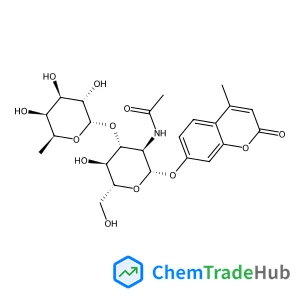
4-Methyl-2-oxo-2H-chromen-7-yl 2-acetamido-2-deoxy-3-O-(6-deoxy-alpha-L-galactopyranosyl)-beta-D-glucopyranoside
CAS Number:
383160-12-1
Molecular Formula:
C24H31NO12
Niloufar Hendinejad, Qadir K. Timerghazin
S-Nitrosothiols (RSNOs) are ubiquitous biomolecules whose chemistry is tightly controlled in vivo, although the specific molecular mechanisms behind this biological control remain unknown. In this work, we demonstrate, using high-level ab initio and DFT calculations, the ability of RSNOs to participate in intermolecular interactions with electron pair donors/Lewis bases (LBs) via a σ-hole, a region of positive electrostatic potential on the molecular surface at the extension of the N–S bond. Importantly, σ-hole binding is able to modulate the properties of RSNOs by changing the balance between two chemically opposite (antagonistic) resonance components, R–S+N–O− (D) and R–S−/NO+ (I), which are, in addition to the main resonance structure R–S–NO, necessary to describe the unusual electronic structure of RSNOs. σ-Hole binding at the sulfur atom of RSNO promotes the resonance structure D and reduces the resonance structure I, thereby stabilizing the weak N–S bond and making the sulfur atom more electrophilic. On the other hand, increasing the D-character of RSNO by other means (e.g. via N- or O-coordination of a Lewis acid) in turn enhances the σ-hole bonding. Our calculations suggest that in the protein environment a combination of σ-hole bonding of a negatively charged amino acid sidechain at the sulfur atom and N- or O-coordination of a positively charged amino acid sidechain is expected to have a profound effect on the RSNO electronic structure and reactivity.
Jennifer L. Bartels, Peng Lu, Amy Walker, Karl Maurer, Kevin D. Moeller
DOI: 10.1039/B910577H
Kilian Muñiz, Alvaro Iglesias, Yewen Fang
DOI: 10.1039/B912139K
Ekaterina V. Skorb, Dmitry V. Sviridov, Helmuth Möhwald, Dmitry G. Shchukin
DOI: 10.1039/B914257F
Lisa K. Knight, V. Nicholas Vukotic, Elizabeth Viljoen, Christopher B. Caputo, Stephen J. Loeb
DOI: 10.1039/B911889F
Junji Kobayashi, Yuya Domoto, Takayuki Kawashima
DOI: 10.1039/B909881J
Marc Mosrin, Gabriel Monzon, Tomke Bresser, Paul Knochel
DOI: 10.1039/B913693B
Safa Shoaee, Zesheng An, Xuan Zhang, Stephen Barlow, Seth R. Marder, Warren Duffy, James R. Durrant
DOI: 10.1039/B909071A
Xiao-Ping Zhou, Zhengtao Xu, Matthias Zeller, Allen D. Hunter
DOI: 10.1039/B910265E
Peter D. Abram, David Ellis, Georgina M. Rosair, Alan J. Welch
DOI: 10.1039/B911350A
Huifang-Jie Li, De-Hui Wang, Liang-Jun Zhou, Li Li, Xin Gan, Quan-Qing Xu, Hai-Bin Song
DOI: 10.1039/B906910K
When handling lithium chloride hydrate (1:1:1) (CAS: 16712-20-2), it is importan...
4-(4H-1,2,4-Triazol-4-yl)piperidine is generally considered safe for use in phar...
Waste containing 1,3-Thiazole-2-carboxamide (CAS: 16733-85-0) should be collecte...
5-(Difluoromethyl)-2-fluorobenzonitrile (CAS: 934175-58-3) is subject to regulat...
Methyl 3-acetamido-2-thiophenecarboxylate can be synthesized by the reaction of ...
4-Isoquinolinecarbonitrile is a chemical compound with the CAS number 34846-65-6...
Store Methyl 1H-1,2,3-triazole-4-carboxylate (CAS: 877309-59-6) in a cool, dry p...
6-Bromo[1,3]thiazolo[5,4-b]pyridin-2-amine (CAS: 1160791-13-8) is subject to the...
(2S,3S)-2-Ammonio-3-(3,4-dihydroxyphenyl)-3-hydroxypropanoate (CAS: 23651-95-8) ...
7-Bromo-3-methyl-3,4-dihydroquinazolin-4-one is a solid with a crystalline form....

Physical Chemistry Chemical Physics (PCCP) is an international journal co-owned by 19 physical chemistry and physics societies from around the world. This journal publishes original, cutting-edge research in physical chemistry, chemical physics and biophysical chemistry. To be suitable for publication in PCCP, articles must include significant innovation and/or insight into physical chemistry; this is the most important criterion that reviewers and Editors will judge against when evaluating submissions. The journal has a broad scope and welcomes contributions spanning experiment, theory, computation and data science. Topical coverage includes spectroscopy, dynamics, kinetics, statistical mechanics, thermodynamics, electrochemistry, catalysis, surface science, quantum mechanics, quantum computing and machine learning. Interdisciplinary research areas such as polymers and soft matter, materials, nanoscience, energy, surfaces/interfaces, and biophysical chemistry are welcomed if they demonstrate significant innovation and/or insight into physical chemistry. Joined experimental/theoretical studies are particularly appreciated when complementary and based on up-to-date approaches.
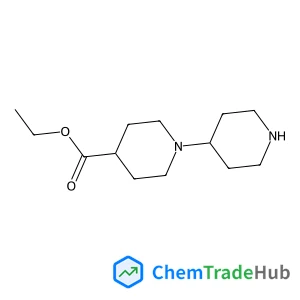
![(1R,5R)-3-{[(2-Methyl-2-propanyl)oxy]carbonyl}-3-azabicyclo[3.1.0]hexane-1-carboxylic acid structure](https://static.chemtradehub.com/structs/116/1165450-63-4-bfe1.webp "(1R,5R)-3-{[(2-Methyl-2-propanyl)oxy]carbonyl}-3-azabicyclo[3.1.0]hexane-1-carboxylic acid structure")
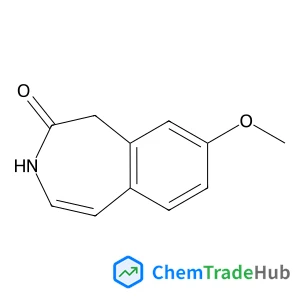
![tert-butyl 8-benzyl-2,8-diazaspiro[4.5]decane-2-carboxylate structure](https://static.chemtradehub.com/structs/336/336191-16-3-bb55.webp "tert-butyl 8-benzyl-2,8-diazaspiro[4.5]decane-2-carboxylate structure")





