












Simultaneous measurement of blood pressure and RBC aggregation by monitoring on–off blood flows supplied from a disposable air-compressed pump
Literature Information
Publication Date
2019-04-22
DOI
10.1039/C9AN00025A
Impact Factor
4.616
Authors
View Original
Abstract
Haematological diseases significantly increase RBC aggregation. Specifically, RBC aggregation is considerably varied by haematological factors including cellular properties, and suspending medium properties. Thus, in order to ensure consistent measurement of RBC aggregation, it is necessary to measure RBC aggregation and blood pressure simultaneously. Here, a method for simultaneously measuring RBC aggregation and blood pressure is demonstrated by analyzing blood flows supplied from a disposable air-compressed pump. A microfluidic device is composed of two parallel microfluidic channels (i.e., PBS channel and blood channel), an inlet, and outlets. After the PBS channel is filled with the PBS solution, the outlets of the PBS channel are completely closed with two pinch valves. Under varying blood flow rates of the disposable pump, the blood pressure index (PI) is quantified by analyzing the image intensity of RBCs in the PBS channel. Thereafter, at stasis, the RBC aggregation index (AI) is calculated by analyzing the image intensity of blood in the blood channel. First, under a constant blood flow-rate of a syringe pump, the image intensity of RBCs collected in the PBS channel (IPC) is linearly proportional to blood pressure estimated in the blood channel (PBC). Second, with respect to variations in the blood flow-rate of the proposed pump, the IPC and PBC decrease gradually over time. Two blood pressure indices (PI [PBC], and PI [IPC]) are obtained by averaging temporal variations in the PBC and IPC, respectively. The results of the regression analysis indicate that the coefficient of the linear regression yields a higher value of R2 = 0.9051. Subsequently, the PI (IPC) is effectively used to estimate blood pressure. Finally, the variations in blood pressure and RBC aggregation are obtained by using aggregation-enhanced blood samples and deformability-reduced blood samples. Thus, the proposed method leads to consistent variations in the PI and AI, when compared with the previous results. The experimental demonstrations indicate that two indices (PI and AI) are effectively used to simultaneously quantify blood pressure and RBC aggregation.
Related Literature
Impact of the reaction pathway on the final product in on-surface synthesis
Antje Kutz, Md Taibur Rahman, Ville Haapasilta, Chiara Venturini, Ralf Bechstein, André Gordon, Angelika Kühnle
2020-02-03
Paper
DOI: 10.1039/C9CP06044H
A systematic investigation of the catalytic performances of monolayer carbon nitride nanosheets C1−xNx
Yan Song, Yumin Zhang
2020-03-05
Paper
DOI: 10.1039/D0CP00319K
Spectroscopic evidence of a particular intermolecular interaction in iodomethane–ethanol mixtures: the cooperative effect of halogen bonding, hydrogen bonding, and the solvent effect
Fei Yao, Nan Gong, Wenhui Fang, Zhiwei Men
2020-02-06
Paper
DOI: 10.1039/C9CP05886A
First-principles comparative study of perfect and defective CsPbX3 (X = Br, I) crystals
R. A. Evarestov, A. Senocrate, R. K. Kremer, J. Maier
2020-01-27
Paper
DOI: 10.1039/C9CP06322F
Large scale indium tin oxide (ITO) one dimensional gratings for ultrafast signal modulation in the visible spectral region
Michele Guizzardi, Silvio Bonfadini, Ilka Kriegel, Luigino Criante
2020-03-05
Paper
DOI: 10.1039/C9CP06839B
Phase transition and mechanical properties of cesium bismuth silver halide double perovskites (Cs2AgBiX6, X = Cl, Br, I): a DFT approach
Javad Beheshtian
2020-02-05
Paper
DOI: 10.1039/C9CP05342E
Synchrotron-based Mössbauer spectroscopy characterization of sublimated spin crossover molecules
Alberto Cini, Lorenzo Poggini, Alexander I. Chumakov, Rudolf Rüffer, Gabriele Spina, Alain Wattiaux, Mathieu Duttine, Mathieu Gonidec, Maria Fittipaldi, Patrick Rosa, Matteo Mannini
2020-02-26
Paper
DOI: 10.1039/C9CP04464G
Lithium migration pathways at the composite interface of LiBH4 and two-dimensional MoS2 enabling superior ionic conductivity at room temperature
Zhixiang Liu, Mengyuan Xiang, Yao Zhang, Huaiyu Shao, Yunfeng Zhu, Xinli Guo, Liquan Li, Hui Wang, Wanqiang Liu
2020-01-27
Paper
DOI: 10.1039/C9CP06090A
Microhydration of verbenone: how the chain of water molecules adapts its structure to the host molecule
Mhamad Chrayteh, Annunziata Savoia, Thérèse R. Huet, Pascal Dréan
2020-02-17
Paper
DOI: 10.1039/C9CP06678K
You might also like
Compound Q&A
What is the market or research trend for N-(4-Methoxybenzyl)-2-pyridinamine (CAS: 52818-63-0)?
N-(4-Methoxybenzyl)-2-pyridinamine (CAS: 52818-63-0) is increasingly being used ...
52818-63-0N-(4-Methoxybenzyl)-...
Compound Q&A
What precautions should be taken when handling Ethyl 4-(2-chlorophenyl)-1,3-thiazole-2-carboxylate (CAS: 1050507-06-6)?
When handling Ethyl 4-(2-chlorophenyl)-1,3-thiazole-2-carboxylate, appropriate p...
1050507-06-6Ethyl 4-(2-chlorophe...
Compound Q&A
What regulatory guidelines apply to diethyldiselane (CAS: 628-39-7)?
Diethyldiselane (CAS: 628-39-7) is classified under the Globally Harmonized Syst...
628-39-7Diethyldiselane
Compound Q&A
What is the market or research trend for oxocopper (CAS: 12053-18-8)?
The market for oxocopper (CAS: 12053-18-8) is primarily driven by its use in cat...
12053-18-8oxocopper; oxo-(oxoc...
Compound Q&A
What is the market or research trend for 5-{[(2-Methyl-2-propanyl)oxy]carbonyl}-5-azaspiro[2.4]heptane-7-carboxylic acid?
The market for 5-{[(2-Methyl-2-propanyl)oxy]carbonyl}-5-azaspiro[2.4]heptane-7-c...
1268519-54-55-{[(2-Methyl-2-prop...
Compound Q&A
What is 2-(1-Pyrrolidinyl)-4-pyridinamine (CAS: 35981-63-6)?
2-(1-Pyrrolidinyl)-4-pyridinamine is a chemical compound with the CAS number 359...
35981-63-62-(1-Pyrrolidinyl)-4...
Compound Q&A
What are the physical and chemical properties of 2-(3-Pyridinyl)-1-azabicyclo[2.2.2]octane (CAS: 91556-75-1)?
2-(3-Pyridinyl)-1-azabicyclo[2.2.2]octane (CAS: 91556-75-1) is a crystalline sol...
91556-75-12-(3-Pyridinyl)-1-az...
Compound Q&A
How is (S)-Alpha-allyl-proline hydrochloride (CAS: 129704-91-2) typically synthesized?
(S)-Alpha-allyl-proline hydrochloride is usually synthesized via a Wittig reacti...
129704-91-2(S)-Alpha-allyl-prol...
Compound Q&A
What is 3-Methyl-1,2-oxazole-5-carboxylic acid (CAS: 4857-42-5)?
3-Methyl-1,2-oxazole-5-carboxylic acid (CAS: 4857-42-5) is an organic compound w...
4857-42-53-Methyl-1,2-oxazole...
Compound Q&A
How is Lys-SMCC-DM1 (CAS: 1281816-04-3) typically synthesized?
Lys-SMCC-DM1 is synthesized via a multi-step process involving the coupling of S...
1281816-04-3Lys-SMCC-DM1
Source Journal
Analyst

CiteScore:
7.8
Self-citation Rate:
5.6%
Articles per Year:
653
Analyst publishes analytical and bioanalytical research that reports premier fundamental discoveries and inventions, and the applications of those discoveries, unconfined by traditional discipline barriers.
Recommended Compounds
![N-{3-[Benzyl(methyl)amino]propyl}-9-chloro-5,6,7,8-tetrahydro-2-acridinecarboxamide structure](https://static.chemtradehub.com/structs/142/1426944-49-1-1e4c.webp "N-{3-[Benzyl(methyl)amino]propyl}-9-chloro-5,6,7,8-tetrahydro-2-acridinecarboxamide structure")
N-{3-[Benzyl(methyl)amino]propyl}-9-chloro-5,6,7,8-tetrahydro-2-acridinecarboxamide
CAS Number:
1426944-49-1
Molecular Formula:
C25H28ClN3O
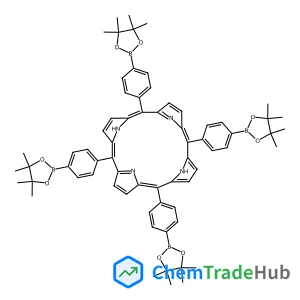
5,10,15,20-tetrakis(4-boronic acid pinacol ester phenyl) porphyrin
CAS Number:
1332748-00-1
Molecular Formula:
C68H74B4N4O8
![6-Bromo-3-ethyl-3H-imidazo[4,5-b]pyridine structure](https://static.chemtradehub.com/structs/103/1033202-59-3-2a8f.webp "6-Bromo-3-ethyl-3H-imidazo[4,5-b]pyridine structure")
Recommended Suppliers






Disclaimer
This page provides academic journal information for reference and research purposes only. We are not affiliated with any journal publishers and do not handle publication submissions. For publication-related inquiries, please contact the respective journal publishers directly.
If you notice any inaccuracies in the information displayed, please contact us at support@chemtradehub.com. We will promptly review and address your concerns.