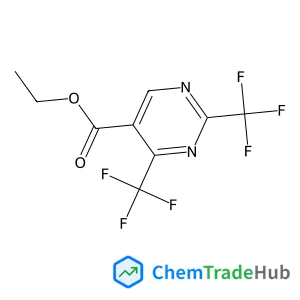
Ethyl 2,4-bis(trifluoromethyl)-5-pyrimidinecarboxylate
CAS Number:
188781-15-9
Molecular Formula:
C9H6F6N2O2
Yan Song, Yumin Zhang
Graphitic carbon nitrides (CNs) are potential candidate materials for the electro-catalytic industry due to their unique physical and chemical properties. However, to date, a full understanding of the electro-catalytic properties of CNs is still lacking. Herein, by using density functional theory calculations, we systematically investigate the catalytic performances in the hydrogen evolution reaction (HER), oxygen evolution reaction (OER), N2 reduction reaction (NRR), and CO2 reduction reaction (CO2RR) of monolayer graphitic carbon nitrides (C1−xNx), C3N (x = 1/4), C2N (x = 1/3), and g-C3N4 (x = 4/7). We also evaluated the NRR activity of B doped C1−xNx, and the CO2RR activity of Cu and Pd modified C1−xNx. The cohesive energy and ab initio molecular dynamics (AIMD) results show that C3N, C2N, and g-C3N4 are stable at room temperature. The C3N–C1 site is predicted to deliver the best HER catalytic performance with a reaction Gibbs free energy (ΔGH*) of −0.03 eV (close to the ideal value (0 eV)). Among the studied C1–xNx materials, the C3N–C2 site is predicted to possess a favorable ηOER of 0.82 V for OER. Pure C3N, C2N, and g-C3N4 are not suitable for NRR and CO2RR. Due to the strong hybridization between the N 2p orbital and the B 2p orbital, the NRR performances of B doped BN–C2N, BN–C3N, and BN–g-C3N4 are greatly enhanced, with corresponding overpotential ηNRR of 0.57 V, 0.70 V, and 0.72 V, respectively. The transition metals Cu and Pd can enhance the CO2RR activity of C3N, C2N, and g-C3N4. The limiting potentials UL of pure C3N, C2N, and g-C3N4 are 0.96 V, 0.86 V, and 2.37 V, respectively, while these values are 0.63 V, 0.68 V, and 0.77 V with Cu or Pd modification. This work provides deep understanding of the catalytic properties of monolayer C1−xNx and guidance for synthesizing higher activity catalysts in the future.
Peter M. Budd, Neil B. McKeown
DOI: 10.1039/B9PY00319C
Guoqiang Ding
DOI: 10.1039/D1RE00208B
Hamish R. Stephen, Sarah Boyall, Christiane Schotten, Richard A. Bourne, Nikil Kapur, Charlotte E. Willans
DOI: 10.1039/D1RE00530H
Masaki Tamaki, Tsukasa Taguchi, Soichi Nakabayashi, Kota Mori, Yoshikazu Kitajyo, Ryosuke Sakai, Toyoji Kakuchi, Toshifumi Satoh
DOI: 10.1039/B9PY00223E
Lijuan Jiang, Benyu Sun, Shuangshuang Liu, Mengmeng Du, Qianqian Hu, Honghui Gong, Baozhong Liu
DOI: 10.1039/D1RE00352F
Jungang Yi, Xianghui Wu, Huadong Wu, Jia Guo
DOI: 10.1039/D1RE90046C
When handling lithium chloride hydrate (1:1:1) (CAS: 16712-20-2), it is importan...
4-(4H-1,2,4-Triazol-4-yl)piperidine is generally considered safe for use in phar...
Waste containing 1,3-Thiazole-2-carboxamide (CAS: 16733-85-0) should be collecte...
5-(Difluoromethyl)-2-fluorobenzonitrile (CAS: 934175-58-3) is subject to regulat...
Methyl 3-acetamido-2-thiophenecarboxylate can be synthesized by the reaction of ...
4-Isoquinolinecarbonitrile is a chemical compound with the CAS number 34846-65-6...
Store Methyl 1H-1,2,3-triazole-4-carboxylate (CAS: 877309-59-6) in a cool, dry p...
6-Bromo[1,3]thiazolo[5,4-b]pyridin-2-amine (CAS: 1160791-13-8) is subject to the...
(2S,3S)-2-Ammonio-3-(3,4-dihydroxyphenyl)-3-hydroxypropanoate (CAS: 23651-95-8) ...
7-Bromo-3-methyl-3,4-dihydroquinazolin-4-one is a solid with a crystalline form....

Physical Chemistry Chemical Physics (PCCP) is an international journal co-owned by 19 physical chemistry and physics societies from around the world. This journal publishes original, cutting-edge research in physical chemistry, chemical physics and biophysical chemistry. To be suitable for publication in PCCP, articles must include significant innovation and/or insight into physical chemistry; this is the most important criterion that reviewers and Editors will judge against when evaluating submissions. The journal has a broad scope and welcomes contributions spanning experiment, theory, computation and data science. Topical coverage includes spectroscopy, dynamics, kinetics, statistical mechanics, thermodynamics, electrochemistry, catalysis, surface science, quantum mechanics, quantum computing and machine learning. Interdisciplinary research areas such as polymers and soft matter, materials, nanoscience, energy, surfaces/interfaces, and biophysical chemistry are welcomed if they demonstrate significant innovation and/or insight into physical chemistry. Joined experimental/theoretical studies are particularly appreciated when complementary and based on up-to-date approaches.