












Base-promoted diastereoselective α-alkylation of borane N-((S)-1′-phenylethyl)azetidine-2-carboxylic acid ester complexes
Literature Information
Publication Date
2018-07-27
DOI
10.1039/C8OB01395K
Impact Factor
3.876
Authors
Eiji Tayama, Ryotaro Nishio, Yoshiaki Kobayashi
View Original
Abstract
The base-promoted α-alkylation of N-((S)-1-phenylethyl)azetidine-2-carboxylic acid esters 1 was investigated. The use of diastereomerically pure borane complexes 3 as substrates, which are easily prepared from 1, dramatically improved the yields and diastereoselectivities of α-alkylated products 2. For example, the treatment of tert-butyl ester (1S,2S,1′S)-3a with 2.4 equivalents of lithium bis(trimethysilyl)amide (LiHMDS) at 0 °C followed by 2.6 equivalents of benzyl bromide afforded α-benzylated (2S,1′S)-2aa in 90% yield as almost a single diastereomer. Our method enables the production of optically active α-substituted azetidine-2-carboxylic acid esters starting from commercially available (S)-1-phenylethylamine, which is one of the least expensive chiral compounds.
Related Literature
Formation of hydroperoxo (–OOH) species on the surface of self-doped Bi2.15WO6: reactivity towards As(iii) oxidation
Xiang-Ming Wang, Song-Hai Wu, Hai-Tao Ren, Peng-Yue Zhu, Cong Wang, Yong Liu, Shi-Wei Sun, Xiao-Cong Zhang, Yi-Ying Lin, Zi-He Meng, Shao-Yi Jia
2020-05-12
Paper
DOI: 10.1039/D0CP00569J
Correction: Liquid-phase exfoliated SnS as a semiconductor coating filler to enhance corrosion protection performance
Zuopeng Qu, Lei Wang, Xuejun Fan, Guoqi Zhang
2020-05-20
Correction
DOI: 10.1039/D0CP90112A
Site dependent reactivity of Pt single atoms on anatase TiO2(101) in an aqueous environment
Wen-Jin Yin, Annabella Selloni, Li-Min Liu
2019-10-14
Paper
DOI: 10.1039/C9CP05097C
Photon-mediated charge exchange reactions between 39K atoms and 40Ca+ ions in a hybrid trap
Hui Li, S. Jyothi, Ming Li, Kenneth R Brown, Svetlana Kotochigova
2020-04-22
Paper
DOI: 10.1039/D0CP01131B
High-throughput experimentation meets artificial intelligence: a new pathway to catalyst discovery
Katherine McCullough, Travis Williams, Kathleen Mingle, Pooyan Jamshidi, Jochen Lauterbach
2020-04-30
Perspective
DOI: 10.1039/D0CP00972E
The unexpected effect of aqueous ion pairs on the forbidden n → π* transition in nitrate
Pernille D. Pedersen, Kurt V. Mikkelsen, Matthew S. Johnson
2020-04-28
Paper
DOI: 10.1039/D0CP00958J
Structural characterization of molybdenum–dinitrogen complex as key species toward ammonia formation by dispersive XAFS spectroscopy
Kazuya Arashiba, Shimpei Naniwa, Kazuo Kato, Hiromasa Tanaka, Kazunari Yoshizawa, Yoshiaki Nishibayashi
2020-04-23
Communication
DOI: 10.1039/C9CP06761B
X-ray photoelectron spectroscopy of piperidinium ionic liquids: a comparison to the charge delocalised pyridinium analogues
Peter Licence, Chi-Linh Do-Thanh, Huimin Luo, Sheng Dai
2020-05-06
Paper
DOI: 10.1039/D0CP01454K
Thermodynamics of mixing methanol with supercritical CO2 as seen from computer simulations and thermodynamic integration
Réka A. Horváth, George Horvai, Abdenacer Idrissi, Pál Jedlovszky
2020-04-28
Paper
DOI: 10.1039/D0CP01241F
You might also like
Compound Q&A
What are the main uses of 4-Nitrophenyl phosphate disodium salt hexahydrate (CAS: 333338-18-4)?
4-Nitrophenyl phosphate disodium salt hexahydrate is primarily used as a substra...
333338-18-44-Nitrophenyl phosph...
Compound Q&A
What are the main uses of 2-(Trifluoromethyl)-1,3-oxazole-4-carboxylic Acid (CAS: 1060816-01-4)?
2-(Trifluoromethyl)-1,3-oxazole-4-carboxylic Acid (CAS: 1060816-01-4) is widely ...
1060816-01-42-(Trifluoromethyl)-...
Compound Q&A
How should 2-Fluoro-4-biphenylcarboxylic acid (CAS: 137045-30-8) be stored?
2-Fluoro-4-biphenylcarboxylic acid should be stored in a cool, dry place at room...
137045-30-82-Fluoro-4-biphenylc...
Compound Q&A
What industries use Prednisolone-21-Carboxylic Acid (CAS: 61549-70-0)?
Prednisolone-21-Carboxylic Acid is primarily used in the pharmaceutical industry...
61549-70-0Prednisolone-21-Carb...
Compound Q&A
How should 4-(Hydrazinomethyl)-1,2,3-benzenetriol (CAS: 3614-72-0) be stored?
4-(Hydrazinomethyl)-1,2,3-benzenetriol (CAS: 3614-72-0) should be stored in a co...
3614-72-04-(Hydrazinomethyl)-...
Compound Q&A
What industries use 4-Amino-1-methyl-1H-pyrazole-5-carboxylic acid hydrochloride (CAS: 92534-70-8)?
4-Amino-1-methyl-1H-pyrazole-5-carboxylic acid hydrochloride (CAS: 92534-70-8) i...
92534-70-84-Amino-1-methyl-1H-...
Compound Q&A
What regulatory guidelines apply to dehydropachymic acid (CAS: 77012-31-8)?
Dehydropachymic acid (CAS: 77012-31-8) is regulated by various agencies. It fall...
77012-31-8Dehydropachymic acid
Compound Q&A
What is the market or research trend for 6-[(2,2-Dimethylpropanoyl)amino]nicotinic acid (CAS: 898561-66-5)?
The market and research trends for 6-[(2,2-Dimethylpropanoyl)amino]nicotinic aci...
898561-66-56-[(2,2-Dimethylprop...
Compound Q&A
How should 1,10-Phenanthroline-2,9-dicarbaldehyde (CAS: 57709-62-3) be stored?
1,10-Phenanthroline-2,9-dicarbaldehyde should be stored in a cool, dry place awa...
57709-62-31,10-Phenanthroline-...
Compound Q&A
How is 5-Carbamoyl-11-oxo-10,11-dihydro-5H-dibenzo[b,f]azepin-10-yl acetate (CAS: 113952-21-9) typically synthesized?
5-Carbamoyl-11-oxo-10,11-dihydro-5H-dibenzo[b,f]azepin-10-yl acetate can be synt...
113952-21-95-Carbamoyl-11-oxo-1...
Source Journal
Organic & Biomolecular Chemistry

CiteScore:
3.4
Self-citation Rate:
10.3%
Articles per Year:
1041
Organic & Biomolecular Chemistry (OBC) publishes original and high impact research and reviews in organic chemistry. We welcome research that shows new or significantly improved protocols or methodologies in total synthesis, synthetic methodology or physical and theoretical organic chemistry as well as research that shows a significant advance in the organic chemistry or molecular design aspects of chemical biology, catalysis, supramolecular and macromolecular chemistry, theoretical chemistry, mechanism-oriented physical organic chemistry, medicinal chemistry or natural products. Articles published in the journal should report new work which makes a highly-significant impact in the field. Routine and incremental work is generally not suitable for publication in the journal. More details about key areas of our scope are below. In all cases authors should include in their article clear rationale for why their research has been carried out.
Recommended Compounds
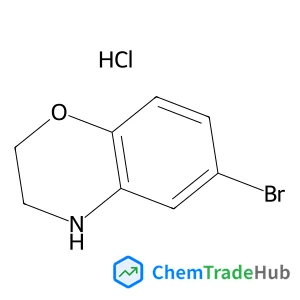
6-Bromo-3,4-dihydro-2H-1,4-benzoxazine hydrochloride (1:1)
CAS Number:
1260803-10-8
Molecular Formula:
C8H9BrClNO

Recommended Suppliers



Disclaimer
This page provides academic journal information for reference and research purposes only. We are not affiliated with any journal publishers and do not handle publication submissions. For publication-related inquiries, please contact the respective journal publishers directly.
If you notice any inaccuracies in the information displayed, please contact us at support@chemtradehub.com. We will promptly review and address your concerns.