












Correction: Liquid-phase exfoliated SnS as a semiconductor coating filler to enhance corrosion protection performance
Literature Information
Publication Date
2020-05-20
DOI
10.1039/D0CP90112A
Impact Factor
3.676
Authors
Zuopeng Qu, Lei Wang, Xuejun Fan, Guoqi Zhang
View Original
Abstract
Correction for ‘Liquid-phase exfoliated SnS as a semiconductor coating filler to enhance corrosion protection performance’ by Hongyu Tang et al., Phys. Chem. Chem. Phys., 2019, 21, 18179–18187, DOI: 10.1039/C9CP03381E.
Related Literature
Efficient visible light-active N-doped TiO2 photocatalysts by a reproducible and controllable synthetic route
Suil In, Alexander Orlov, Felipe García, Mintcho Tikhov, Dominic S. Wright, Richard M. Lambert
2006-08-31
Communication
DOI: 10.1039/B610316B
TTF-based bent-core liquid crystals
Inmaculada C. Pintre, José Luís Serrano, M. Blanca Ros, Josu Ortega, Ibón Alonso, Josu Martínez-Perdiguero, César L. Folcia, Jesús Etxebarria, Faustyna Goc, David B. Amabilino, Josep Puigmartí-Luis, Elba Gomar-Nadal
2008-03-31
Communication
DOI: 10.1039/B801196F
Polymer-supported cationic templates for molecular recognition of anionic hosts in water
Pol Besenius, Peter A. G. Cormack, R. Frederick Ludlow, Sijbren Otto, David C. Sherrington
2008-04-29
Communication
DOI: 10.1039/B802982B
One-step preparation of positively-charged gold nanoraspberry
Hiroshi Shiigi, Yojiro Yamamoto, Naonobu Yoshi, Hidenobu Nakao, Tsutomu Nagaoka
2006-08-21
Communication
DOI: 10.1039/B610085F
Reciprocal template effects in a simple synthetic system
Eleftherios Kassianidis, Douglas Philp
2006-09-05
Communication
DOI: 10.1039/B608148G
Synthesis of propargylic fluorides from allenylsilanes
Laurence Carroll, Mª Carmen Pacheco, Ludivine Garcia, Véronique Gouverneur
2006-08-23
Communication
DOI: 10.1039/B610013A
Highly fluorescent supramolecular gels with chirality transcription through hydrogen bonding
Jangwon Seo, Jong Won Chung, Eun-Hye Jo, Soo Young Park
2008-04-17
Communication
DOI: 10.1039/B802096E
Vinyl and ring-opening metathesis polymerization of norbornene with novel half-sandwich iridium(iii) complexes bearing hydroxyindanimine ligands
Xia Meng, Guang-Rong Tang, Guo-Xin Jin
2008-05-08
Communication
DOI: 10.1039/B803382J
Three-dimensionally ordered macroporous carbons having walls composed of hollow mesosized spheres
Sang-Wook Woo, Keiji Sasajima, Takashi Takei
2006-09-18
Communication
DOI: 10.1039/B607196A
Detection of zinc ions under aqueous conditions using chirality assisted solid-state fluorescence of a bipyridyl based fluorophore
Sivaramapanicker Sreejith, Kizhumuri P. Divya, Ayyappanpillai Ajayaghosh
2008-04-23
Communication
DOI: 10.1039/B802958J
You might also like
Compound Q&A
What are the main uses of 4-Nitrophenyl phosphate disodium salt hexahydrate (CAS: 333338-18-4)?
4-Nitrophenyl phosphate disodium salt hexahydrate is primarily used as a substra...
333338-18-44-Nitrophenyl phosph...
Compound Q&A
What are the main uses of 2-(Trifluoromethyl)-1,3-oxazole-4-carboxylic Acid (CAS: 1060816-01-4)?
2-(Trifluoromethyl)-1,3-oxazole-4-carboxylic Acid (CAS: 1060816-01-4) is widely ...
1060816-01-42-(Trifluoromethyl)-...
Compound Q&A
How should 2-Fluoro-4-biphenylcarboxylic acid (CAS: 137045-30-8) be stored?
2-Fluoro-4-biphenylcarboxylic acid should be stored in a cool, dry place at room...
137045-30-82-Fluoro-4-biphenylc...
Compound Q&A
What industries use Prednisolone-21-Carboxylic Acid (CAS: 61549-70-0)?
Prednisolone-21-Carboxylic Acid is primarily used in the pharmaceutical industry...
61549-70-0Prednisolone-21-Carb...
Compound Q&A
How should 4-(Hydrazinomethyl)-1,2,3-benzenetriol (CAS: 3614-72-0) be stored?
4-(Hydrazinomethyl)-1,2,3-benzenetriol (CAS: 3614-72-0) should be stored in a co...
3614-72-04-(Hydrazinomethyl)-...
Compound Q&A
What industries use 4-Amino-1-methyl-1H-pyrazole-5-carboxylic acid hydrochloride (CAS: 92534-70-8)?
4-Amino-1-methyl-1H-pyrazole-5-carboxylic acid hydrochloride (CAS: 92534-70-8) i...
92534-70-84-Amino-1-methyl-1H-...
Compound Q&A
What regulatory guidelines apply to dehydropachymic acid (CAS: 77012-31-8)?
Dehydropachymic acid (CAS: 77012-31-8) is regulated by various agencies. It fall...
77012-31-8Dehydropachymic acid
Compound Q&A
What is the market or research trend for 6-[(2,2-Dimethylpropanoyl)amino]nicotinic acid (CAS: 898561-66-5)?
The market and research trends for 6-[(2,2-Dimethylpropanoyl)amino]nicotinic aci...
898561-66-56-[(2,2-Dimethylprop...
Compound Q&A
How should 1,10-Phenanthroline-2,9-dicarbaldehyde (CAS: 57709-62-3) be stored?
1,10-Phenanthroline-2,9-dicarbaldehyde should be stored in a cool, dry place awa...
57709-62-31,10-Phenanthroline-...
Compound Q&A
How is 5-Carbamoyl-11-oxo-10,11-dihydro-5H-dibenzo[b,f]azepin-10-yl acetate (CAS: 113952-21-9) typically synthesized?
5-Carbamoyl-11-oxo-10,11-dihydro-5H-dibenzo[b,f]azepin-10-yl acetate can be synt...
113952-21-95-Carbamoyl-11-oxo-1...
Source Journal
Physical Chemistry Chemical Physics

CiteScore:
5.5
Self-citation Rate:
10.3%
Articles per Year:
3036
Physical Chemistry Chemical Physics (PCCP) is an international journal co-owned by 19 physical chemistry and physics societies from around the world. This journal publishes original, cutting-edge research in physical chemistry, chemical physics and biophysical chemistry. To be suitable for publication in PCCP, articles must include significant innovation and/or insight into physical chemistry; this is the most important criterion that reviewers and Editors will judge against when evaluating submissions. The journal has a broad scope and welcomes contributions spanning experiment, theory, computation and data science. Topical coverage includes spectroscopy, dynamics, kinetics, statistical mechanics, thermodynamics, electrochemistry, catalysis, surface science, quantum mechanics, quantum computing and machine learning. Interdisciplinary research areas such as polymers and soft matter, materials, nanoscience, energy, surfaces/interfaces, and biophysical chemistry are welcomed if they demonstrate significant innovation and/or insight into physical chemistry. Joined experimental/theoretical studies are particularly appreciated when complementary and based on up-to-date approaches.
Recommended Compounds
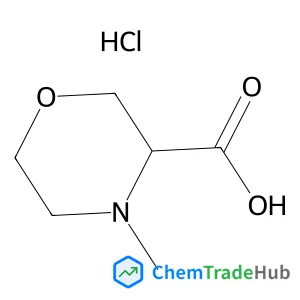
4-Methyl-3-morpholinecarboxylic acid hydrochloride (1:1)
CAS Number:
1240518-90-4
Molecular Formula:
C6H12ClNO3

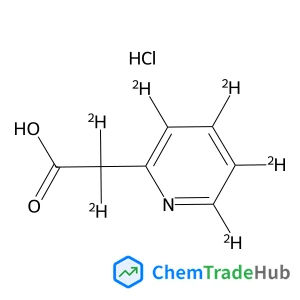
2,2-dideuterio-2-(3,4,5,6-tetradeuterio-2-pyridyl)acetic acid;hydrochloride
CAS Number:
1329799-67-8
Molecular Formula:
C7H2ClD6NO2
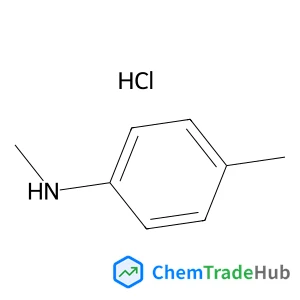
Recommended Suppliers






Disclaimer
This page provides academic journal information for reference and research purposes only. We are not affiliated with any journal publishers and do not handle publication submissions. For publication-related inquiries, please contact the respective journal publishers directly.
If you notice any inaccuracies in the information displayed, please contact us at support@chemtradehub.com. We will promptly review and address your concerns.