












High-throughput experimentation meets artificial intelligence: a new pathway to catalyst discovery
Literature Information
Publication Date
2020-04-30
DOI
10.1039/D0CP00972E
Impact Factor
3.676
Authors
Katherine McCullough, Travis Williams, Kathleen Mingle, Pooyan Jamshidi, Jochen Lauterbach
View Original
Abstract
High throughput experimentation in heterogeneous catalysis provides an efficient solution to the generation of large datasets under reproducible conditions. Knowledge extraction from these datasets has mostly been performed using statistical methods, targeting the optimization of catalyst formulations. The combination of advanced machine learning methodologies with high-throughput experimentation has enormous potential to accelerate the predictive discovery of novel catalyst formulations that do not exist with current statistical design of experiments. This perspective describes selective examples ranging from statistical design of experiments for catalyst synthesis to genetic algorithms applied to catalyst optimization, and finally random forest machine learning using experimental data for the discovery of novel catalysts. Lastly, this perspective also provides an outlook on advanced machine learning methodologies as applied to experimental data for materials discovery.
Related Literature
Ultra-fast and scalable sidewall functionalisation of single-walled carbon nanotubes with carboxylic acid
Brenda Long, Tan Man Wu, Francesco Stellacci
2008-04-16
Communication
DOI: 10.1039/B719380G
Molecules and crystals with both icosahedral and cubic symmetry‡
Jorge Echeverría, David Casanova, Miquel Llunell, Pere Alemany, Santiago Alvarez
2008-05-01
Feature Article
DOI: 10.1039/B719615F
Amylose-wrapped luminescent conjugated polymers
Michael J. Frampton, Timothy D. W. Claridge, Gianluca Latini, Sergio Brovelli, Franco Cacialli, Harry L. Anderson
2008-05-01
Communication
DOI: 10.1039/B803335H
Hysteretic sorption of light gases by a porous metal–organic framework containing tris(para-carboxylated) triphenylphosphine oxide‡
Shaunt E. Oungoulian, Ji Woong Yoon, Young Kyu Hwang, Erica R. Wise, Jong-San Chang
2008-04-21
Communication
DOI: 10.1039/B802809E
Promotion of organic reactions by interfacial hydrogen bonds on hydroxyl group rich nano-solids
Fang Niu, Chang-Chang Liu, Zhi-Min Cui, Jin Zhai, Lei Jiang, Wei-Guo Song
2008-04-11
Communication
DOI: 10.1039/B801361F
In situ investigation of the oxidative addition in homogeneous Pd catalysts by synchronised time resolved UV-Vis/EXAFS
Gemma Guilera, Mark A. Newton, Charlene Polli, Sakura Pascarelli, Meritxell Guinó, King Kuog (Mimi) Hii
2006-09-04
Communication
DOI: 10.1039/B606772G
A ratiometric and non-enzymatic luminescence assay for uric acid: differential quenching of lanthanide excited states by anti-oxidants
Robert A. Poole, Filip Kielar, Siobhan L. Richardson, Philip A. Stenson, David Parker
2006-09-18
Communication
DOI: 10.1039/B611259E
Rhodium N-confused porphyrin-catalyzed alkene cyclopropanation
Teppei Niino, Motoki Toganoh, Bruno Andrioletti
2006-09-05
Communication
DOI: 10.1039/B608154A
A combined SPS–LCD sensor for screening protease specificity
Rein V. Ulijn, Simon J. Webb
2008-05-28
Communication
DOI: 10.1039/B805321A
You might also like
Compound Q&A
What are the main uses of 4-Nitrophenyl phosphate disodium salt hexahydrate (CAS: 333338-18-4)?
4-Nitrophenyl phosphate disodium salt hexahydrate is primarily used as a substra...
333338-18-44-Nitrophenyl phosph...
Compound Q&A
What are the main uses of 2-(Trifluoromethyl)-1,3-oxazole-4-carboxylic Acid (CAS: 1060816-01-4)?
2-(Trifluoromethyl)-1,3-oxazole-4-carboxylic Acid (CAS: 1060816-01-4) is widely ...
1060816-01-42-(Trifluoromethyl)-...
Compound Q&A
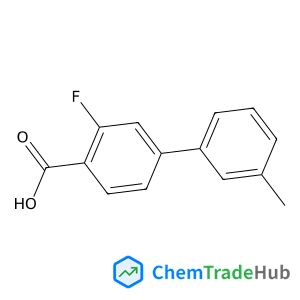
How should 2-Fluoro-4-biphenylcarboxylic acid (CAS: 137045-30-8) be stored?
2-Fluoro-4-biphenylcarboxylic acid should be stored in a cool, dry place at room...
137045-30-82-Fluoro-4-biphenylc...
Compound Q&A
What industries use Prednisolone-21-Carboxylic Acid (CAS: 61549-70-0)?
Prednisolone-21-Carboxylic Acid is primarily used in the pharmaceutical industry...
61549-70-0Prednisolone-21-Carb...
Compound Q&A
How should 4-(Hydrazinomethyl)-1,2,3-benzenetriol (CAS: 3614-72-0) be stored?
4-(Hydrazinomethyl)-1,2,3-benzenetriol (CAS: 3614-72-0) should be stored in a co...
3614-72-04-(Hydrazinomethyl)-...
Compound Q&A
What industries use 4-Amino-1-methyl-1H-pyrazole-5-carboxylic acid hydrochloride (CAS: 92534-70-8)?
4-Amino-1-methyl-1H-pyrazole-5-carboxylic acid hydrochloride (CAS: 92534-70-8) i...
92534-70-84-Amino-1-methyl-1H-...
Compound Q&A
What regulatory guidelines apply to dehydropachymic acid (CAS: 77012-31-8)?
Dehydropachymic acid (CAS: 77012-31-8) is regulated by various agencies. It fall...
77012-31-8Dehydropachymic acid
Compound Q&A
What is the market or research trend for 6-[(2,2-Dimethylpropanoyl)amino]nicotinic acid (CAS: 898561-66-5)?
The market and research trends for 6-[(2,2-Dimethylpropanoyl)amino]nicotinic aci...
898561-66-56-[(2,2-Dimethylprop...
Compound Q&A
How should 1,10-Phenanthroline-2,9-dicarbaldehyde (CAS: 57709-62-3) be stored?
1,10-Phenanthroline-2,9-dicarbaldehyde should be stored in a cool, dry place awa...
57709-62-31,10-Phenanthroline-...
Compound Q&A
How is 5-Carbamoyl-11-oxo-10,11-dihydro-5H-dibenzo[b,f]azepin-10-yl acetate (CAS: 113952-21-9) typically synthesized?
5-Carbamoyl-11-oxo-10,11-dihydro-5H-dibenzo[b,f]azepin-10-yl acetate can be synt...
113952-21-95-Carbamoyl-11-oxo-1...
Source Journal
Physical Chemistry Chemical Physics

CiteScore:
5.5
Self-citation Rate:
10.3%
Articles per Year:
3036
Physical Chemistry Chemical Physics (PCCP) is an international journal co-owned by 19 physical chemistry and physics societies from around the world. This journal publishes original, cutting-edge research in physical chemistry, chemical physics and biophysical chemistry. To be suitable for publication in PCCP, articles must include significant innovation and/or insight into physical chemistry; this is the most important criterion that reviewers and Editors will judge against when evaluating submissions. The journal has a broad scope and welcomes contributions spanning experiment, theory, computation and data science. Topical coverage includes spectroscopy, dynamics, kinetics, statistical mechanics, thermodynamics, electrochemistry, catalysis, surface science, quantum mechanics, quantum computing and machine learning. Interdisciplinary research areas such as polymers and soft matter, materials, nanoscience, energy, surfaces/interfaces, and biophysical chemistry are welcomed if they demonstrate significant innovation and/or insight into physical chemistry. Joined experimental/theoretical studies are particularly appreciated when complementary and based on up-to-date approaches.
Recommended Compounds

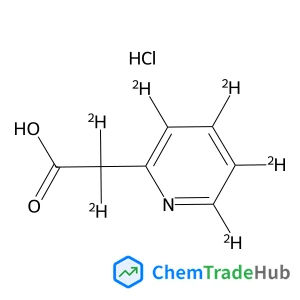
2,2-dideuterio-2-(3,4,5,6-tetradeuterio-2-pyridyl)acetic acid;hydrochloride
CAS Number:
1329799-67-8
Molecular Formula:
C7H2ClD6NO2
Recommended Suppliers




Disclaimer
This page provides academic journal information for reference and research purposes only. We are not affiliated with any journal publishers and do not handle publication submissions. For publication-related inquiries, please contact the respective journal publishers directly.
If you notice any inaccuracies in the information displayed, please contact us at support@chemtradehub.com. We will promptly review and address your concerns.