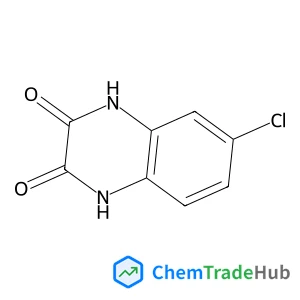
6-CHLORO-2,3-DIOXO-1,2,3,4-TETRAHYDROQUINOXALINE, 97
CAS Number:
169-14-2
Molecular Formula:
C8H5ClN2O2
A graphical abstract is available for this content
Shaunt E. Oungoulian, Ji Woong Yoon, Young Kyu Hwang, Erica R. Wise, Jong-San Chang
DOI: 10.1039/B802809E
Sudipta Ray, Apurba K. Das, Michael G. B. Drew, Arindam Banerjee
DOI: 10.1039/B607657B
Suju P. Mathew, Martin Klussmann, Hiroshi Iwamura, David H. Wells, Jr., Alan Armstrong
DOI: 10.1039/B609926B
Kazusa Ota, Naoto Chatani
DOI: 10.1039/B805100C
Sang-Wook Woo, Keiji Sasajima, Takashi Takei
DOI: 10.1039/B607196A
Sanjib K. Patra, S. M. Wahidur Rahaman, Moumita Majumdar, Arup Sinha, Jitendra K. Bera
DOI: 10.1039/B803632B
Takanori Matsuda, Sho Kadowaki, Yoshiyuki Yamaguchi, Masahiro Murakami
DOI: 10.1039/B804721A
Ben Conway, David V. Graham, Eva Hevia, Alan R. Kennedy, Jan Klett, Robert E. Mulvey
DOI: 10.1039/B805606D
Michael J. Frampton, Timothy D. W. Claridge, Gianluca Latini, Sergio Brovelli, Franco Cacialli, Harry L. Anderson
DOI: 10.1039/B803335H
4-Nitrophenyl phosphate disodium salt hexahydrate is primarily used as a substra...
2-(Trifluoromethyl)-1,3-oxazole-4-carboxylic Acid (CAS: 1060816-01-4) is widely ...
2-Fluoro-4-biphenylcarboxylic acid should be stored in a cool, dry place at room...
Prednisolone-21-Carboxylic Acid is primarily used in the pharmaceutical industry...
4-(Hydrazinomethyl)-1,2,3-benzenetriol (CAS: 3614-72-0) should be stored in a co...
4-Amino-1-methyl-1H-pyrazole-5-carboxylic acid hydrochloride (CAS: 92534-70-8) i...
Dehydropachymic acid (CAS: 77012-31-8) is regulated by various agencies. It fall...
The market and research trends for 6-[(2,2-Dimethylpropanoyl)amino]nicotinic aci...
1,10-Phenanthroline-2,9-dicarbaldehyde should be stored in a cool, dry place awa...
5-Carbamoyl-11-oxo-10,11-dihydro-5H-dibenzo[b,f]azepin-10-yl acetate can be synt...

Physical Chemistry Chemical Physics (PCCP) is an international journal co-owned by 19 physical chemistry and physics societies from around the world. This journal publishes original, cutting-edge research in physical chemistry, chemical physics and biophysical chemistry. To be suitable for publication in PCCP, articles must include significant innovation and/or insight into physical chemistry; this is the most important criterion that reviewers and Editors will judge against when evaluating submissions. The journal has a broad scope and welcomes contributions spanning experiment, theory, computation and data science. Topical coverage includes spectroscopy, dynamics, kinetics, statistical mechanics, thermodynamics, electrochemistry, catalysis, surface science, quantum mechanics, quantum computing and machine learning. Interdisciplinary research areas such as polymers and soft matter, materials, nanoscience, energy, surfaces/interfaces, and biophysical chemistry are welcomed if they demonstrate significant innovation and/or insight into physical chemistry. Joined experimental/theoretical studies are particularly appreciated when complementary and based on up-to-date approaches.