













Percolation behaviors of ionic and electronic transfers in Li3−2xCoxN
Literature Information
Publication Date
2019-01-08
DOI
10.1039/C8CP06770H
Impact Factor
3.676
Authors
E. Panabière, N. Emery, O. Dubrunfaut, J. P. Pereira-Ramos
View Original
Abstract
Nitridocobaltates Li3−2xCoxN, with Li3N-type layered structure, are promising compounds as negative electrode materials for Li-ion batteries. In the present paper, we report the first detailed broadband dielectric spectroscopy (BDS) study on lithiated transition metal nitrides. The ionic and electronic conductivities of Li3−2xCox□xN compounds (0 ≤ x ≤ 0.44) are investigated as a function of the concentration x of cobalt ions, cationic vacancies (□) and lithium ions. Dielectric and conductivity spectra were recorded within the frequency range of 60–1010 Hz from 200 to 300 K. Experimental results exhibit two types of electric conduction: the first one is due to lithium ion diffusion (for 0 ≤ x ≤ 0.25) and the second one due to electronic transfers (for x ≥ 0.3). Furthermore, two percolation transitions are evidenced and associated with 3D ionic transfers (threshold at x ≈ 0.11) on the one hand and 2D electronic transfers (threshold at x ≈ 0.30) on the other hand. Upon increasing the frequency, dielectric relaxations appear from larger to smaller sample scales. These successive polarizations appear with increasing frequency in the following order: (a) sample/silver paint interface; (b) particles (aggregates of grains); (c) grains (crystallites); (d) local ionic and electronic motions within the grains. Evolutions of dielectric relaxation parameters (dielectric strength and relaxation frequency) with Co content confirm the two percolation transitions. Surprisingly, the grain conductivity has a large discontinuity immediately below the electronic percolation threshold where any local- and long-range ionic movement disappears without electronic transfer. This discontinuity would be due to a narrow transition from ionic to electronic conduction when x increases.
Related Literature
The glass transition relaxation in a side-chain liquid crystalline polymer studied by modulated temperature differential scanning calorimetry
Cristina Alvarez, Joaquim J. Moura-Ramos
2000-09-29
Paper
DOI: 10.1039/B004133P
Photo- and thermo-oxidative stability of aromatic spiro-linked bichromophoric cross-shaped molecules
Bernhard Schartel, Thomas Damerau, Manfred Hennecke
2000-09-28
Paper
DOI: 10.1039/B004931J
Laser induced ionisation/dissociation of cyclopentanone in the 320–370 nm region
Paper
DOI: 10.1039/A902027F
ENDOR study of a thiocytosine oxidation product in cytosine monohydrate crystals doped with 2-thiocytosine, X-irradiated at 15 K
Janko N. Herak, Krešimir Sanković, Eli O. Hole, Einar Sagstuen
2000-10-04
Paper
DOI: 10.1039/B004639F
The partial molar volumes of some tetra- and pentapeptides in aqueous solution: a test of amino acid side-chain group additivity for unfolded proteins
Marko Häckel, Hans-Jürgen Hinz, Gavin R. Hedwig
2000-07-06
Paper
DOI: 10.1039/B003034L
Design of novel nonlinear optical chromophores with multiple substitutions
Paper
DOI: 10.1039/A903535D
You might also like
Compound Q&A
What precautions should be taken when handling 4-(2-Furylmethyl)thiomorpholine 1,1-dioxide (CAS: 79206-94-3)?
When handling 4-(2-Furylmethyl)thiomorpholine 1,1-dioxide (CAS: 79206-94-3), it ...
79206-94-34-(2-Furylmethyl)thi...
Compound Q&A
What precautions should be taken when handling 4-Chloro-N-[2-(4-morpholinyl)ethyl]benzamide (CAS: 71320-77-9)?
When handling 4-Chloro-N-[2-(4-morpholinyl)ethyl]benzamide (CAS: 71320-77-9), it...
71320-77-94-Chloro-N-[2-(4-mor...
Compound Q&A
How should waste containing 2-[2-(2-Methoxyethoxy)ethoxy]ethyl 4-methylbenzenesulfonate (CAS: 62921-74-8) be handled?
Waste containing this compound (CAS: 62921-74-8) should be handled according to ...
62921-74-82-[2-(2-Methoxyethox...
Compound Q&A
How should waste containing (S)-Methyl 2-amino-3-cyclohexylpropanoate be handled?
Waste containing (S)-Methyl 2-amino-3-cyclohexylpropanoate should be collected i...
40056-18-6(S)-Methyl 2-amino-3...
Compound Q&A
How is 5-({4-[(2S,4R)-4-Hydroxy-2-methyltetrahydro-2H-pyran-4-yl]-2-thienyl}sulfanyl)-1-methyl-1,3-dihydro-2H-indol-2-one (CAS: 166882-70-8) typically synthesized?
This compound can be synthesized using a multi-step process involving the conjug...
166882-70-85-({4-[(2S,4R)-4-Hyd...
Compound Q&A
Are there alternatives to (2E)-3-(3,4-Dichlorophenyl)acrylic acid (CAS: 7312-27-8) in synthesis?
There are several alternatives to (2E)-3-(3,4-Dichlorophenyl)acrylic acid in syn...
7312-27-8(2E)-3-(3,4-Dichloro...
Compound Q&A
How should Ethyl 6-(2-nitrophenyl)imidazo[2,1-b][1,3]thiazole-3-carboxylate (CAS: 925437-84-9) be stored?
Ethyl 6-(2-nitrophenyl)imidazo[2,1-b][1,3]thiazole-3-carboxylate (CAS: 925437-84...
925437-84-9Ethyl 6-(2-nitrophen...
Compound Q&A
How should waste containing 2-(1,3-Thiazol-2-yl)ethanamine (CAS: 18453-07-1) be handled?
Waste containing 2-(1,3-Thiazol-2-yl)ethanamine (CAS: 18453-07-1) should be coll...
18453-07-12-(1,3-Thiazol-2-yl)...
Compound Q&A
How is Methyl 5-iodo-2-methylbenzoate (CAS: 103440-54-6) typically synthesized?
Methyl 5-iodo-2-methylbenzoate can be synthesized through the iodination of meth...
103440-54-6Methyl 5-iodo-2-meth...
Compound Q&A
How is 5-Chloro[1,2,4]triazolo[1,5-a]pyridine (CAS: 1427399-34-5) typically synthesized?
5-Chloro[1,2,4]triazolo[1,5-a]pyridine is commonly synthesized via the condensat...
1427399-34-55-Chloro[1,2,4]triaz...
Source Journal
Physical Chemistry Chemical Physics

CiteScore:
5.5
Self-citation Rate:
10.3%
Articles per Year:
3036
Physical Chemistry Chemical Physics (PCCP) is an international journal co-owned by 19 physical chemistry and physics societies from around the world. This journal publishes original, cutting-edge research in physical chemistry, chemical physics and biophysical chemistry. To be suitable for publication in PCCP, articles must include significant innovation and/or insight into physical chemistry; this is the most important criterion that reviewers and Editors will judge against when evaluating submissions. The journal has a broad scope and welcomes contributions spanning experiment, theory, computation and data science. Topical coverage includes spectroscopy, dynamics, kinetics, statistical mechanics, thermodynamics, electrochemistry, catalysis, surface science, quantum mechanics, quantum computing and machine learning. Interdisciplinary research areas such as polymers and soft matter, materials, nanoscience, energy, surfaces/interfaces, and biophysical chemistry are welcomed if they demonstrate significant innovation and/or insight into physical chemistry. Joined experimental/theoretical studies are particularly appreciated when complementary and based on up-to-date approaches.
Recommended Compounds
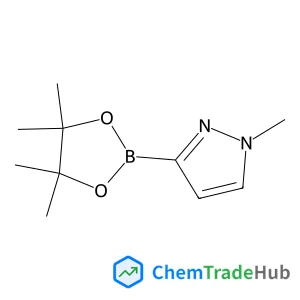
1-Methyl-3-(4,4,5,5-tetramethyl-1,3,2-dioxaborolan-2-yl)-1H-pyrazole
CAS Number:
1020174-04-2
Molecular Formula:
C10H17BN2O2

Methyl 2-cyano-3,12-dioxooleana-1,9(11)-dien-28-oate
CAS Number:
218600-53-4
Molecular Formula:
C32H43NO4

3-(Methylamino)-1-phenyl-1-propanone hydrochloride (1:1)
CAS Number:
2538-50-3
Molecular Formula:
C10H14ClNO
Recommended Suppliers







Disclaimer
This page provides academic journal information for reference and research purposes only. We are not affiliated with any journal publishers and do not handle publication submissions. For publication-related inquiries, please contact the respective journal publishers directly.
If you notice any inaccuracies in the information displayed, please contact us at support@chemtradehub.com. We will promptly review and address your concerns.