












High-performance and self-powered photodetectors from an S-scheme Cs2SnI2Cl2/Cs2TiI6 heterojunction: a DFT+NAMD study
Literature Information
Publication Date
2023-11-15
DOI
10.1039/D3CP04415G
Impact Factor
3.676
Authors
Ruiqin Li
View Original
Abstract
The recently reported two-dimensional (2D) Ruddlesden–Popper perovskite materials exhibit a plethora of advantages, making them an ideal candidate for constructing high-performance photodetectors. The mixed 2D/3D Cs2SnI2Cl2/Cs2TiI6 heterojunction is an S-scheme heterojunction and has excellent light trapping ability. Due to the spontaneous transfer of carriers caused by different work functions, a built-in electric field is formed in the heterojunction and the self-powered capability is provided. Through the nonadiabatic molecular dynamics (NAMD) method, it is found that the heterojunction exhibits fast photoresponse, low losses and efficient carrier separation. In addition, biaxial compressive strain can not only broaden the photoresponse of the Cs2SnI2Cl2/Cs2TiI6 heterojunction in the near-infrared region and enhance the optical absorption coefficient of the heterojunction, but also enhance the self-powered ability of the heterojunction. Our discoveries present a highly effective avenue for the future development of high-performance, self-powered hybrid optoelectronic devices.
Related Literature
Crossover in the inelastic electron tunneling spectra of conjugated molecules with direct Au–C links
Enrique Montes, Giuseppe Foti, Héctor Vázquez
2019-01-08
Paper
DOI: 10.1039/C8CP06290K
Al solubility in (Ti1−cAlc)NiSn half-Heusler alloy
David Fuks, Yaniv Gelbstein
2019-03-15
Paper
DOI: 10.1039/C9CP00764D
Transition-metal dichalcogenides/Mg(OH)2 van der Waals heterostructures as promising water-splitting photocatalysts: a first-principles study
Yi Luo, Sake Wang, Kai Ren, Jyh-Pin Chou, Jin Yu, Zhengming Sun, Minglei Sun
2019-01-09
Paper
DOI: 10.1039/C8CP06960C
First-principles prediction of phonon-mediated superconductivity in XBC (X = Mg, Ca, Sr, Ba)
Enamul Haque, M. Anwar Hossain, Catherine Stampfl
2019-04-02
Paper
DOI: 10.1039/C8CP07634K
Depletion driven self-assembly of block copolymer solutions by homopolymers
Tao Yang, Zhen Lei, Shuang Yang, Er-Qiang Chen
2019-01-03
Paper
DOI: 10.1039/C8CP06679E
Fluorescence measurements of peroxynitrite/peroxynitrous acid in cold air plasma treated aqueous solutions
Barbora Tarabová, Petr Lukeš, Malte U. Hammer, Helena Jablonowski, Thomas von Woedtke, Stephan Reuter, Zdenko Machala
2019-04-01
Paper
DOI: 10.1039/C9CP00871C
Interactions between cyclic nucleotides and common cations: an ab initio molecular dynamics study
Giuseppe Cassone, Holger Kruse, Jiri Sponer
2019-03-25
Paper
DOI: 10.1039/C8CP07492E
Destructive role of oxygen in growth of molybdenum disulfide determined by secondary ion mass spectrometry
Paweł Piotr Michałowski, Piotr Knyps, Paweł Ciepielewski, Piotr Caban, Ewa Dumiszewska, Jacek Baranowski
2019-04-03
Paper
DOI: 10.1039/C9CP00613C
Electronic transport properties and magnetoresistance in the Fe3O4/SiO2/p-Si heterostructure with an in-plane current geometry
Xiang Liu, Wenbo Mi
2019-03-06
Paper
DOI: 10.1039/C9CP00033J
Thermodynamics of adsorption of lysozyme on gold nanoparticles from second harmonic light scattering
Kamini Mishra, Puspendu K. Das
2019-03-13
Paper
DOI: 10.1039/C8CP07299J
You might also like
Compound Q&A
Are there alternatives to 1-(4-Chlorophenyl)-N-hydroxymethanimine (CAS: 3848-36-0) in synthesis?
When considering alternatives to 1-(4-Chlorophenyl)-N-hydroxymethanimine (CAS: 3...
3848-36-01-(4-Chlorophenyl)-N...
Compound Q&A
How should (1R,9S,10S,12S,14E,16S,19R,20R,21S,22R)-3,9,21-Trihydroxy-5,10,12,14,16,20,22-heptamethyl-23,24-dioxatetracyclo[17.3.1.1~6,9~.0~2,7~]tetracosa-2,5,7,14-tetraen-4-one (CAS: 183202-73-5) be stored?
This compound should be stored in a cool, dry place away from direct sunlight. I...
183202-73-5(1R,9S,10S,12S,14E,1...
Compound Q&A
How is 3-(4-Bromophenyl)-5-(2-fluorophenyl)-1,2,4-oxadiazole (CAS: 419553-16-5) typically synthesized?
3-(4-Bromophenyl)-5-(2-fluorophenyl)-1,2,4-oxadiazole is synthesized through a m...
419553-16-53-(4-Bromophenyl)-5-...
Compound Q&A
How is 5-Chloro-2-(4-chlorophenyl)-4-methyl-6-[3-(1-piperidinyl)propoxy]pyrimidine (CAS: 1639220-19-1) typically synthesized?
5-Chloro-2-(4-chlorophenyl)-4-methyl-6-[3-(1-piperidinyl)propoxy]pyrimidine (CAS...
1639220-19-15-Chloro-2-(4-chloro...
Compound Q&A
What industries use 2-Chloro-4-(difluoromethoxy)pyridine (CAS: 1206978-15-5)?
2-Chloro-4-(difluoromethoxy)pyridine is used in the pharmaceutical industry for ...
1206978-15-52-Chloro-4-(difluoro...
Compound Q&A
What regulatory guidelines apply to 3-Chloro-6-methylpyridazine (CAS: 1121-79-5)?
3-Chloro-6-methylpyridazine (CAS: 1121-79-5) is classified under the Globally Ha...
1121-79-53-Chloro-6-methylpyr...
Compound Q&A
Are there alternatives to Methyl 4,5-dimethyl-2-nitrobenzoate in synthesis?
Several alternatives can be used in the synthesis of Methyl 4,5-dimethyl-2-nitro...
90922-74-0Methyl 4,5-dimethyl-...
Compound Q&A
Are there alternatives to (2E,2'E)-3,3'-(1,4-Phenylene)bisacrylaldehyde in synthesis?
Alternatives to (2E,2'E)-3,3'-(1,4-Phenylene)bisacrylaldehyde include other acry...
63405-68-5(2E,2'E)-3,3'-(1,4-P...
Compound Q&A
What is 3-Amino-5-chloropyridin-2-ol hydrochloride (CAS: 1261906-29-9)?
3-Amino-5-chloropyridin-2-ol hydrochloride is an organic compound with the CAS n...
1261906-29-93-Amino-5-chloropyri...
Compound Q&A
What precautions should be taken when handling 6,7-Difluoro-2,3-dihydro-4H-chromen-4-one (CAS: 1092349-93-3)?
When handling 6,7-Difluoro-2,3-dihydro-4H-chromen-4-one, it is essential to wear...
1092349-93-36,7-Difluoro-2,3-dih...
Source Journal
Physical Chemistry Chemical Physics

CiteScore:
5.5
Self-citation Rate:
10.3%
Articles per Year:
3036
Physical Chemistry Chemical Physics (PCCP) is an international journal co-owned by 19 physical chemistry and physics societies from around the world. This journal publishes original, cutting-edge research in physical chemistry, chemical physics and biophysical chemistry. To be suitable for publication in PCCP, articles must include significant innovation and/or insight into physical chemistry; this is the most important criterion that reviewers and Editors will judge against when evaluating submissions. The journal has a broad scope and welcomes contributions spanning experiment, theory, computation and data science. Topical coverage includes spectroscopy, dynamics, kinetics, statistical mechanics, thermodynamics, electrochemistry, catalysis, surface science, quantum mechanics, quantum computing and machine learning. Interdisciplinary research areas such as polymers and soft matter, materials, nanoscience, energy, surfaces/interfaces, and biophysical chemistry are welcomed if they demonstrate significant innovation and/or insight into physical chemistry. Joined experimental/theoretical studies are particularly appreciated when complementary and based on up-to-date approaches.
Recommended Compounds
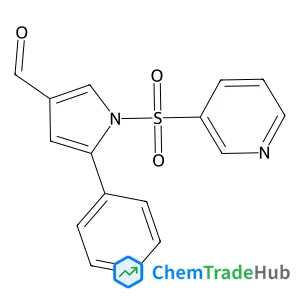
5-Phenyl-1-(pyridin-3-ylsulfonyl)-1H-pyrrole-3-carbaldehyde
CAS Number:
881676-90-0
Molecular Formula:
C16H12N2O3S
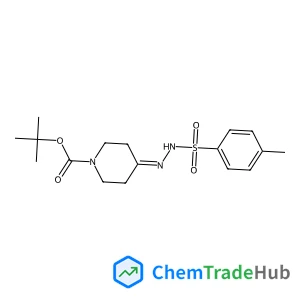
tert-Butyl 4-(2-(p-Tolylsulfonyl)hydrazono)piperidine-1-carboxylate
CAS Number:
1046478-89-0
Molecular Formula:
C17H25N3O4S
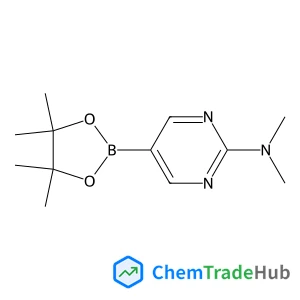
N,N-Dimethyl-5-(4,4,5,5-tetramethyl-1,3,2-dioxaborolan-2-yl)-2-pyrimidinamine
CAS Number:
1032759-30-0
Molecular Formula:
C12H20BN3O2

Recommended Suppliers




Disclaimer
This page provides academic journal information for reference and research purposes only. We are not affiliated with any journal publishers and do not handle publication submissions. For publication-related inquiries, please contact the respective journal publishers directly.
If you notice any inaccuracies in the information displayed, please contact us at support@chemtradehub.com. We will promptly review and address your concerns.