



Comparison study of carbon clusters formation during thermal decomposition of 1,3,5-triamino-2,4,6-trinitrobenzene and benzotrifuroxan: a ReaxFF based sequential molecular dynamics simulation
Literature Information
Publication Date
2020-01-22
DOI
10.1039/C9CP05734J
Impact Factor
3.676
Authors
Xuefeng Zhao, Xinping Long, Xiaogan Dai, Kaili Zhang, Ming Li, Feng Guo, Zhiqiang Qiao, Yushi Wen
View Original
Abstract
Carbon rich clusters are usually found after the detonation of explosives, which greatly hinder their further decomposition into small molecules. A comparison study of thermal decomposition and clusters formation between 1,3,5-triamino-2,4,6-trinitrobenzene (TATB) and benzotrifuroxan (BTF) crystals was conducted to uncover the mechanisms behind their distinct differences in sensitivity and reaction violence, which has not been investigated in detail. The simulations of heating at 3500 K, then expansion and cooling were conducted through reactive molecular dynamics using the ReaxFF-lg force field. As a result, the initial low decay rate indicates that TATB is more stable than BTF under high temperatures, while once ignited it decays faster than BTF. Nevertheless, BTF decomposes more completely with a higher potential energy release, a greater amount of final products, and higher reaction frequencies, and shows higher reaction violence than TATB. More and heavier clusters occur in TATB crystals compared with those in BTF. Large clusters form during the heating process and then partly dissociate during expansion and cooling. A faster cooling rate facilitates larger clusters formation. Graphitic geometries as well as carbon rings and carbon chains are common in the stable clusters. Besides, further simulations show that a lower heating temperature facilitates larger clusters formation both in TATB and BTF. Our results are expected to deepen the insight into the mechanisms of carbon clusters formation and the different performances of TATB and BTF.
Recommended Journals

Journal of Natural Medicines

Russian Journal of General Chemistry

Chemistry Education Research and Practice

Organic Process Research & Development

Russian Journal of Organic Chemistry

Crystallography Reports

Current Opinion in Colloid & Interface Science

Journal of Peptide Science

Chemical Communications

Russian Journal of Applied Chemistry
Related Literature
In silico characterization of protein partial molecular volumes and hydration shells
Sara Del Galdo, Paolo Marracino, Marco D'Abramo, Andrea Amadei
2015-10-27
Paper
DOI: 10.1039/C5CP05891K
Testing the transferability of a coarse-grained model to intrinsically disordered proteins
Gil O. Rutter, David Quigley, Tiffany R. Walsh
2015-11-05
Paper
DOI: 10.1039/C5CP05652G
How exciton-vibrational coherences control charge separation in the photosystem II reaction center
Vladimir I. Novoderezhkin, Elisabet Romero, Rienk van Grondelle
2015-03-31
Paper
DOI: 10.1039/C5CP00582E
Coupled phase field, heat conduction, and elastodynamic simulations of kinetic superheating and nanoscale melting of aluminum nanolayer irradiated by picosecond laser
Yong Seok Hwang, Valery I. Levitas
2015-11-02
Paper
DOI: 10.1039/C5CP04443J
Adsorption of O2 on anionic silver clusters: spins and electron binding energies dominate in the range up to nano sizes
Jun Ma, Xizi Cao, Xiaopeng Xing, Xuefeng Wang, Joel H. Parks
2015-11-12
Paper
DOI: 10.1039/C5CP06116D
Self-assembly of block copolymers on lithographically patterned template with ordered posts
Dan Xu, Yao-Hong Xue, Yan-Bo Sun
2015-11-03
Paper
DOI: 10.1039/C5CP05449D
Prediction of spin–orbital coupling effects on the electronic structure of two dimensional van der Waals heterostructures
Baiqing You, Xiaocha Wang, Wenbo Mi
2015-10-28
Paper
DOI: 10.1039/C5CP05068E
Periodic Hartree–Fock and hybrid density functional calculations on the metallic and the insulating phase of (EDO-TTF)2PF6
Gerrit-Jan Linker, Paul H. M. van Loosdrecht, Piet Th. van Duijnen, Ria Broer
2015-10-21
Paper
DOI: 10.1039/C5CP05187H
Electron transfer within a reaction path model calibrated by constrained DFT calculations: application to mixed-valence organic compounds
A. de la Lande, C. Meier
2015-05-18
Paper
DOI: 10.1039/C5CP01194A
The general base in the thymidylate synthase catalyzed proton abstraction
Ananda K. Ghosh, Zahidul Islam, Jonathan Krueger, Thelma Abeysinghe, Amnon Kohen
2015-04-15
Paper
DOI: 10.1039/C5CP01246E
You might also like
Compound Q&A
Is 6-(3-Fluorophenyl)picolinic acid (CAS: 887982-40-3) safe?
6-(3-Fluorophenyl)picolinic acid is generally considered safe for laboratory use...
887982-40-36-(3-Fluorophenyl)pi...
Compound Q&A
What industries use (3R)-3-Pyrrolidinol (CAS: 2799-21-5)?
(3R)-3-Pyrrolidinol is used in the pharmaceutical industry as a precursor for dr...
2799-21-5(3R)-3-Pyrrolidinol
Compound Q&A
What precautions should be taken when handling (4R,5R)-4,5-Diethoxycarbonyl-2,2-dimethyldioxolane (CAS: 59779-75-8)?
When handling (4R,5R)-4,5-Diethoxycarbonyl-2,2-dimethyldioxolane (CAS: 59779-75-...
59779-75-8(4R,5R)-4,5-Diethoxy...
Compound Q&A
How is 1-(6-Chloroimidazo[1,2-b]pyridazin-3-yl)ethanone (CAS: 90734-71-7) typically synthesized?
1-(6-Chloroimidazo[1,2-b]pyridazin-3-yl)ethanone is often synthesized via a mult...
90734-71-71-(6-Chloroimidazo[1...
Compound Q&A
What is the market or research trend for N-Ethyl-3,4-dimethylbenzylamine (CAS: 39180-83-1)?
The market for N-Ethyl-3,4-dimethylbenzylamine (CAS: 39180-83-1) remains steady,...
39180-83-1N-Ethyl-3,4-dimethyl...
Compound Q&A
What is Tert-butyl 3-(pyrrolidin-1-yl)azetidine-1-carboxylate (CAS: 1019008-21-9)?
Tert-butyl 3-(pyrrolidin-1-yl)azetidine-1-carboxylate is a chemical compound wit...
1019008-21-9Tert-butyl 3-(pyrrol...
Compound Q&A
What regulatory guidelines apply to 1-Bromo-3-chloro-2,4-dimethoxybenzene (CAS: 1228956-93-1)?
1-Bromo-3-chloro-2,4-dimethoxybenzene (CAS: 1228956-93-1) falls under the classi...
1228956-93-11-Bromo-3-chloro-2,4...
Compound Q&A
Is 8-Bromo-2-methyl-3,4-dihydroisoquinolin-1(2H)-one (CAS: 1368622-07-4) safe?
The safety of 8-Bromo-2-methyl-3,4-dihydroisoquinolin-1(2H)-one (CAS: 1368622-07...
1368622-07-48-Bromo-2-methyl-3,4...
Compound Q&A
Is Benzyl [(3S)-2,6-dioxo-3-piperidinyl]carbamate (CAS: 22785-43-9) safe?
Benzyl [(3S)-2,6-dioxo-3-piperidinyl]carbamate is generally safe when handled wi...
22785-43-9Benzyl [(3S)-2,6-dio...
Compound Q&A
How should 1-{[4-(4,4,5,5-Tetramethyl-1,3,2-dioxaborolan-2-yl)phenyl]sulfonyl}pyrrolidine (CAS: 928657-21-0) be stored?
1-{[4-(4,4,5,5-Tetramethyl-1,3,2-dioxaborolan-2-yl)phenyl]sulfonyl}pyrrolidine s...
928657-21-01-{[4-(4,4,5,5-Tetra...
Source Journal
Physical Chemistry Chemical Physics

CiteScore:
5.5
Self-citation Rate:
10.3%
Articles per Year:
3036
Physical Chemistry Chemical Physics (PCCP) is an international journal co-owned by 19 physical chemistry and physics societies from around the world. This journal publishes original, cutting-edge research in physical chemistry, chemical physics and biophysical chemistry. To be suitable for publication in PCCP, articles must include significant innovation and/or insight into physical chemistry; this is the most important criterion that reviewers and Editors will judge against when evaluating submissions. The journal has a broad scope and welcomes contributions spanning experiment, theory, computation and data science. Topical coverage includes spectroscopy, dynamics, kinetics, statistical mechanics, thermodynamics, electrochemistry, catalysis, surface science, quantum mechanics, quantum computing and machine learning. Interdisciplinary research areas such as polymers and soft matter, materials, nanoscience, energy, surfaces/interfaces, and biophysical chemistry are welcomed if they demonstrate significant innovation and/or insight into physical chemistry. Joined experimental/theoretical studies are particularly appreciated when complementary and based on up-to-date approaches.
Recommended Compounds
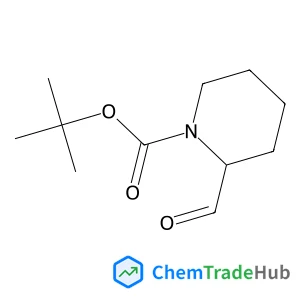
2-Methyl-2-propanyl (2R)-2-formyl-1-piperidinecarboxylate
CAS Number:
134526-69-5
Molecular Formula:
C11H19NO3
![(2E)-4-[(1R,2S,8R,19S,21R)-14-Hydroxy-11-isopropenyl-8,23,23-trimethyl-5-(3-methyl-2-buten-1-yl)-16,20-dioxo-3,7,22-trioxaheptacyclo[17.4.1.1~8,12~.0~2,17~.0~2,21~.0~4,15~.0~6,13~]pentacosa-4(15),5,13
,17-tetraen-21-yl]-2-methyl-2-butenoic acid structure](https://static.chemtradehub.com/structs/173/173867-04-4-d2d3.webp "(2E)-4-[(1R,2S,8R,19S,21R)-14-Hydroxy-11-isopropenyl-8,23,23-trimethyl-5-(3-methyl-2-buten-1-yl)-16,20-dioxo-3,7,22-trioxaheptacyclo[17.4.1.1~8,12~.0~2,17~.0~2,21~.0~4,15~.0~6,13~]pentacosa-4(15),5,13
,17-tetraen-21-yl]-2-methyl-2-butenoic acid structure")
Recommended Suppliers





Disclaimer
This page provides academic journal information for reference and research purposes only. We are not affiliated with any journal publishers and do not handle publication submissions. For publication-related inquiries, please contact the respective journal publishers directly.
If you notice any inaccuracies in the information displayed, please contact us at support@chemtradehub.com. We will promptly review and address your concerns.