













Tuning the photoreactivity of Z-hexatriene photoswitches by substituents – a non-adiabatic molecular dynamics study
Literature Information
Publication Date
2018-09-13
DOI
10.1039/C8CP05181J
Impact Factor
3.676
Authors
Enrico Tapavicza, Travis Thompson, Kenneth Redd, Dan Kim
View Original
Abstract
To understand how substituents can be used to increase the quantum yield of photochemical electrocyclic ring-closing of the Z-hexa-1,3,5-triene (HT) photoswitch forming cyclohexadiene (CHD), we investigate the S1 photo dynamics of HT and its derivatives 2,5-dimethyl-HT (DMHT), 2-isopropyl-5-methyl-HT (2,5-IMHT), 1-isopropyl-4-methyl-HT (1,4-IMHT), and 2,5-diisopropyl-HT (DIHT) using time-dependent density functional theory surface hopping dynamics. We report detailed photoproduct distributions, formation mechanisms, branching ratios, and wavelength-dependent product quantum yields. Most products have been confirmed experimentally and include all-trans HT derivatives, cyclopropanes, cyclobutenes, cyclopentene, cyclohexadienes, and bicyclic compounds. Regarding CHD formation, we find that for the 2,5-substituted derivatives DMHT, 2,5-IMHT, and DIHT, the branching ratios increase with increasing size of the substituents. In contrast the branching ratios of the E/Z-isomerization decrease with increasing size of the substituents. Due to steric interactions, increasing the size of the substituents increases the amount of gZg rotamers in the ground state, which are prone to CHD formation and have lower E/Z-isomerization probability. Furthermore, we find [1,4], [1,5], and [1,6]-sigmatropic hydrogen shift reactions occurring at large percentages (5% to 15%); for sterical reasons these reactions stem from tZg conformers. DIHT shows the lowest percentage of side product formation among the 2,5-substituted molecules and highest CHD branching ratio; its CHD quantum yield can be increased up to more than 64%, by excitation of DIHT on the red tail of its absorption spectrum, whereas the Z/E-isomerization is reduced below 5% and side reactions practically vanish. This makes DIHT the best candidate for applications in molecular switches.
Related Literature
ENDOR study of a thiocytosine oxidation product in cytosine monohydrate crystals doped with 2-thiocytosine, X-irradiated at 15 K
Janko N. Herak, Krešimir Sanković, Eli O. Hole, Einar Sagstuen
2000-10-04
Paper
DOI: 10.1039/B004639F
An EPR/ENDOR study of the reduction products of symmetrical isomers of dipyridylacetylene
Paper
DOI: 10.1039/A902689D
The amphiphilic drug flufenamic acid can induce a hexagonal phase in DMPC: a solid state 31P- and 19F-NMR study
Stephan L. Grage, Dorit R. Gauger, Carsten Selle, Walter Pohle, Walter Richter, Anne S. Ulrich
2000-08-23
Paper
DOI: 10.1039/B003902K
The thermal unimolecular decomposition rate constants of ethoxy radicals
Paper
DOI: 10.1039/A901768B
Quasiclassical trajectory calculations of collisional energy transfer: the methyl internal rotor in ethane
Paper
DOI: 10.1039/A902118C
n-Alkyl alcohols at the water/vapour and water/benzene interfaces: a study on phase transfer energies
Luca Frediani, Christian S. Pomelli, Jacopo Tomasi
2000-08-15
Paper
DOI: 10.1039/B004330N
Influence of water on the pillaring of montmorillonite with aminopropyltriethoxysilane
Paper
DOI: 10.1039/A901888C
You might also like
Compound Q&A
What precautions should be taken when handling 4-(2-Furylmethyl)thiomorpholine 1,1-dioxide (CAS: 79206-94-3)?
When handling 4-(2-Furylmethyl)thiomorpholine 1,1-dioxide (CAS: 79206-94-3), it ...
79206-94-34-(2-Furylmethyl)thi...
Compound Q&A
What precautions should be taken when handling 4-Chloro-N-[2-(4-morpholinyl)ethyl]benzamide (CAS: 71320-77-9)?
When handling 4-Chloro-N-[2-(4-morpholinyl)ethyl]benzamide (CAS: 71320-77-9), it...
71320-77-94-Chloro-N-[2-(4-mor...
Compound Q&A
How should waste containing 2-[2-(2-Methoxyethoxy)ethoxy]ethyl 4-methylbenzenesulfonate (CAS: 62921-74-8) be handled?
Waste containing this compound (CAS: 62921-74-8) should be handled according to ...
62921-74-82-[2-(2-Methoxyethox...
Compound Q&A
How should waste containing (S)-Methyl 2-amino-3-cyclohexylpropanoate be handled?
Waste containing (S)-Methyl 2-amino-3-cyclohexylpropanoate should be collected i...
40056-18-6(S)-Methyl 2-amino-3...
Compound Q&A
How is 5-({4-[(2S,4R)-4-Hydroxy-2-methyltetrahydro-2H-pyran-4-yl]-2-thienyl}sulfanyl)-1-methyl-1,3-dihydro-2H-indol-2-one (CAS: 166882-70-8) typically synthesized?
This compound can be synthesized using a multi-step process involving the conjug...
166882-70-85-({4-[(2S,4R)-4-Hyd...
Compound Q&A
Are there alternatives to (2E)-3-(3,4-Dichlorophenyl)acrylic acid (CAS: 7312-27-8) in synthesis?
There are several alternatives to (2E)-3-(3,4-Dichlorophenyl)acrylic acid in syn...
7312-27-8(2E)-3-(3,4-Dichloro...
Compound Q&A
How should Ethyl 6-(2-nitrophenyl)imidazo[2,1-b][1,3]thiazole-3-carboxylate (CAS: 925437-84-9) be stored?
Ethyl 6-(2-nitrophenyl)imidazo[2,1-b][1,3]thiazole-3-carboxylate (CAS: 925437-84...
925437-84-9Ethyl 6-(2-nitrophen...
Compound Q&A
How should waste containing 2-(1,3-Thiazol-2-yl)ethanamine (CAS: 18453-07-1) be handled?
Waste containing 2-(1,3-Thiazol-2-yl)ethanamine (CAS: 18453-07-1) should be coll...
18453-07-12-(1,3-Thiazol-2-yl)...
Compound Q&A
How is Methyl 5-iodo-2-methylbenzoate (CAS: 103440-54-6) typically synthesized?
Methyl 5-iodo-2-methylbenzoate can be synthesized through the iodination of meth...
103440-54-6Methyl 5-iodo-2-meth...
Compound Q&A
How is 5-Chloro[1,2,4]triazolo[1,5-a]pyridine (CAS: 1427399-34-5) typically synthesized?
5-Chloro[1,2,4]triazolo[1,5-a]pyridine is commonly synthesized via the condensat...
1427399-34-55-Chloro[1,2,4]triaz...
Source Journal
Physical Chemistry Chemical Physics

CiteScore:
5.5
Self-citation Rate:
10.3%
Articles per Year:
3036
Physical Chemistry Chemical Physics (PCCP) is an international journal co-owned by 19 physical chemistry and physics societies from around the world. This journal publishes original, cutting-edge research in physical chemistry, chemical physics and biophysical chemistry. To be suitable for publication in PCCP, articles must include significant innovation and/or insight into physical chemistry; this is the most important criterion that reviewers and Editors will judge against when evaluating submissions. The journal has a broad scope and welcomes contributions spanning experiment, theory, computation and data science. Topical coverage includes spectroscopy, dynamics, kinetics, statistical mechanics, thermodynamics, electrochemistry, catalysis, surface science, quantum mechanics, quantum computing and machine learning. Interdisciplinary research areas such as polymers and soft matter, materials, nanoscience, energy, surfaces/interfaces, and biophysical chemistry are welcomed if they demonstrate significant innovation and/or insight into physical chemistry. Joined experimental/theoretical studies are particularly appreciated when complementary and based on up-to-date approaches.
Recommended Compounds
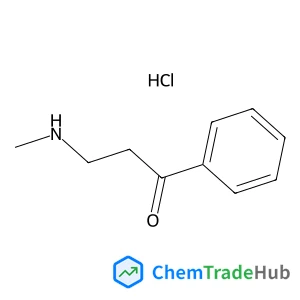
3-(Methylamino)-1-phenyl-1-propanone hydrochloride (1:1)
CAS Number:
2538-50-3
Molecular Formula:
C10H14ClNO
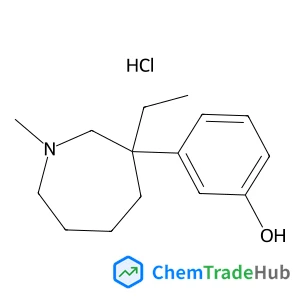
3-(3-Ethyl-1-methyl-3-azepanyl)phenol hydrochloride (1:1)
CAS Number:
59263-76-2
Molecular Formula:
C15H24ClNO
![1-Naphthalenesulfonic acid, 2-[(2-hydroxy-1-naphthalenyl)azo]-, bariumsalt (2:1) structure](https://static.chemtradehub.com/structs/110/1103-38-4-0b33.webp "1-Naphthalenesulfonic acid, 2-[(2-hydroxy-1-naphthalenyl)azo]-, bariumsalt (2:1) structure")
1-Naphthalenesulfonic acid, 2-[(2-hydroxy-1-naphthalenyl)azo]-, bariumsalt (2:1)
CAS Number:
1103-38-4
Molecular Formula:
C20H14BaN2O4S
Recommended Suppliers



Disclaimer
This page provides academic journal information for reference and research purposes only. We are not affiliated with any journal publishers and do not handle publication submissions. For publication-related inquiries, please contact the respective journal publishers directly.
If you notice any inaccuracies in the information displayed, please contact us at support@chemtradehub.com. We will promptly review and address your concerns.