












Understanding the interactions of imidazolium-based ionic liquids with cell membrane models
Literature Information
Publication Date
2018-11-09
DOI
10.1039/C8CP05035J
Impact Factor
3.676
Authors
Carlos M. N. Mendonça, Debora T. Balogh, Simone C. Barbosa, Tânia E. Sintra, Sónia P. M. Ventura, Pedro Morgado, Eduardo J. M. Filipe, João A. P. Coutinho, Osvaldo N. Oliveira, Jr., Ana Barros-Timmons
View Original
Abstract
Cell membrane models have been used to evaluate the interactions of various imidazolium-based ionic liquids (ILs) with Langmuir monolayers of two types of phospholipids and cholesterol. Data from surface pressure isotherms, Brewster angle microscopy (BAM) and polarization-modulated infrared reflection absorption spectroscopy (PM-IRRAS) pointed to significant effects on the monolayers of 1,2-dipalmitoyl-sn-glycero-3-phosphocholine (DPPC) and cholesterol, used to mimic the membranes of eukaryotic cells, for ILs containing more than 6 carbon atoms in the alkyl chain (i.e. n > 6). For ILs with less hydrophobic tails (n ≤ 6) and low concentrations, the effects were almost negligible, therefore, such ILs should not be toxic to eukaryotic cells. The hydrophobicity of the anion was also proved to be relevant, with larger impact from ILs containing tetrafluoroborate ([BF4]−) than chloride (Cl−). Molecular dynamics simulations for DPPC monolayers at the surface of aqueous solutions of alkylimidazolium chloride ([Cnmim]Cl) confirm the penetration of the IL cations with longer alkyl chains into the phospholid monolayer and provide information on their location and orientation within the monolayer. For monolayers of dipalmitoylphosphatidyl glycerol (DPPG), which is negatively charged like bacteria cell membranes, the ILs induced much larger effects. Similarly to the results for DPPC and cholesterol, effects increased with the number of carbon atoms in the alkyl chain and with a more hydrophobic anion [BF4]−. Overall, the approach used can provide relevant information of molecular-level interactions behind the toxicity mechanisms and support the design of (quantitative) structure–activity relationship models, which may help design more efficient and environmentally friendly ILs.
Related Literature
Ultrafast IR laser control of photodissociation: single- vs. multi-pulse schemes
Paper
DOI: 10.1039/A902136A
Synthesis of mesostructured aluminophosphates using cationic templating
2000-10-30
Paper
DOI: 10.1039/B004928J
Kinetics of excited-state Cr(a5S2, a5DJ, a5GJ) depletion by simple hydrocarbons
Paper
DOI: 10.1039/A902886B
Solid-state NMR investigations on the structure and topological equilibria of polypeptides associated with biological membranes. Invited Lecture
2000-09-01
Paper
DOI: 10.1039/B003695L
Interaction of thiophene with a molybdenum disulfide catalyst—an inelastic neutron scattering study
Paper
DOI: 10.1039/A902617G
Continuum solvent effects on various isomers of bilirubin
Giuliano Alagona, Caterina Ghio, Susanna Monti
2000-09-01
Paper
DOI: 10.1039/B004476H
You might also like
Compound Q&A
What precautions should be taken when handling 4-(2-Furylmethyl)thiomorpholine 1,1-dioxide (CAS: 79206-94-3)?
When handling 4-(2-Furylmethyl)thiomorpholine 1,1-dioxide (CAS: 79206-94-3), it ...
79206-94-34-(2-Furylmethyl)thi...
Compound Q&A
What precautions should be taken when handling 4-Chloro-N-[2-(4-morpholinyl)ethyl]benzamide (CAS: 71320-77-9)?
When handling 4-Chloro-N-[2-(4-morpholinyl)ethyl]benzamide (CAS: 71320-77-9), it...
71320-77-94-Chloro-N-[2-(4-mor...
Compound Q&A
How should waste containing 2-[2-(2-Methoxyethoxy)ethoxy]ethyl 4-methylbenzenesulfonate (CAS: 62921-74-8) be handled?
Waste containing this compound (CAS: 62921-74-8) should be handled according to ...
62921-74-82-[2-(2-Methoxyethox...
Compound Q&A
How should waste containing (S)-Methyl 2-amino-3-cyclohexylpropanoate be handled?
Waste containing (S)-Methyl 2-amino-3-cyclohexylpropanoate should be collected i...
40056-18-6(S)-Methyl 2-amino-3...
Compound Q&A
How is 5-({4-[(2S,4R)-4-Hydroxy-2-methyltetrahydro-2H-pyran-4-yl]-2-thienyl}sulfanyl)-1-methyl-1,3-dihydro-2H-indol-2-one (CAS: 166882-70-8) typically synthesized?
This compound can be synthesized using a multi-step process involving the conjug...
166882-70-85-({4-[(2S,4R)-4-Hyd...
Compound Q&A
Are there alternatives to (2E)-3-(3,4-Dichlorophenyl)acrylic acid (CAS: 7312-27-8) in synthesis?
There are several alternatives to (2E)-3-(3,4-Dichlorophenyl)acrylic acid in syn...
7312-27-8(2E)-3-(3,4-Dichloro...
Compound Q&A
How should Ethyl 6-(2-nitrophenyl)imidazo[2,1-b][1,3]thiazole-3-carboxylate (CAS: 925437-84-9) be stored?
Ethyl 6-(2-nitrophenyl)imidazo[2,1-b][1,3]thiazole-3-carboxylate (CAS: 925437-84...
925437-84-9Ethyl 6-(2-nitrophen...
Compound Q&A
How should waste containing 2-(1,3-Thiazol-2-yl)ethanamine (CAS: 18453-07-1) be handled?
Waste containing 2-(1,3-Thiazol-2-yl)ethanamine (CAS: 18453-07-1) should be coll...
18453-07-12-(1,3-Thiazol-2-yl)...
Compound Q&A
How is Methyl 5-iodo-2-methylbenzoate (CAS: 103440-54-6) typically synthesized?
Methyl 5-iodo-2-methylbenzoate can be synthesized through the iodination of meth...
103440-54-6Methyl 5-iodo-2-meth...
Compound Q&A
How is 5-Chloro[1,2,4]triazolo[1,5-a]pyridine (CAS: 1427399-34-5) typically synthesized?
5-Chloro[1,2,4]triazolo[1,5-a]pyridine is commonly synthesized via the condensat...
1427399-34-55-Chloro[1,2,4]triaz...
Source Journal
Physical Chemistry Chemical Physics

CiteScore:
5.5
Self-citation Rate:
10.3%
Articles per Year:
3036
Physical Chemistry Chemical Physics (PCCP) is an international journal co-owned by 19 physical chemistry and physics societies from around the world. This journal publishes original, cutting-edge research in physical chemistry, chemical physics and biophysical chemistry. To be suitable for publication in PCCP, articles must include significant innovation and/or insight into physical chemistry; this is the most important criterion that reviewers and Editors will judge against when evaluating submissions. The journal has a broad scope and welcomes contributions spanning experiment, theory, computation and data science. Topical coverage includes spectroscopy, dynamics, kinetics, statistical mechanics, thermodynamics, electrochemistry, catalysis, surface science, quantum mechanics, quantum computing and machine learning. Interdisciplinary research areas such as polymers and soft matter, materials, nanoscience, energy, surfaces/interfaces, and biophysical chemistry are welcomed if they demonstrate significant innovation and/or insight into physical chemistry. Joined experimental/theoretical studies are particularly appreciated when complementary and based on up-to-date approaches.
Recommended Compounds

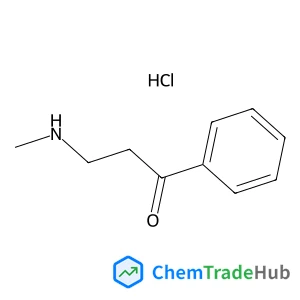
3-(Methylamino)-1-phenyl-1-propanone hydrochloride (1:1)
CAS Number:
2538-50-3
Molecular Formula:
C10H14ClNO

Recommended Suppliers






Disclaimer
This page provides academic journal information for reference and research purposes only. We are not affiliated with any journal publishers and do not handle publication submissions. For publication-related inquiries, please contact the respective journal publishers directly.
If you notice any inaccuracies in the information displayed, please contact us at support@chemtradehub.com. We will promptly review and address your concerns.