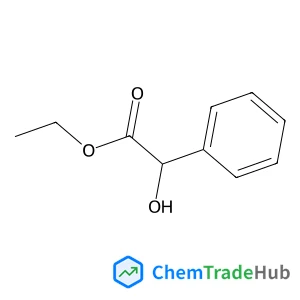
5,7,8'-Trihydroxy-2',2'-dimethyl-2'H,4H-3,6'-bichromen-4-one
CAS Number:
129280-33-7
Molecular Formula:
C20H16O6
A. V. Anupama, V. B. Khopkar, V. Kumaran, B. Sahoo
We report the synthesis of single crystalline octahedron-shaped magnetite microcrystals, the preparation of magnetorheological fluids (MRFs) and their magnetorheological properties under steady-state shear conditions. The magnetite microcrystals were synthesized via the template-free hydrothermal route. MRFs with three different particle concentrations (10, 20 and 40 weight%) were prepared and were subjected to steady shear conditions at various externally applied magnetic fields of strength up to 1.2 T. The shear rates were chosen up to high enough values to observe the yield behaviour of the MRFs. The dynamic yield strengths of MRFs, estimated using the Bingham plastic model fit to the steady-state shear response curves, showed that they scale-up with the applied magnetic field strength and amount of magnetic particles in the fluid. The origin of the mechanical strength in the MRFs due to the inter-particle interaction is explained using a simple dipolar model. The observed high yield strengths of the MRFs were explained on the basis of the particle shape (octahedrons) and magnetic nature (saturation magnetization). By comparing the values of the yield strength with the on-state to off-state viscosity ratio for the MRFs (for each particle concentration), an optimum content of particles in the carrier fluid to obtain high efficiency is suggested. Because the particles are single crystalline, the off-state viscosity of the MRFs even at the highest studied (40 wt%) particle concentration was very low, which is ideal for their application as quickly responding MRFs.

Current Opinion in Colloid & Interface Science

Russian Journal of Organic Chemistry

Journal of Natural Medicines

Russian Chemical Bulletin

Journal of Peptide Science

Drug Discovery Today

Saudi Pharmaceutical Journal

Russian Journal of General Chemistry

Russian Journal of Applied Chemistry

Russian Journal of Bioorganic Chemistry
Barbara Binotti, Carla Carfagna, Cristiano Zuccaccia, Alceo Macchioni
DOI: 10.1039/B411214H
Seung Uk Son, Youngjin Jang, Ki Youl Yoon, Changhua An, Yosun Hwang, Je-Geun Park, Han-Jin Noh, Jae-Young Kim, Jae-Hoon Park, Taeghwan Hyeon
DOI: 10.1039/B411656A
Cinzia Chiappe, Elsa Leandri, Daniela Pieraccini
DOI: 10.1039/B410796A
Paula Alvarez-Bercedo, Andrew D. Bond, Robert Haigh, Alexander D. Hopkins, Gavin T. Lawson, Mary McPartlin, David Moncrieff, Marta E. Gonzalez Mosquera, Jeremy M. Rawson, Anthony D. Woods, Dominic S. Wright
DOI: 10.1039/B300522D
Martin Oestreich, Fernando Sempere-Culler
DOI: 10.1039/B315758J
Varinder K. Aggarwal, Mike Butters, Paul W. Davies
DOI: 10.1039/B300719G
Elizabeth A. Whitsitt, Andrew R. Barron
DOI: 10.1039/B212808J
Jiang Shen, Wei Shan, Yahong Zhang, Junming Du, Hualong Xu, Kangnian Fan, Wei Shen, Yi Tang
DOI: 10.1039/B412986E
Robin B. Bedford, Duncan W. Bruce, Robert M. Frost, John W. Goodby, Michael Hird
DOI: 10.1039/B413790F
Dong Mok Shin, In Su Lee, Young Keun Chung, Myoung Soo Lah
DOI: 10.1039/B210320F
(1R,3S)-1,3-Cyclopentanediol finds applications in various industries. In the ph...
When handling N'-[4-(Dimethylamino)phenyl]-N,N-dimethyl-1,4-benzenediamine, it i...
There are several alternatives to 5-(2,4-Difluorophenyl)-2-methoxypyrimidine in ...
1-(3-Methoxyphenoxy)propan-2-ol (CAS: 382141-68-6) must comply with the Globally...
Tetrodotoxin Citrate is extremely dangerous and should be handled with extreme c...
2-Methyl-2-propanyl [(1R,3S)-3-hydroxycyclopentyl]carbamate (CAS: 225641-84-9) i...
Waste containing 4-(2-Hydroxyhexafluoroisopropyl)Benzoic Acid (CAS: 16261-80-6) ...
2-Methyl-2-proanyl {(2S)-1-[(benzyloxy)amino]-3-hydroxy-3-methyl-1-oxo-2-butanyl...
Benzeneethanamine, α-ethyl-, hydrochloride (1:1) is an organic compound with the...
In the synthesis of compounds similar to 3-{(E)-[4-(Dimethylamino)phenyl]diazeny...

Physical Chemistry Chemical Physics (PCCP) is an international journal co-owned by 19 physical chemistry and physics societies from around the world. This journal publishes original, cutting-edge research in physical chemistry, chemical physics and biophysical chemistry. To be suitable for publication in PCCP, articles must include significant innovation and/or insight into physical chemistry; this is the most important criterion that reviewers and Editors will judge against when evaluating submissions. The journal has a broad scope and welcomes contributions spanning experiment, theory, computation and data science. Topical coverage includes spectroscopy, dynamics, kinetics, statistical mechanics, thermodynamics, electrochemistry, catalysis, surface science, quantum mechanics, quantum computing and machine learning. Interdisciplinary research areas such as polymers and soft matter, materials, nanoscience, energy, surfaces/interfaces, and biophysical chemistry are welcomed if they demonstrate significant innovation and/or insight into physical chemistry. Joined experimental/theoretical studies are particularly appreciated when complementary and based on up-to-date approaches.

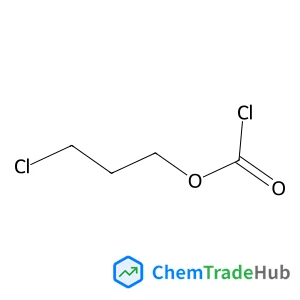
![N-[(9H-Fluoren-9-ylmethoxy)carbonyl]-beta-phenyl-L-phenylalanine structure](https://static.chemtradehub.com/structs/201/201484-50-6-c2fc.webp "N-[(9H-Fluoren-9-ylmethoxy)carbonyl]-beta-phenyl-L-phenylalanine structure")