


From atactic to isotactic CO/p-methylstyrenecopolymer by proper modification of Pd(ii) catalysts bearing achiral α-diimines
Literature Information
Publication Date
2004-11-29
DOI
10.1039/B411214H
Impact Factor
6.222
Authors
Barbara Binotti, Carla Carfagna, Cristiano Zuccaccia, Alceo Macchioni
View Original
Abstract
Cationic Pd(II) complexes modified with achiral C2v-symmetric α-diimine ligands allow preparation of atactic or isotactic stereoblock CO/p-methylstyrene copolymers; both catalyst activity and polyketone microstructure depend on the choice of α-diimine substituents and counterion.
Recommended Journals

Journal of Chemical Sciences

Critical Reviews in Solid State and Materials Sciences

Bioorganic & Medicinal Chemistry

Chinese Journal of Chemistry

Heteroatom Chemistry

Topics in Catalysis

Bioorganic & Medicinal Chemistry Letters

Medicinal Chemistry Research

Cellulose

Journal of Asian Natural Products Research
Related Literature
In vitro FTIR microspectroscopy analysis of primary oral squamous carcinoma cells treated with cisplatin and 5-fluorouracil: a new spectroscopic approach for studying the drug–cell interaction
Elisabetta Giorgini, Simona Sabbatini, Romina Rocchetti, Valentina Notarstefano, Corrado Rubini, Carla Conti, Giulia Orilisi, Elisa Mitri, Diana E. Bedolla, Lisa Vaccari
2018-05-30
Paper
DOI: 10.1039/C8AN00602D
Volatile organic compound signature from co-culture of lung epithelial cell line with Pseudomonas aeruginosa
Hugo Knobel, Hans Weda, Lieuwe D. Bos, Tamara M. E. Nijsen, Royston Goodacre
2018-06-01
Paper
DOI: 10.1039/C8AN00759D
Electrochemiluminescence biosensing based on different modes of switching signals
Ying Zhuo, Hai-Jun Wang, Yan-Mei Lei, Pu Zhang, Jia-Li Liu, Ya-Qin Chai, Ruo Yuan
2018-05-23
Critical Review
DOI: 10.1039/C8AN00276B
A ratiometric electrochemical sensor for multiplex detection of cancer biomarkers using bismuth as an internal reference and metal sulfide nanoparticles as signal tags
Xin Cui, Huijuan Li, Jianjun Lu, Qi Kang, Dazhong Shen
2019-05-24
Paper
DOI: 10.1039/C9AN00775J
Investigation of hairpin DNA and chelerythrine interaction by a single bio-nanopore sensing interface
Yuan-Min Liu, Xiu-Yu Fang, Fang Fang, Zhi-Yong Wu
2019-05-29
Paper
DOI: 10.1039/C9AN00113A
Fluorescence hyperspectral imaging for live monitoring of multiple spheroids in microfluidic chips
Mathieu Masse, Mathias Strupler
2018-07-12
Paper
DOI: 10.1039/C8AN00536B
You might also like
Compound Q&A
What industries use (1R,3S)-1,3-Cyclopentanediol (CAS: 16326-97-9)?
(1R,3S)-1,3-Cyclopentanediol finds applications in various industries. In the ph...
16326-97-9(1R,3S)-1,3-Cyclopen...
Compound Q&A
What precautions should be taken when handling N'-[4-(Dimethylamino)phenyl]-N,N-dimethyl-1,4-benzenediamine (CAS: 637-31-0)?
When handling N'-[4-(Dimethylamino)phenyl]-N,N-dimethyl-1,4-benzenediamine, it i...
637-31-0N'-[4-(Dimethylamino...
Compound Q&A
Are there alternatives to 5-(2,4-Difluorophenyl)-2-methoxypyrimidine (CAS: 1352318-16-1) in synthesis?
There are several alternatives to 5-(2,4-Difluorophenyl)-2-methoxypyrimidine in ...
1352318-16-15-(2,4-Difluoropheny...
Compound Q&A
What regulatory guidelines apply to 1-(3-Methoxyphenoxy)propan-2-ol (CAS: 382141-68-6)?
1-(3-Methoxyphenoxy)propan-2-ol (CAS: 382141-68-6) must comply with the Globally...
382141-68-61-(3-Methoxyphenoxy)...
Compound Q&A
Is Tetrodotoxin Citrate (CAS: 18660-81-6) safe?
Tetrodotoxin Citrate is extremely dangerous and should be handled with extreme c...
18660-81-6Tetrodotoxin Citrate
Compound Q&A
What are the main uses of 2-Methyl-2-propanyl [(1R,3S)-3-hydroxycyclopentyl]carbamate (CAS: 225641-84-9)?
2-Methyl-2-propanyl [(1R,3S)-3-hydroxycyclopentyl]carbamate (CAS: 225641-84-9) i...
225641-84-92-Methyl-2-propanyl ...
Compound Q&A
How should waste containing 4-(2-Hydroxyhexafluoroisopropyl)Benzoic Acid (CAS: 16261-80-6) be handled?
Waste containing 4-(2-Hydroxyhexafluoroisopropyl)Benzoic Acid (CAS: 16261-80-6) ...
16261-80-64-(2-Hydroxyhexafluo...
Compound Q&A
How is 2-Methyl-2-proanyl {(2S)-1-[(benzyloxy)amino]-3-hydroxy-3-methyl-1-oxo-2-butanyl}carbamate (CAS: 102507-19-7) typically synthesized?
2-Methyl-2-proanyl {(2S)-1-[(benzyloxy)amino]-3-hydroxy-3-methyl-1-oxo-2-butanyl...
102507-19-72-Methyl-2-propanyl ...
Compound Q&A
What is Benzeneethanamine, α-ethyl-, hydrochloride (1:1) (CAS: 20735-15-3)?
Benzeneethanamine, α-ethyl-, hydrochloride (1:1) is an organic compound with the...
20735-15-3Benzeneethanamine, α...
Compound Q&A
Are there alternatives to 3-{(E)-[4-(Dimethylamino)phenyl]diazenyl}benzoic acid (CAS: 20691-84-3) in synthesis?
In the synthesis of compounds similar to 3-{(E)-[4-(Dimethylamino)phenyl]diazeny...
20691-84-33-{(E)-[4-(Dimethyla...
Source Journal
Chemical Communications

CiteScore:
8.6
Self-citation Rate:
4.7%
Articles per Year:
2458
ChemComm publishes urgent research which is of outstanding significance and interest to experts in the field, while also appealing to the journal’s broad chemistry readership. Our communication format is ideally suited to short, urgent studies that are of such importance that they require accelerated publication. Our scope covers all topics in chemistry, and research at the interface of chemistry and other disciplines (such as materials science, nanoscience, physics, engineering and biology) where there is a significant novelty in the chemistry aspects. Major topic areas covered include: Analytical Chemistry Catalysis Chemical Biology and medicinal chemistry Computational Chemistry and Machine Learning Energy and sustainable chemistry Environmental Chemistry Green Chemistry Inorganic Chemistry Materials Chemistry Nanoscience Organic Chemistry Physical Chemistry Polymer Chemistry Supramolecular Chemistry
Recommended Compounds
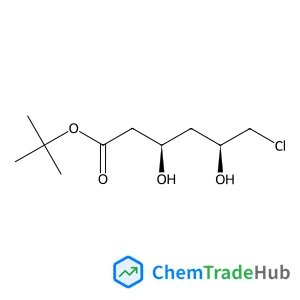
2-Methyl-2-propanyl (3R,5S)-6-chloro-3,5-dihydroxyhexanoate
CAS Number:
154026-93-4
Molecular Formula:
C10H19ClO4
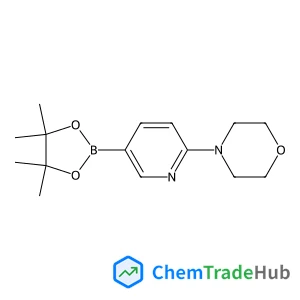
4-(5-(4,4,5,5-tetramethyl-1,3,2-dioxaborolan-2-yl)pyridin-2-yl)morpholine
CAS Number:
485799-04-0
Molecular Formula:
C15H23BN2O3
Recommended Suppliers






Disclaimer
This page provides academic journal information for reference and research purposes only. We are not affiliated with any journal publishers and do not handle publication submissions. For publication-related inquiries, please contact the respective journal publishers directly.
If you notice any inaccuracies in the information displayed, please contact us at support@chemtradehub.com. We will promptly review and address your concerns.