


Direct comparison between subnanometer hydration structures on hydrophilic and hydrophobic surfaces via three-dimensional scanning force microscopy
Literature Information
Publication Date
2018-08-28
DOI
10.1039/C8CP02309C
Impact Factor
3.676
Authors
Chih-Wen Yang, Keisuke Miyazawa, Ing-Shouh Hwang
View Original
Abstract
Investigating interfacial water ordering on solid surfaces with different hydrophobicities is fundamentally important. Here, we prepared hydrophilic mica substrates with some areas covered by mildly hydrophobic graphene layers and studied the resulting hydration layers using three-dimensional (3D) force measurements based on frequency-modulation atomic force microscopy. Hydration layers of 0.3–0.6 nm were detected on bare graphene regions; these layers were considerably larger than the spacing measured on mica (0.2–0.3 nm). On the graphene-covered regions, we also observed the formation of special ordered structures of adsorbates over time, on which, surprisingly, no prominent hydration layers were detected. Based on these findings, we present one possible scenario to describe the formation process of the ordered interfacial structures and the enhanced oscillation period in the force profiles. This work also demonstrates the capability and significance of 3D force measurements in probing hydration behaviors on a heterogeneous substrate with a lateral resolution smaller than several nanometers.
Recommended Journals

Journal of Enzyme inhibition and Medicinal Chemistry

Foundations of Chemistry

Coloration Technology

Nature Reviews Drug Discovery

Journal of Medical Biochemistry

Molecular Diversity

Current Pharmaceutical Biotechnology

Mini-Reviews in Medicinal Chemistry

Physical Chemistry Chemical Physics

Contact Lens & Anterior Eye
Related Literature
Solvent-free N-iodosuccinimide-promoted synthesis of spiroimidazolines from alkenes and amidines under ball-milling conditions
Hui Xu, Kuan Chen, Hong-Wei Liu
2018-09-03
Research Article
DOI: 10.1039/C8QO00723C
Cu-catalyzed sp3 C–H bond oxidative functionalization of alkylazaarenes and substituted ethanones: an efficient approach to isoxazoline derivatives
Gang-Wei Wang, Shi-Xia Li, Quan-Xiang Wu
2015-03-27
Research Article
DOI: 10.1039/C5QO00053J
Asymmetric ring-opening reactions of azabenzonorbornadienes through transfer hydrogenation using secondary amines as hydrogen sources: tuning of absolute configuration by acids
Dongdong Pu, Yongyun Zhou, Fan Yang, Guoli Shen, Yang Gao, Weiqing Sun, Ruhima Khan
2018-05-02
Research Article
DOI: 10.1039/C7QO01163F
Palladium-catalyzed denitrogenative cycloadditions and alkenylations of benzotriazoles with alkynes
Yuanhao Wang, Zhiguo Wang, Xuewei Chen
2018-08-24
Research Article
DOI: 10.1039/C8QO00778K
Lewis acid catalyst-steered divergent synthesis of functionalized vicinal amino alcohols and pyrroles from tertiary enamides
Xin-Ming Xu, Chuan-Hu Lei, Shuo Tong, Jieping Zhu, Mei-Xiang Wang
2018-09-25
Research Article
DOI: 10.1039/C8QO00839F
Ni-Catalyzed 1,2-iminoacylation of alkenes via a reductive strategy
Lin Wang, Chuan Wang
2018-10-25
Research Article
DOI: 10.1039/C8QO01044G
Thermal-mediated catalyst-free heterolytic cleavage of 3-halooxindoles: rapid access to 3-functionalized-2-oxindoles
Jing Yue, Shuang Chen, Huan-Huan Liu, Kai-Mo Yang, Ting-Ting Feng, Ying Zhou
2018-12-05
Research Article
DOI: 10.1039/C8QO01222A
Gold-catalyzed ring enlargement and cycloisomerization of alkynylamide tethered alkylidenecyclopropanes
Jia-hao Zhang, Yin Wei
2018-09-17
Research Article
DOI: 10.1039/C8QO00907D
The CASE 2014 symposium: Catalysis and sensing for our environment, Xiamen 7th–9th November 2014
John S. Fossey, William D. G. Brittain
2014-12-19
Conference Report
DOI: 10.1039/C4QO90045F
You might also like
Compound Q&A
Is 2-(2-chloroacetamido)-3-phenylpropanoic acid (CAS: 7765-11-9) safe?
2-(2-Chloroacetamido)-3-phenylpropanoic acid (CAS: 7765-11-9) is generally consi...
7765-11-92-(2-chloroacetamido...
Compound Q&A
Is 2-(Benzyloxy)-5-bromobenzoic acid (CAS: 62176-31-2) safe?
2-(Benzyloxy)-5-bromobenzoic acid can be handled safely if appropriate precautio...
62176-31-22-(Benzyloxy)-5-brom...
Compound Q&A
What is (4-Methyl-1,2,5-oxadiazol-3-yl)methanamine hydrochloride (CAS: 1159825-48-5)?
(4-Methyl-1,2,5-oxadiazol-3-yl)methanamine hydrochloride is a chemical compound ...
1159825-48-5(4-Methyl-1,2,5-oxad...
Compound Q&A
What is 2-(5-Hexylthiophen-2-yl)-4,4,5,5-tetramethyl-1,3,2-dioxaborolane (CAS: 917985-54-7)?
2-(5-Hexylthiophen-2-yl)-4,4,5,5-tetramethyl-1,3,2-dioxaborolane (CAS: 917985-54...
917985-54-72-(5-Hexylthiophen-2...
Compound Q&A
Are there alternatives to 4-(8-Methyl-9H-1,3-dioxolo[4,5-h][2,3]benzodiazepin-5-yl)benzenamine (CAS: 102771-26-6) in synthesis?
While 4-(8-Methyl-9H-1,3-dioxolo[4,5-h][2,3]benzodiazepin-5-yl)benzenamine (CAS:...
102771-26-64-(8-Methyl-9H-1,3-d...
Compound Q&A
What is the market or research trend for tert-butyl 3-hydroxy-4,5,7,8-tetrahydro-2H-pyrazolo[3,4-d]azepine-6-carboxylate (CAS: 851376-80-2)?
The market for tert-butyl 3-hydroxy-4,5,7,8-tetrahydro-2H-pyrazolo[3,4-d]azepine...
851376-80-2tert-butyl 3-hydroxy...
Compound Q&A
How should waste containing 3,5-Diamino-1H-pyrazole-4-carbonitrile (CAS: 6844-58-2) be handled?
Waste containing 3,5-Diamino-1H-pyrazole-4-carbonitrile (CAS: 6844-58-2) should ...
6844-58-23,5-Diamino-1H-pyraz...
Compound Q&A
How is (6-Fluoro-3-pyridinyl)boronic acid (CAS: 351019-18-6) typically synthesized?
(6-Fluoro-3-pyridinyl)boronic acid can be synthesized through the reaction of 6-...
351019-18-6(6-Fluoro-3-pyridiny...
Compound Q&A
What industries use Dibenzyl carbonimidoylbiscarbamate (CAS: 10065-79-9)?
Dibenzyl carbonimidoylbiscarbamate (CAS: 10065-79-9) finds applications in vario...
10065-79-9Dibenzyl carbonimido...
Compound Q&A
What is the market or research trend for (beta,beta,2,3,4,5,6-~2~H_7_)Phenylalanine (CAS: 74228-83-4)?
The market for (beta,beta,2,3,4,5,6-~2~H_7_)Phenylalanine (CAS: 74228-83-4) is g...
74228-83-4(beta,beta,2,3,4,5,6...
Source Journal
Physical Chemistry Chemical Physics
CiteScore:
5.5
Self-citation Rate:
10.3%
Articles per Year:
3036
Physical Chemistry Chemical Physics (PCCP) is an international journal co-owned by 19 physical chemistry and physics societies from around the world. This journal publishes original, cutting-edge research in physical chemistry, chemical physics and biophysical chemistry. To be suitable for publication in PCCP, articles must include significant innovation and/or insight into physical chemistry; this is the most important criterion that reviewers and Editors will judge against when evaluating submissions. The journal has a broad scope and welcomes contributions spanning experiment, theory, computation and data science. Topical coverage includes spectroscopy, dynamics, kinetics, statistical mechanics, thermodynamics, electrochemistry, catalysis, surface science, quantum mechanics, quantum computing and machine learning. Interdisciplinary research areas such as polymers and soft matter, materials, nanoscience, energy, surfaces/interfaces, and biophysical chemistry are welcomed if they demonstrate significant innovation and/or insight into physical chemistry. Joined experimental/theoretical studies are particularly appreciated when complementary and based on up-to-date approaches.
Recommended Compounds
![19-[Chloro(dideuterio)methyl]-19-deuterio-20,20-dideuteriooxyoctatriacontane-18,21-dione structure](https://static.chemtradehub.com/structs/124/1246818-85-8-6244.webp "19-[Chloro(dideuterio)methyl]-19-deuterio-20,20-dideuteriooxyoctatriacontane-18,21-dione structure")
19-[Chloro(dideuterio)methyl]-19-deuterio-20,20-dideuteriooxyoctatriacontane-18,21-dione
CAS Number:
1246818-85-8
Molecular Formula:
C39H75ClO4
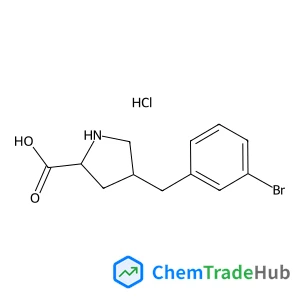
(2S,4R)-4-(3-Bromobenzyl)pyrrolidine-2-carboxylic acid hydrochloride
CAS Number:
1049734-10-2
Molecular Formula:
C12H15BrClNO2
Recommended Suppliers



Disclaimer
This page provides academic journal information for reference and research purposes only. We are not affiliated with any journal publishers and do not handle publication submissions. For publication-related inquiries, please contact the respective journal publishers directly.
If you notice any inaccuracies in the information displayed, please contact us at support@chemtradehub.com. We will promptly review and address your concerns.