











Single cell analysis of aged RBCs: quantitative analysis of the aged cells and byproducts
Literature Information
Publication Date
2018-12-11
DOI
10.1039/C8AN01904E
Impact Factor
4.616
Authors
James Kim, Mitchell Weigand, Andre F. Palmer, Maciej Zborowski, Mark H. Yazer, Jeffrey J. Chalmers
View Original
Abstract
This study initially focused on characterizing the aging process of red blood cells by correlating the loss of hemoglobin and the translocation of phosphatidylserine (PS) in expired human red blood cells, hRBCs. Five pre-storage, leukoreduced hRBC units in AS-5 solution were stored between 1 and 6 °C for 42 days. Aliquots from each of these units were stained with Annexin-V FLUOS, which binds to externalized PS, and the hemoglobin within the cells was placed in a methemoglobin state with sodium nitrite, metHb. These aliquots were subsequently sorted into four sub-populations, ranging from no PS expression to high PS expression using a BD FACS ARIAIII. Each of these sub-fractions were introduced into the cell tracking velocimetry apparatus which measured both the magnetically-induced and the gravity-induced velocity. Subsequently, the samples were removed from the cell tracking velocimetry instrument and characterized using the Multisizer 4e Coulter Counter. From the magnetically-induced velocity, the amount of hemoglobin, in pg Hb per cell can be determined, and using an average value of the density of RBCs, the size can be determined. For the PS negative sub-fraction of RBCs, the size of the RBC was as expected but the average hemoglobin, Hb, content was below the threshold which defines anemia. In contrast, unexpected results were observed with the various levels of expression of PS. First, virtually all of the PS expressing cells were significantly smaller, on the order of 1 micron, than a normal RBC after 42 days of storage; yet the density of these small cells/microvesicles was such that they had settling velocities similar to normal-sized RBCs. Further, while the total amount of Hb per small cell/microvesicle was only approximately 25% of the full-sized RBCs, the volume of these small cells/microvesicles is only 1/200 of the PS negative RBCs. This suggests that these PS expressing cells are shrunken RBCs, or shrunken microvesicles from RBCs that concentrated the Hb internally. These results suggest not only a relationship between the loss of hemoglobin and the amount of PS exposed on the cellular outer wall, but also a mechanism by which these aged RBCs break down. It is not known at this time whether this is an artifact of storage or similar mechanisms occur in circulation within the human body.
Related Literature
The CH(X2Π) + H2O reaction: two transition state kinetics
Thanh Lam Nguyen, Jozef Peeters
2021-07-16
Paper
DOI: 10.1039/D1CP02234B
Molecular dynamics study on the inhibition mechanisms of ReACp53 peptide for p53–R175H mutant aggregation
Jiangtao Lei, Mengqiang Cai, Yun Shen, Dongdong Lin, Xiaohua Deng
2021-09-22
Paper
DOI: 10.1039/D1CP03094A
Decomposition of nitrous oxide in hydrated cobalt(i) clusters: a theoretical insight into the mechanistic roles of ligand-binding modes
Ephrem G. Demissie, Wing Ka Lam, Wai Kit Tang, Chi-Kit Siu
2021-07-06
Paper
DOI: 10.1039/D1CP01820E
Aggregation-induced negative differential resistance in graphene oxide quantum dots
Sonia Sharma, Chieh-An Cheng, Svette Reina Merden Santiago, Denice N. Feria, Chi-Tsu Yuan, Sheng-Hsiung Chang, Tai-Yuan Lin, Ji-Lin Shen
2021-08-01
Paper
DOI: 10.1039/D1CP01529J
Reactive force fields for aqueous and interfacial magnesium carbonate formation
Siavash Zare, Mohammad Javad Abdolhosseini Qomi
2021-10-01
Paper
DOI: 10.1039/D1CP02627E
Effects of water on the solvation and structure of lipase in deep eutectic solvents containing a protein destabilizer and stabilizer
Qi Qiao, Jian Shi, Qing Shao
2021-09-29
Paper
DOI: 10.1039/D1CP03282H
Modeling the impedance response and steady state behaviour of porous CGO-based MIEC anodes
Philip Marmet, Lorenz Holzer, Jan G. Grolig, Holger Bausinger, Andreas Mai, Joseph M. Brader, Thomas Hocker
2021-10-06
Paper
DOI: 10.1039/D1CP01962G
Local structure and NO adsorption/desorption property of Pd2+ cations at different paired Al sites in CHA zeolite
Shunsaku Yasumura, Taihei Ueda, Hajime Ide, Katsumasa Otsubo, Chong Liu, Nao Tsunoji, Zen Maeno
2021-08-12
Paper
DOI: 10.1039/D1CP02668B
Strain engineering of polar optical phonon scattering mechanism – an effective way to optimize the power-factor and lattice thermal conductivity of ScN
Man Hea Kim, Carlos Baldo, III, Yan Wang, Mahalakshmi Sahasranaman
2021-09-27
Paper
DOI: 10.1039/D1CP02971A
You might also like
Compound Q&A
How is Ethyl 4-chlorothieno[2,3-b]pyridine-5-carboxylate (CAS: 59713-58-5) typically synthesized?
Ethyl 4-chlorothieno[2,3-b]pyridine-5-carboxylate (CAS: 59713-58-5) can be synth...
59713-58-5Ethyl 4-chlorothieno...
Compound Q&A
What regulatory guidelines apply to 5-Methyl-1H-indole-3-carbaldehyde (CAS: 52562-50-2)?
5-Methyl-1H-indole-3-carbaldehyde (CAS: 52562-50-2) is subject to various regula...
52562-50-25-Methyl-1H-indole-3...
Compound Q&A
What are the physical and chemical properties of (1,3-Dimethyl-2,4-dioxo-1,2,3,4-tetrahydro-5-pyrimidinyl)boronic acid (CAS: 223418-73-3)?
(1,3-Dimethyl-2,4-dioxo-1,2,3,4-tetrahydro-5-pyrimidinyl)boronic acid is a white...
223418-73-3(1,3-Dimethyl-2,4-di...
Compound Q&A
How should waste containing Sulfocostunolide A (CAS: 1016983-51-9) be handled?
Waste containing Sulfocostunolide A (CAS: 1016983-51-9) should be handled with c...
1016983-51-9Sulfocostunolide A
Compound Q&A
What precautions should be taken when handling Murraxocin (CAS: 88478-44-8)?
When handling Murraxocin (CAS: 88478-44-8), ensure proper personal protective eq...
88478-44-8Murraxocin
Compound Q&A
What are the physical and chemical properties of Formvar (CAS: 63148-64-1)?
Formvar (CAS: 63148-64-1) is an alkyd resin characterized by a high molecular we...
63148-64-1Formvar(R)
Compound Q&A
Is (S)-4-benzyl-2-((benzyloxy)methyl)morpholine (CAS: 205242-66-6) safe?
(S)-4-benzyl-2-((benzyloxy)methyl)morpholine is generally safe when handled with...
205242-66-6(S)-4-benzyl-2-((ben...
Compound Q&A
What industries use Methyl 1-(5-bromo-2-pyrimidinyl)cyclopropanecarboxylate (CAS: 1447607-69-3)?
Methyl 1-(5-bromo-2-pyrimidinyl)cyclopropanecarboxylate (CAS: 1447607-69-3) is p...
1447607-69-3Methyl 1-(5-bromo-2-...
Compound Q&A
Is 2-Methyl-1-phenyl-1-propanamine hydrochloride (CAS: 24290-47-9) safe?
2-Methyl-1-phenyl-1-propanamine hydrochloride (CAS: 24290-47-9) is generally con...
24290-47-92-Methyl-1-phenyl-1-...
Compound Q&A
How is 3-(4-Bromophenyl)-2-methylpropanoic acid (CAS: 66735-01-1) typically synthesized?
3-(4-Bromophenyl)-2-methylpropanoic acid is synthesized through a multi-step pro...
66735-01-13-(4-Bromophenyl)-2-...
Source Journal
Analyst

CiteScore:
7.8
Self-citation Rate:
5.6%
Articles per Year:
653
Analyst publishes analytical and bioanalytical research that reports premier fundamental discoveries and inventions, and the applications of those discoveries, unconfined by traditional discipline barriers.
Recommended Compounds
![2-(Methylsulfonyl)-2,4,5,6-tetrahydropyrrolo[3,4-c]pyrazole structure](https://static.chemtradehub.com/structs/122/1226781-80-1-09d5.webp "2-(Methylsulfonyl)-2,4,5,6-tetrahydropyrrolo[3,4-c]pyrazole structure")
2-(Methylsulfonyl)-2,4,5,6-tetrahydropyrrolo[3,4-c]pyrazole
CAS Number:
1226781-80-1
Molecular Formula:
C6H9N3O2S
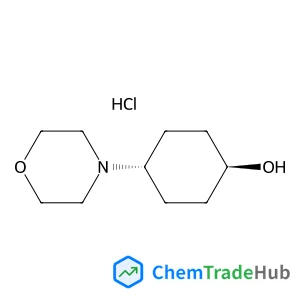
trans-4-(4-Morpholinyl)cyclohexanol hydrochloride (1:1)
CAS Number:
1588441-09-1
Molecular Formula:
C10H20ClNO2
Recommended Suppliers




Disclaimer
This page provides academic journal information for reference and research purposes only. We are not affiliated with any journal publishers and do not handle publication submissions. For publication-related inquiries, please contact the respective journal publishers directly.
If you notice any inaccuracies in the information displayed, please contact us at support@chemtradehub.com. We will promptly review and address your concerns.