![[2-(Benzyloxy)-3-bromo-5-methylphenyl]boronic acid structure](https://static.chemtradehub.com/structs/870/870777-20-1-24ac.webp "[2-(Benzyloxy)-3-bromo-5-methylphenyl]boronic acid structure")
[2-(Benzyloxy)-3-bromo-5-methylphenyl]boronic acid
CAS Number:
870777-20-1
Molecular Formula:
C14H14BBrO3
Siavash Zare, Mohammad Javad Abdolhosseini Qomi
We develop Mg/C/O/H ReaxFF parameter sets for two environments: an aqueous force field for magnesium ions in solution and an interfacial force field for minerals and mineral–water interfaces. Since magnesium is highly ionic, we choose to fix the magnesium charge and model its interaction with C/O/H through Coulomb, Lennard-Jones, and Buckingham potentials. We parameterize the forcefields against several crystal structures, including brucite, magnesite, magnesia, magnesium hydride, and magnesium carbide, as well as Mg2+ water binding energies for the aqueous forcefield. Then, we test the forcefield for other magnesium-containing crystals, solvent separated and contact ion-pairs and single-molecule/multilayer water adsorption energies on mineral surfaces. We also apply the forcefield to the forsterite–water and brucite–water interface that contains a bicarbonate ion. We observe that a long-range proton transfer mechanism deprotonates the bicarbonate ion to carbonate at the interface. Free energy calculations show that carbonate can attach to the magnesium surface with an energy barrier of about 0.22 eV, consistent with the free energy required for aqueous Mg–CO3 ion pairing. Also, the diffusion constant of the hydroxide ions in the water layers formed on the forsterite surface are shown to be anisotropic and heterogeneous. These findings can help explain the experimentally observed fast nucleation and growth of magnesite at low temperature at the mineral–water–CO2 interface in water-poor conditions.
Antonino Polimeno
DOI: 10.1039/B607998A
C. Steinbach, M. Fárník, I. Ettischer, J. Siebers, U. Buck
DOI: 10.1039/B604715G
Uroš Tasić, Yuri Alexeev, Grigoriy Vayner, T. Daniel Crawford, Theresa L. Windus, William L. Hase
DOI: 10.1039/B609743J
Wen-kai Zhang, Hong-fei Wang, De-sheng Zheng
DOI: 10.1039/B608005G
Sean Maksimuk, Xiaowei Teng, Hong Yang
DOI: 10.1039/B611186F
Paul Nissenson, Christopher J. H. Knox, Barbara J. Finlayson-Pitts, Leon F. Phillips, Donald Dabdub
DOI: 10.1039/B609219E
Robert Vácha, Pavel Jungwirth, Jing Chen, Kalliat Valsaraj
DOI: 10.1039/B610253K
Clélia Canuel, Mohamed Elhanine, Michel Mons, François Piuzzi, Benjamin Tardivel, Iliana Dimicoli
DOI: 10.1039/B606437J
Ethyl 4-chlorothieno[2,3-b]pyridine-5-carboxylate (CAS: 59713-58-5) can be synth...
5-Methyl-1H-indole-3-carbaldehyde (CAS: 52562-50-2) is subject to various regula...
(1,3-Dimethyl-2,4-dioxo-1,2,3,4-tetrahydro-5-pyrimidinyl)boronic acid is a white...
Waste containing Sulfocostunolide A (CAS: 1016983-51-9) should be handled with c...
When handling Murraxocin (CAS: 88478-44-8), ensure proper personal protective eq...
Formvar (CAS: 63148-64-1) is an alkyd resin characterized by a high molecular we...
(S)-4-benzyl-2-((benzyloxy)methyl)morpholine is generally safe when handled with...
Methyl 1-(5-bromo-2-pyrimidinyl)cyclopropanecarboxylate (CAS: 1447607-69-3) is p...
2-Methyl-1-phenyl-1-propanamine hydrochloride (CAS: 24290-47-9) is generally con...
3-(4-Bromophenyl)-2-methylpropanoic acid is synthesized through a multi-step pro...

Physical Chemistry Chemical Physics (PCCP) is an international journal co-owned by 19 physical chemistry and physics societies from around the world. This journal publishes original, cutting-edge research in physical chemistry, chemical physics and biophysical chemistry. To be suitable for publication in PCCP, articles must include significant innovation and/or insight into physical chemistry; this is the most important criterion that reviewers and Editors will judge against when evaluating submissions. The journal has a broad scope and welcomes contributions spanning experiment, theory, computation and data science. Topical coverage includes spectroscopy, dynamics, kinetics, statistical mechanics, thermodynamics, electrochemistry, catalysis, surface science, quantum mechanics, quantum computing and machine learning. Interdisciplinary research areas such as polymers and soft matter, materials, nanoscience, energy, surfaces/interfaces, and biophysical chemistry are welcomed if they demonstrate significant innovation and/or insight into physical chemistry. Joined experimental/theoretical studies are particularly appreciated when complementary and based on up-to-date approaches.
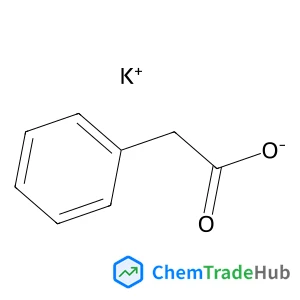
![Imidazo[1,5-a]pyrazine structure](https://static.chemtradehub.com/structs/274/274-49-7-d749.webp "Imidazo[1,5-a]pyrazine structure")