












Molecular dynamics study on the inhibition mechanisms of ReACp53 peptide for p53–R175H mutant aggregation
Literature Information
Publication Date
2021-09-22
DOI
10.1039/D1CP03094A
Impact Factor
3.676
Authors
Jiangtao Lei, Mengqiang Cai, Yun Shen, Dongdong Lin, Xiaohua Deng
View Original
Abstract
p53 mutant aggregation can lead to loss-of-function (LoF), dominant-negative (DN) and gain-of-function (GoF) effects, involving in tumor growth. Finding inhibition methods of p53 mutant aggregation is a key step for developing new therapeutics against aggregation-associated cancers. Recent studies have shown that a cell-permeable peptide, ReACp53, can inhibit aggregation of the p53 mutant and restore p53 nuclear function as a transcriptional factor, showing extraordinary therapeutic potential. However, the molecular mechanism underlying the inhibition of p53 mutant aggregation by the ReAp53 peptide is unclear. In this work, we used all-atom molecular dynamics (MD) simulations to investigate the effect of ReACp53 peptide on the structural and dynamic properties of the p53 core domain (p53C) of the aggregation-prone R175H mutant. Our simulations revealed that the ReACp53 peptide can stabilize the ordered secondary structure and decrease the flexibility of disordered loops of the R175H mutant through increasing the intra-interactions of p53C. Moreover, we found that ReACp53 peptide specifically binds to the fragment (residues 180–233) of the R175H mutant through strong hydrophobic interactions with residues L188 and L201 and a salt bridge or hydrogen bond formation with residues D186, E198, D204, E221 and E224. The specific binding pattern protects the aggregation-prone fragment (residues 182–213) from exposure to water. Hence, we suggested that the ReACp53 peptide inhibits aggregation of the R175H mutant by restoring the wild-type conformation from an aggregation-prone state and reducing the exposure of the aggregation-prone segment. These results provide molecular mechanistic insight into inhibition of the ReACp53 peptide on amyloid aggregation of the R175H mutant.
Related Literature
Time dependent density functional investigation of the near-edge absorption spectra of V2O5
M. Causà
2006-08-14
Paper
DOI: 10.1039/B607705F
Chemisorption of HCl to the MgO(001) surface: A DFT study
Andreas Markmann, Jacob L. Gavartin, Alexander L. Shluger
2006-08-22
Paper
DOI: 10.1039/B608719A
Lineshapes in carbon 1s photoelectron spectra of methanol clusters
M. Abu-samha, K. J. Børve, L. J. Sæthre, G. Öhrwall, H. Bergersen, T. Rander, O. Björneholm, M. Tchaplyguine
2006-04-28
Paper
DOI: 10.1039/B516905D
Optical detection of singlet oxygen from single cells
John W. Snyder, Esben Skovsen, John D. C. Lambert, Lars Poulsen, Peter R. Ogilby
2006-08-08
Invited Article
DOI: 10.1039/B609070M
Scalar relativistic calculations of hyperfine coupling tensors using the Douglas–Kroll–Hess method with a finite-size nucleus model
Elena Malkin, Irina Malkin, Olga L. Malkina, Vladimir G. Malkin, Martin Kaupp
2006-08-04
Paper
DOI: 10.1039/B607044B
Electropolishing of stainless steels in a choline chloride based ionic liquid: an electrochemical study with surface characterisation using SEM and atomic force microscopy
Andrew P. Abbott, Glen Capper, Katy J. McKenzie, Andrew Glidle, Karl S. Ryder
2006-08-03
Paper
DOI: 10.1039/B607763N
Vibrational mode and collision energy effects on reaction of H2CO+ with CO2
Jianbo Liu, Brady W. Uselman, Brian Van Devener, Scott L. Anderson
2006-09-11
Paper
DOI: 10.1039/B610814H
Calculation of intermolecular interactions in the benzene dimer using coupled-cluster and local electron correlation methods‡
J. Grant Hill, James A. Platts, Hans-Joachim Werner
2006-07-27
Paper
DOI: 10.1039/B608623C
You might also like
Compound Q&A
How is Ethyl 4-chlorothieno[2,3-b]pyridine-5-carboxylate (CAS: 59713-58-5) typically synthesized?
Ethyl 4-chlorothieno[2,3-b]pyridine-5-carboxylate (CAS: 59713-58-5) can be synth...
59713-58-5Ethyl 4-chlorothieno...
Compound Q&A
What regulatory guidelines apply to 5-Methyl-1H-indole-3-carbaldehyde (CAS: 52562-50-2)?
5-Methyl-1H-indole-3-carbaldehyde (CAS: 52562-50-2) is subject to various regula...
52562-50-25-Methyl-1H-indole-3...
Compound Q&A
What are the physical and chemical properties of (1,3-Dimethyl-2,4-dioxo-1,2,3,4-tetrahydro-5-pyrimidinyl)boronic acid (CAS: 223418-73-3)?
(1,3-Dimethyl-2,4-dioxo-1,2,3,4-tetrahydro-5-pyrimidinyl)boronic acid is a white...
223418-73-3(1,3-Dimethyl-2,4-di...
Compound Q&A
How should waste containing Sulfocostunolide A (CAS: 1016983-51-9) be handled?
Waste containing Sulfocostunolide A (CAS: 1016983-51-9) should be handled with c...
1016983-51-9Sulfocostunolide A
Compound Q&A
What precautions should be taken when handling Murraxocin (CAS: 88478-44-8)?
When handling Murraxocin (CAS: 88478-44-8), ensure proper personal protective eq...
88478-44-8Murraxocin
Compound Q&A
What are the physical and chemical properties of Formvar (CAS: 63148-64-1)?
Formvar (CAS: 63148-64-1) is an alkyd resin characterized by a high molecular we...
63148-64-1Formvar(R)
Compound Q&A
Is (S)-4-benzyl-2-((benzyloxy)methyl)morpholine (CAS: 205242-66-6) safe?
(S)-4-benzyl-2-((benzyloxy)methyl)morpholine is generally safe when handled with...
205242-66-6(S)-4-benzyl-2-((ben...
Compound Q&A
What industries use Methyl 1-(5-bromo-2-pyrimidinyl)cyclopropanecarboxylate (CAS: 1447607-69-3)?
Methyl 1-(5-bromo-2-pyrimidinyl)cyclopropanecarboxylate (CAS: 1447607-69-3) is p...
1447607-69-3Methyl 1-(5-bromo-2-...
Compound Q&A
Is 2-Methyl-1-phenyl-1-propanamine hydrochloride (CAS: 24290-47-9) safe?
2-Methyl-1-phenyl-1-propanamine hydrochloride (CAS: 24290-47-9) is generally con...
24290-47-92-Methyl-1-phenyl-1-...
Compound Q&A
How is 3-(4-Bromophenyl)-2-methylpropanoic acid (CAS: 66735-01-1) typically synthesized?
3-(4-Bromophenyl)-2-methylpropanoic acid is synthesized through a multi-step pro...
66735-01-13-(4-Bromophenyl)-2-...
Source Journal
Physical Chemistry Chemical Physics

CiteScore:
5.5
Self-citation Rate:
10.3%
Articles per Year:
3036
Physical Chemistry Chemical Physics (PCCP) is an international journal co-owned by 19 physical chemistry and physics societies from around the world. This journal publishes original, cutting-edge research in physical chemistry, chemical physics and biophysical chemistry. To be suitable for publication in PCCP, articles must include significant innovation and/or insight into physical chemistry; this is the most important criterion that reviewers and Editors will judge against when evaluating submissions. The journal has a broad scope and welcomes contributions spanning experiment, theory, computation and data science. Topical coverage includes spectroscopy, dynamics, kinetics, statistical mechanics, thermodynamics, electrochemistry, catalysis, surface science, quantum mechanics, quantum computing and machine learning. Interdisciplinary research areas such as polymers and soft matter, materials, nanoscience, energy, surfaces/interfaces, and biophysical chemistry are welcomed if they demonstrate significant innovation and/or insight into physical chemistry. Joined experimental/theoretical studies are particularly appreciated when complementary and based on up-to-date approaches.
Recommended Compounds
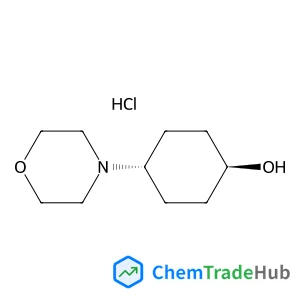
trans-4-(4-Morpholinyl)cyclohexanol hydrochloride (1:1)
CAS Number:
1588441-09-1
Molecular Formula:
C10H20ClNO2
Recommended Suppliers







Disclaimer
This page provides academic journal information for reference and research purposes only. We are not affiliated with any journal publishers and do not handle publication submissions. For publication-related inquiries, please contact the respective journal publishers directly.
If you notice any inaccuracies in the information displayed, please contact us at support@chemtradehub.com. We will promptly review and address your concerns.