












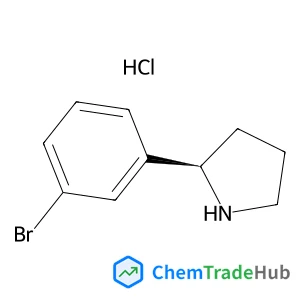
(2R)-2-(3-Bromophenyl)pyrrolidine hydrochloride (1:1)
CAS Number:
1391550-13-2
Molecular Formula:
C10H13BrClN
The micropump is the most important functional unit of a micro total analysis system (μTAS). An ideal microfluidics system should adopt simple, stable, robust, inexpensive, and integrated on-chip strategies to transport samples for downstream applications, with little or no external energy consumption and limited manual intervention. Nevertheless, it remains a key challenge for traditional micropumps to be directly integrated into self-contained and disposable μTAS for velocity-stable and passive sample transport. The best way to assess the capability of passive micropumps is to evaluate their pumping performance in extreme environments, e.g. a 3D configurated microchannel instead of a 2D configuration, high temperature conditions instead of at room temperature, a long microchannel instead of short microchannel, a complex topological microsystem (e.g. a microvascular network interconnecting multiple inlets and outlets) instead of a simple topological microsystem (e.g. a one-directional microchannel connecting only one inlet and one outlet), and multi-phase microdroplet transport instead of single-phase plug transport. In this review, a novel micropumping methodology – a pressure-driven gas-diffusion/permeation micropump – is described, which is the first review paper dedicated to this subject. A comprehensive overview is provided for comparison between this novel micropumping methodology and traditional passive micropumps, especially for applications in stable velocity control in the aforementioned extreme environments. Compared with mainstream conventional micropumps, we confirm that pressure-driven gas-diffusion/permeation micropumps combine a number of superior properties all into one device, such as small size, simple structure, without the need for microfabrication procedures or external power consumption, strong transport capacity, homogeneous flow velocity, delivery capacity for both multi-phase microdroplets and single-phase plugs, long-distance transport, persistent pumping for both 3D microchannels and complex topological microsystems (e.g. a biomimetic microvasculature), low cost, ease of microdevice integration, bubble suppression and amazing stability at high temperatures. An advanced outlook and perspectives for the future development of this novel micropump are also discussed, which may serve as a starting point for researchers in the microfluidics fields to harness pressure-driven gas-diffusion/permeation micropumps for downstream applications.
Xin Zeng, Stevin S. Pramana, Sudip K. Batabyal, Xiaodong Chen, K. B. Jinesh
DOI: 10.1039/C3CP43470B
Pierre Terech, Minhao Yan, Manuel Maréchal, Guy Royal, Jose Galvez, Sabareesh K. P. Velu
DOI: 10.1039/C3CP50671A
Xiaowei Li, Shunhong Zhang, Qian Wang
DOI: 10.1039/C3CP44660C
Matija Zlatar, Maja Gruden-Pavlović, Mireia Güell
DOI: 10.1039/C2CP43735J
Shinji Aono, Takashi Hosoya, Shigeyoshi Sakaki
DOI: 10.1039/C3CP43892A
Dong Jun Kim, Sang Jin Kim, Dong Kyu Roh, Jong Hak Kim
DOI: 10.1039/C3CP44308F
Yi Lin Yang, Yu-Chieh Ho, Yuri A. Dyakov, Wen-Hsin Hsu, Yi-Lun Sun, Wan-Chen Tsai, Wei-Ping Hu
DOI: 10.1039/C3CP44674C
Viraj P. Modak, Harshad Pathak, Mitchell Thayer, Sherwin J. Singer
DOI: 10.1039/C3CP44490B
Luis Gómez-Hortigüela, Furio Corà, C. Richard A. Catlow
DOI: 10.1039/C3CP51079D
N-(4-Methoxybenzyl)-2-pyridinamine (CAS: 52818-63-0) is increasingly being used ...
When handling Ethyl 4-(2-chlorophenyl)-1,3-thiazole-2-carboxylate, appropriate p...
Diethyldiselane (CAS: 628-39-7) is classified under the Globally Harmonized Syst...
The market for oxocopper (CAS: 12053-18-8) is primarily driven by its use in cat...
The market for 5-{[(2-Methyl-2-propanyl)oxy]carbonyl}-5-azaspiro[2.4]heptane-7-c...
2-(1-Pyrrolidinyl)-4-pyridinamine is a chemical compound with the CAS number 359...
2-(3-Pyridinyl)-1-azabicyclo[2.2.2]octane (CAS: 91556-75-1) is a crystalline sol...
(S)-Alpha-allyl-proline hydrochloride is usually synthesized via a Wittig reacti...
3-Methyl-1,2-oxazole-5-carboxylic acid (CAS: 4857-42-5) is an organic compound w...
Lys-SMCC-DM1 is synthesized via a multi-step process involving the coupling of S...

Analyst publishes analytical and bioanalytical research that reports premier fundamental discoveries and inventions, and the applications of those discoveries, unconfined by traditional discipline barriers.
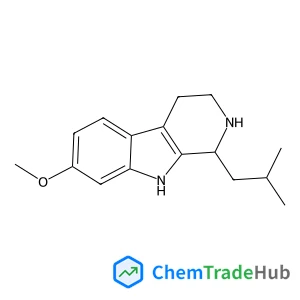
![N-{[(2-Methyl-2-propanyl)oxy]carbonyl}-L-methionylglycine structure](https://static.chemtradehub.com/structs/234/23446-03-9-e1e5.webp "N-{[(2-Methyl-2-propanyl)oxy]carbonyl}-L-methionylglycine structure")
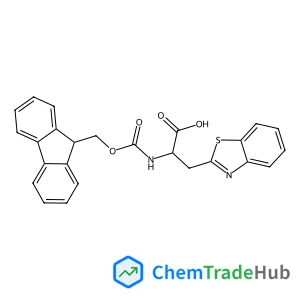
![1,10-bis(3,5-dimethylphenyl)-12-hydroxy-4,5,6,7-tetrahydroiindeno[7,1-de:1',7'-fg][1,3,2]dioxaphosphocine 12-oxide structure](https://static.chemtradehub.com/structs/141/1412439-82-7-b9a9.webp "1,10-bis(3,5-dimethylphenyl)-12-hydroxy-4,5,6,7-tetrahydroiindeno[7,1-de:1',7'-fg][1,3,2]dioxaphosphocine 12-oxide structure")




