












Effects of intramolecular hydrogen bonding on the excited state dynamics of phenol chromophores
Literature Information
Publication Date
2013-03-15
DOI
10.1039/C3CP44674C
Impact Factor
3.676
Authors
Yi Lin Yang, Yu-Chieh Ho, Yuri A. Dyakov, Wen-Hsin Hsu, Yi-Lun Sun, Wan-Chen Tsai, Wei-Ping Hu
View Original
Abstract
The theoretical prediction and experimental confirmation of the 1πσ* excited state of phenol which is repulsive along the O–H bond has a large impact on the interpretation of phenol and tyrosine photochemistry. In this work, we demonstrate that this excited state changes significantly if the OH functional group is involved in the formation of an intramolecular hydrogen bond in the ground state. We investigate the excited state dynamics of 2-, 3-, and 4-hydroxyacetophenone (HAP) separately in a molecular beam at 193 nm using multimass ion imaging techniques. H atom elimination from the repulsive excited state and Norrish type I reactions are the major dissociation channels of 3-HAP and 4-HAP which do not have intramolecular hydrogen bonding. However, the H atom elimination channel is completely quenched for 2-HAP which shows intramolecular hydrogen bonding. In addition, the ground state and the excited state potential energy surfaces (PESs) of HAP, 2-hydroxybenzoyl fluoride, 2-hydroxybenzoyl chloride, and 2-hydroxybenzamide are investigated using ab initio calculations. The results also show that the excited state potential along the O–H bond distance of the hydroxyl group changes significantly for molecules with intramolecular hydrogen bonding. The changes include: (a) the repulsive potential energy surface becomes an attractive potential near the ground state equilibrium geometry, (b) the conical intersection between the first and the second excited states along the O–H bond moves to a much higher energy level, and (c) the conical intersection between the repulsive excited state and the ground state along the O–H bond distance disappears. The results suggest that the interpretation of the photochemistry for molecules with a phenol chromophore must take these effects into consideration.
Related Literature
Molecular engineering of donor–acceptor sp2-carbon-linked covalent organic frameworks for enhancing photocatalytic hydrogen production
Mei Xu, Shanshan Yu, Wanru Li, Chuangye Li, Yukai Peng, Fengtao Yu
2023-11-03
Paper
DOI: 10.1039/D3PY01069D
Tracking sodium cobaltate formation pathways and its CO2 capture dynamics in real time with synchrotron X-ray diffraction
Federico Hector Cova, Maria Valeria Blanco
2023-11-02
Paper
DOI: 10.1039/D3RE00459G
Anti-inflammatory unimolecular micelles of redox-responsive hyperbranched polycurcumin amphiphiles with enhanced anti-inflammatory efficacy in vitro and in vivo
Qiang Tang, Minglang Zou, Yongming Wang, Jinyi Mu, Yuanzi Wu, Zhenyu Lin
2023-11-14
Paper
DOI: 10.1039/D3PY01071F
Investigation of support effects during ethanol steam reforming over a Ni/sepiolite catalyst
Marinela D. Zhurka, James A. Anderson, Alan J. McCue, Angeliki A. Lemonidou, Panagiotis N. Kechagiopoulos
2023-07-12
Paper
DOI: 10.1039/D3RE00181D
Batch and continuous flow mechanochemical synthesis of organic compounds including APIs
2023-09-05
Review Article
DOI: 10.1039/D2RE00521B
Synthesis of magnetic UiO-66-NH2@EDTA-GO and mechanism study of simultaneous adsorption of Pb(ii) and organic dyes from water
Mingli Cao, Wei Yang
2023-10-05
Paper
DOI: 10.1039/D3RE00399J
Efficient photocatalytic degradation of ultra-high concentration printing and dyeing wastewater using a SiO2/GCN nanocomposite
Jinyuan Zhu, Yingying Zhu, Yifan Zhou, Chaoran Li, Geng Chen, Xinbao Li
2023-08-22
Paper
DOI: 10.1039/D3RE00325F
You might also like
Compound Q&A
What is the market or research trend for N-(4-Methoxybenzyl)-2-pyridinamine (CAS: 52818-63-0)?
N-(4-Methoxybenzyl)-2-pyridinamine (CAS: 52818-63-0) is increasingly being used ...
52818-63-0N-(4-Methoxybenzyl)-...
Compound Q&A
What precautions should be taken when handling Ethyl 4-(2-chlorophenyl)-1,3-thiazole-2-carboxylate (CAS: 1050507-06-6)?
When handling Ethyl 4-(2-chlorophenyl)-1,3-thiazole-2-carboxylate, appropriate p...
1050507-06-6Ethyl 4-(2-chlorophe...
Compound Q&A
What regulatory guidelines apply to diethyldiselane (CAS: 628-39-7)?
Diethyldiselane (CAS: 628-39-7) is classified under the Globally Harmonized Syst...
628-39-7Diethyldiselane
Compound Q&A
What is the market or research trend for oxocopper (CAS: 12053-18-8)?
The market for oxocopper (CAS: 12053-18-8) is primarily driven by its use in cat...
12053-18-8oxocopper; oxo-(oxoc...
Compound Q&A
What is the market or research trend for 5-{[(2-Methyl-2-propanyl)oxy]carbonyl}-5-azaspiro[2.4]heptane-7-carboxylic acid?
The market for 5-{[(2-Methyl-2-propanyl)oxy]carbonyl}-5-azaspiro[2.4]heptane-7-c...
1268519-54-55-{[(2-Methyl-2-prop...
Compound Q&A
What is 2-(1-Pyrrolidinyl)-4-pyridinamine (CAS: 35981-63-6)?
2-(1-Pyrrolidinyl)-4-pyridinamine is a chemical compound with the CAS number 359...
35981-63-62-(1-Pyrrolidinyl)-4...
Compound Q&A
What are the physical and chemical properties of 2-(3-Pyridinyl)-1-azabicyclo[2.2.2]octane (CAS: 91556-75-1)?
2-(3-Pyridinyl)-1-azabicyclo[2.2.2]octane (CAS: 91556-75-1) is a crystalline sol...
91556-75-12-(3-Pyridinyl)-1-az...
Compound Q&A
How is (S)-Alpha-allyl-proline hydrochloride (CAS: 129704-91-2) typically synthesized?
(S)-Alpha-allyl-proline hydrochloride is usually synthesized via a Wittig reacti...
129704-91-2(S)-Alpha-allyl-prol...
Compound Q&A
What is 3-Methyl-1,2-oxazole-5-carboxylic acid (CAS: 4857-42-5)?
3-Methyl-1,2-oxazole-5-carboxylic acid (CAS: 4857-42-5) is an organic compound w...
4857-42-53-Methyl-1,2-oxazole...
Compound Q&A
How is Lys-SMCC-DM1 (CAS: 1281816-04-3) typically synthesized?
Lys-SMCC-DM1 is synthesized via a multi-step process involving the coupling of S...
1281816-04-3Lys-SMCC-DM1
Source Journal
Physical Chemistry Chemical Physics

CiteScore:
5.5
Self-citation Rate:
10.3%
Articles per Year:
3036
Physical Chemistry Chemical Physics (PCCP) is an international journal co-owned by 19 physical chemistry and physics societies from around the world. This journal publishes original, cutting-edge research in physical chemistry, chemical physics and biophysical chemistry. To be suitable for publication in PCCP, articles must include significant innovation and/or insight into physical chemistry; this is the most important criterion that reviewers and Editors will judge against when evaluating submissions. The journal has a broad scope and welcomes contributions spanning experiment, theory, computation and data science. Topical coverage includes spectroscopy, dynamics, kinetics, statistical mechanics, thermodynamics, electrochemistry, catalysis, surface science, quantum mechanics, quantum computing and machine learning. Interdisciplinary research areas such as polymers and soft matter, materials, nanoscience, energy, surfaces/interfaces, and biophysical chemistry are welcomed if they demonstrate significant innovation and/or insight into physical chemistry. Joined experimental/theoretical studies are particularly appreciated when complementary and based on up-to-date approaches.
Recommended Compounds
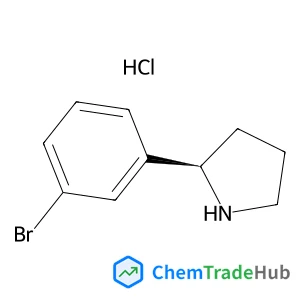
(2R)-2-(3-Bromophenyl)pyrrolidine hydrochloride (1:1)
CAS Number:
1391550-13-2
Molecular Formula:
C10H13BrClN


(3alpha,5beta,6alpha,7alpha)-6-Ethylcholane-3,7,24-triol
CAS Number:
1537866-49-1
Molecular Formula:
C26H46O3
Recommended Suppliers





Disclaimer
This page provides academic journal information for reference and research purposes only. We are not affiliated with any journal publishers and do not handle publication submissions. For publication-related inquiries, please contact the respective journal publishers directly.
If you notice any inaccuracies in the information displayed, please contact us at support@chemtradehub.com. We will promptly review and address your concerns.