



Low temperature synthesis of wurtzite zinc sulfide (ZnS) thin films by chemical spray pyrolysis
Literature Information
Publication Date
2013-01-17
DOI
10.1039/C3CP43470B
Impact Factor
3.676
Authors
Xin Zeng, Stevin S. Pramana, Sudip K. Batabyal, Xiaodong Chen, K. B. Jinesh
View Original
Abstract
Zinc sulfide (ZnS) thin films have been synthesized by spray pyrolysis at 310 °C using an aqueous solution of zinc chloride (ZnCl2) and thioacetamide (TAA). Highly crystalline films were obtained by applying TAA instead of thiourea (TU) as the sulfur source. X-ray diffraction (XRD) analyses show that the films prepared by TAA contained a wurtzite structure, which is usually a high temperature phase of ZnS. The crystallinity and morphology of the ZnS films appeared to have a strong dependence on the spray rate as well. The asymmetric polar structure of the TAA molecule is proposed to be the intrinsic reason of the formation of highly crystalline ZnS at comparatively low temperatures. The violet and green emissions from photoluminescence (PL) spectroscopy reflected the sulfur and zinc vacancies in the film. Accordingly, the photodetectors fabricated using these films exhibit excellent response to green and red photons of 525 nm and 650 nm respectively, though the band gaps of the materials, estimated from optical absorption spectroscopy, are in the range of 3.5–3.6 eV.
Recommended Journals

Planta Medica

Kinetics and Catalysis

Journal of Heterocyclic Chemistry

Journal of Medicinal Chemistry

Proceedings of the National Academy of Sciences of the United States of America

Science

Helvetica Chimica Acta

Journal of Physics and Chemistry of Solids

Pure and Applied Chemistry

Journal of Organometallic Chemistry
Related Literature
An effective approach for the preparation of epoxy vitrimers by in situ formation of dynamic and permanent linkages in a one-pot curing reaction
Du-Yuan Hung, Jia-Jun Lee, Ying-Ling Liu
2023-10-17
Paper
DOI: 10.1039/D3PY00957B
Fabrication of Cu2O-loaded TiO2 nanotubes with heterojunctions via an electrochemical method: enhanced photocatalytic activity
Peng Qiao, Jiangling Liu, Yanxiu Liu, Man Dai, Rui Piao, Ying Liu, Wenyi Wang, Yuanyuan Wang
2023-06-29
Paper
DOI: 10.1039/D3RE00226H
Hofmeister effect-driven superlattice construction via hydrophilic/hydrophobic transition of poly(ethylene glycol) ligands
Yanqiu Du, Haidong Li, Yang Jiang, Yunchao Xiao, Jipeng Guan, Xuejie Liu, Nan Yan
2023-12-13
Paper
DOI: 10.1039/D3PY01159C
Synthesis and charge-transport properties of novel π-conjugated polymers incorporating core-extended naphtho[2,1-b:3,4-b′]dithiophene diimides
Lingli Zhao, Yanyan Cao, Hanwen Qin, Xi He, Zhiyuan Zhao, Yunlong Guo, Huajie Chen
2023-11-28
Paper
DOI: 10.1039/D3PY01186K
Thermoresponsive property of poly(N,N-bis(2-ethoxyethyl)acrylamide) and its multiblock copolymers with poly(N,N-dimethylacrylamide) prepared by hydrosilylation-promoted group transfer polymerization
Xiangming Fu, Yanqiu Wang, Liang Xu, Atsushi Narumi, Shin-ichiro Sato, Xiaoran Yang
2023-10-30
Paper
DOI: 10.1039/D3PY01032E
Efficient photocatalytic degradation of ultra-high concentration printing and dyeing wastewater using a SiO2/GCN nanocomposite
Jinyuan Zhu, Yingying Zhu, Yifan Zhou, Chaoran Li, Geng Chen, Xinbao Li
2023-08-22
Paper
DOI: 10.1039/D3RE00325F
You might also like
Compound Q&A
What is the market or research trend for N-(4-Methoxybenzyl)-2-pyridinamine (CAS: 52818-63-0)?
N-(4-Methoxybenzyl)-2-pyridinamine (CAS: 52818-63-0) is increasingly being used ...
52818-63-0N-(4-Methoxybenzyl)-...
Compound Q&A
What precautions should be taken when handling Ethyl 4-(2-chlorophenyl)-1,3-thiazole-2-carboxylate (CAS: 1050507-06-6)?
When handling Ethyl 4-(2-chlorophenyl)-1,3-thiazole-2-carboxylate, appropriate p...
1050507-06-6Ethyl 4-(2-chlorophe...
Compound Q&A
What regulatory guidelines apply to diethyldiselane (CAS: 628-39-7)?
Diethyldiselane (CAS: 628-39-7) is classified under the Globally Harmonized Syst...
628-39-7Diethyldiselane
Compound Q&A
What is the market or research trend for oxocopper (CAS: 12053-18-8)?
The market for oxocopper (CAS: 12053-18-8) is primarily driven by its use in cat...
12053-18-8oxocopper; oxo-(oxoc...
Compound Q&A
What is the market or research trend for 5-{[(2-Methyl-2-propanyl)oxy]carbonyl}-5-azaspiro[2.4]heptane-7-carboxylic acid?
The market for 5-{[(2-Methyl-2-propanyl)oxy]carbonyl}-5-azaspiro[2.4]heptane-7-c...
1268519-54-55-{[(2-Methyl-2-prop...
Compound Q&A
What is 2-(1-Pyrrolidinyl)-4-pyridinamine (CAS: 35981-63-6)?
2-(1-Pyrrolidinyl)-4-pyridinamine is a chemical compound with the CAS number 359...
35981-63-62-(1-Pyrrolidinyl)-4...
Compound Q&A
What are the physical and chemical properties of 2-(3-Pyridinyl)-1-azabicyclo[2.2.2]octane (CAS: 91556-75-1)?
2-(3-Pyridinyl)-1-azabicyclo[2.2.2]octane (CAS: 91556-75-1) is a crystalline sol...
91556-75-12-(3-Pyridinyl)-1-az...
Compound Q&A
How is (S)-Alpha-allyl-proline hydrochloride (CAS: 129704-91-2) typically synthesized?
(S)-Alpha-allyl-proline hydrochloride is usually synthesized via a Wittig reacti...
129704-91-2(S)-Alpha-allyl-prol...
Compound Q&A
What is 3-Methyl-1,2-oxazole-5-carboxylic acid (CAS: 4857-42-5)?
3-Methyl-1,2-oxazole-5-carboxylic acid (CAS: 4857-42-5) is an organic compound w...
4857-42-53-Methyl-1,2-oxazole...
Compound Q&A
How is Lys-SMCC-DM1 (CAS: 1281816-04-3) typically synthesized?
Lys-SMCC-DM1 is synthesized via a multi-step process involving the coupling of S...
1281816-04-3Lys-SMCC-DM1
Source Journal
Physical Chemistry Chemical Physics

CiteScore:
5.5
Self-citation Rate:
10.3%
Articles per Year:
3036
Physical Chemistry Chemical Physics (PCCP) is an international journal co-owned by 19 physical chemistry and physics societies from around the world. This journal publishes original, cutting-edge research in physical chemistry, chemical physics and biophysical chemistry. To be suitable for publication in PCCP, articles must include significant innovation and/or insight into physical chemistry; this is the most important criterion that reviewers and Editors will judge against when evaluating submissions. The journal has a broad scope and welcomes contributions spanning experiment, theory, computation and data science. Topical coverage includes spectroscopy, dynamics, kinetics, statistical mechanics, thermodynamics, electrochemistry, catalysis, surface science, quantum mechanics, quantum computing and machine learning. Interdisciplinary research areas such as polymers and soft matter, materials, nanoscience, energy, surfaces/interfaces, and biophysical chemistry are welcomed if they demonstrate significant innovation and/or insight into physical chemistry. Joined experimental/theoretical studies are particularly appreciated when complementary and based on up-to-date approaches.
Recommended Compounds
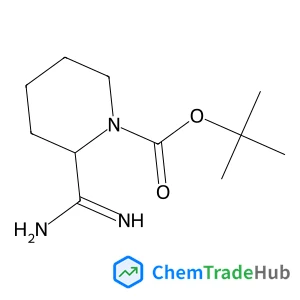
2-Methyl-2-propanyl 2-carbamimidoyl-1-piperidinecarboxylate
CAS Number:
1258640-98-0
Molecular Formula:
C11H21N3O2
Recommended Suppliers





Disclaimer
This page provides academic journal information for reference and research purposes only. We are not affiliated with any journal publishers and do not handle publication submissions. For publication-related inquiries, please contact the respective journal publishers directly.
If you notice any inaccuracies in the information displayed, please contact us at support@chemtradehub.com. We will promptly review and address your concerns.