












Systematic analysis of various ionic liquids by attenuated total reflectance spectroscopy (145–450 nm) and quantum chemical calculations
Literature Information
Publication Date
2018-05-11
DOI
10.1039/C8AN00563J
Impact Factor
4.616
Authors
Ichiro Tanabe, Aki Suyama, Taiki Sato, Ken-ichi Fukui
View Original
Abstract
Despite providing rich information on electronic states, the far-ultraviolet (FUV, <200 nm) and deep-ultraviolet (DUV, <300 nm) absorption spectra of ionic liquids (ILs) are difficult to obtain without saturation due to very strong analyte absorbance. Herein, FUV-DUV spectra of selected ILs were systematically and easily recorded using an attenuated total reflectance spectrometer and rationalized based on quantum chemical calculations. ILs containing pyrrolidinium or ammonium cations and fluorine-containing anions exhibited weak absorbance below 200 nm that could not be measured by conventional UV-Vis spectroscopy, whereas the corresponding imidazolium-based ILs showed distinct absorption bands that could be reproduced by single-cation-model calculations. On the other hand, imidazolium-based ILs with halide anions showed characteristic charge transfer (CT)-related absorbances. Thus, the above spectroscopic investigations contribute to a fundamental understanding of the electronic processes (e.g., intramolecular excitations and CT transitions) and molecular designs used in electrochemical devices.
Related Literature
First principles characterisation of bio–nano interface
Ian Rouse, David Power, Erik G. Brandt, Matthew Schneemilch, Konstantinos Kotsis, Nick Quirke, Alexander P. Lyubartsev, Vladimir Lobaskin
2021-06-10
Paper
DOI: 10.1039/D1CP01116B
Atmospheric oxidation of fluoroalcohols initiated by ˙OH radicals in the presence of water and mineral dusts: mechanism, kinetics, and risk assessment
Feng-Yang Bai, Ming-Shuai Deng, Mei-Yan Chen, Lian Kong, Shuang Ni, Xiu-Mei Pan
2021-04-29
Paper
DOI: 10.1039/D1CP01324F
Computational discovery of PtS2/GaSe van der Waals heterostructure for solar energy applications
Rui Xiong, Rong Hu, Yinggan Zhang, Xuhui Yang, Peng Lin, Cuilian Wen, Baisheng Sa, Zhimei Sun
2021-08-12
Paper
DOI: 10.1039/D1CP02436A
Effect of curing reaction types on the structures and properties of acetylene-containing thermosets: towards optimization of curing procedure
Junli Zhu, Liquan Wang, Jiaping Lin, Lei Du, Qixin Zhuang
2021-06-01
Paper
DOI: 10.1039/D0CP05580H
Self-consistent field modeling of mesomorphic phase changes of monoolein and phospholipids in response to additives
N. de Lange, J. M. Kleijn, F. A. M. Leermakers
2021-06-17
Paper
DOI: 10.1039/D1CP00697E
Unravelling the microhydration frameworks of prototype PAH by infrared spectroscopy: naphthalene–(water)1–3
Kuntal Chatterjee, Tarun Kumar Roy, Jai Khatri, Gerhard Schwaab, Martina Havenith
2021-05-25
Paper
DOI: 10.1039/D1CP01789F
Surface electronic states mediate concerted electron and proton transfer at metal nanoscale interfaces for catalytic hydride reduction of –NO2 to –NH2
Bing-Qian Shan, Jia-Feng Zhou, Meng Ding, Xiao-Dan Hu
2021-05-25
Communication
DOI: 10.1039/D1CP01792F
Characterization of cisplatin/membrane interactions by QM/MM energy decomposition analysis
Gustavo Cárdenas, Álvaro Pérez-Barcia, Marcos Mandado
2021-09-03
Paper
DOI: 10.1039/D1CP03382D
You might also like
Compound Q&A
What is the market or research trend for N-(4-Methoxybenzyl)-2-pyridinamine (CAS: 52818-63-0)?
N-(4-Methoxybenzyl)-2-pyridinamine (CAS: 52818-63-0) is increasingly being used ...
52818-63-0N-(4-Methoxybenzyl)-...
Compound Q&A
What precautions should be taken when handling Ethyl 4-(2-chlorophenyl)-1,3-thiazole-2-carboxylate (CAS: 1050507-06-6)?
When handling Ethyl 4-(2-chlorophenyl)-1,3-thiazole-2-carboxylate, appropriate p...
1050507-06-6Ethyl 4-(2-chlorophe...
Compound Q&A
What regulatory guidelines apply to diethyldiselane (CAS: 628-39-7)?
Diethyldiselane (CAS: 628-39-7) is classified under the Globally Harmonized Syst...
628-39-7Diethyldiselane
Compound Q&A
What is the market or research trend for oxocopper (CAS: 12053-18-8)?
The market for oxocopper (CAS: 12053-18-8) is primarily driven by its use in cat...
12053-18-8oxocopper; oxo-(oxoc...
Compound Q&A
What is the market or research trend for 5-{[(2-Methyl-2-propanyl)oxy]carbonyl}-5-azaspiro[2.4]heptane-7-carboxylic acid?
The market for 5-{[(2-Methyl-2-propanyl)oxy]carbonyl}-5-azaspiro[2.4]heptane-7-c...
1268519-54-55-{[(2-Methyl-2-prop...
Compound Q&A
What is 2-(1-Pyrrolidinyl)-4-pyridinamine (CAS: 35981-63-6)?
2-(1-Pyrrolidinyl)-4-pyridinamine is a chemical compound with the CAS number 359...
35981-63-62-(1-Pyrrolidinyl)-4...
Compound Q&A
What are the physical and chemical properties of 2-(3-Pyridinyl)-1-azabicyclo[2.2.2]octane (CAS: 91556-75-1)?
2-(3-Pyridinyl)-1-azabicyclo[2.2.2]octane (CAS: 91556-75-1) is a crystalline sol...
91556-75-12-(3-Pyridinyl)-1-az...
Compound Q&A
How is (S)-Alpha-allyl-proline hydrochloride (CAS: 129704-91-2) typically synthesized?
(S)-Alpha-allyl-proline hydrochloride is usually synthesized via a Wittig reacti...
129704-91-2(S)-Alpha-allyl-prol...
Compound Q&A
What is 3-Methyl-1,2-oxazole-5-carboxylic acid (CAS: 4857-42-5)?
3-Methyl-1,2-oxazole-5-carboxylic acid (CAS: 4857-42-5) is an organic compound w...
4857-42-53-Methyl-1,2-oxazole...
Compound Q&A
How is Lys-SMCC-DM1 (CAS: 1281816-04-3) typically synthesized?
Lys-SMCC-DM1 is synthesized via a multi-step process involving the coupling of S...
1281816-04-3Lys-SMCC-DM1
Source Journal
Analyst

CiteScore:
7.8
Self-citation Rate:
5.6%
Articles per Year:
653
Analyst publishes analytical and bioanalytical research that reports premier fundamental discoveries and inventions, and the applications of those discoveries, unconfined by traditional discipline barriers.
Recommended Compounds
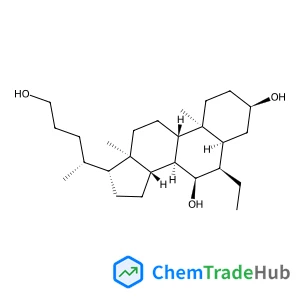
(3alpha,5beta,6alpha,7alpha)-6-Ethylcholane-3,7,24-triol
CAS Number:
1537866-49-1
Molecular Formula:
C26H46O3
![(2R,6S)-6-[(Benzyloxy)methyl]-4-{[(2-methyl-2-propanyl)oxy]carbonyl}-2-morpholinecarboxylic acid structure](https://static.chemtradehub.com/structs/109/1093085-91-6-3382.webp "(2R,6S)-6-[(Benzyloxy)methyl]-4-{[(2-methyl-2-propanyl)oxy]carbonyl}-2-morpholinecarboxylic acid structure")
(2R,6S)-6-[(Benzyloxy)methyl]-4-{[(2-methyl-2-propanyl)oxy]carbonyl}-2-morpholinecarboxylic acid
CAS Number:
1093085-91-6
Molecular Formula:
C18H25NO6

Recommended Suppliers






Disclaimer
This page provides academic journal information for reference and research purposes only. We are not affiliated with any journal publishers and do not handle publication submissions. For publication-related inquiries, please contact the respective journal publishers directly.
If you notice any inaccuracies in the information displayed, please contact us at support@chemtradehub.com. We will promptly review and address your concerns.