












Structure elucidation and quantification of the reduction products of anticancer Pt(iv) prodrugs by electrochemistry/mass spectrometry (EC-MS)
Literature Information
Publication Date
2018-04-09
DOI
10.1039/C8AN00258D
Impact Factor
4.616
Authors
L. M. Frensemeier, J. Mayr, G. Koellensperger, B. K. Keppler, C. R. Kowol, U. Karst
View Original
Abstract
Pt(IV) prodrugs are a class of promising anticancer agents, which are activated by reduction to the active Pt(II) species. Consequently, the reduction process is a crucial parameter. Herein, a new approach using electrochemistry (EC) coupled to liquid chromatography (LC) and electrospray ionization-mass spectrometry (ESI-MS) or inductively coupled plasma (ICP)-MS was applied. This enabled getting insights into the differences in the reduction and ligand release of platinum(IV) complexes with varying equatorial core structures.
Related Literature
Infrared spectroscopy of CeO2 nanoparticles using Bergman's spectral representation: effects of phonon confinement and lattice strain
Leire del Campo, Domingos De Sousa Meneses
2021-05-25
Paper
DOI: 10.1039/D1CP01259B
Mode-specific dynamics in multichannel reaction NH+ + H2
Weiliang Shi, Kun Wang, Ping Zhang, Le Yu, Anyang Li
2021-08-20
Paper
DOI: 10.1039/D1CP02603H
Heparin remodels the microtubule-binding repeat R3 of Tau protein towards fibril-prone conformations
Xuewei Dong, Ruxi Qi, Qin Qiao, Xuhua Li, Fangying Li, Jiaqian Wan, Qingwen Zhang, Guanghong Wei
2021-08-20
Paper
DOI: 10.1039/D1CP02651H
Probing reaction processes and reversibility in Earth-abundant Na3FeF6 for Na-ion batteries
Anthony Wong, Gabriel Ménard
2021-07-01
Paper
DOI: 10.1039/D1CP02763H
Novel organic semiconductors based on 2-amino-anthracene: Synthesis, charge transport and photo-conductive properties
K. Kondratenko, I. Carlescu, P.-E. Danjou, Y. Boussoualem, A. Simion, B. Duponchel, J. F. Blach, C. Legrand, N. Hurduc, A. Daoudi
2021-05-25
Paper
DOI: 10.1039/D1CP01427G
In silico mutational analyses reveal different ligand-binding abilities of double pockets of medaka fish taste receptor type 1 essential for efficient taste recognition
Hayato Aida, Rikuri Morita
2021-08-20
Paper
DOI: 10.1039/D1CP02876F
Origin of asynchronicity in Diels–Alder reactions
Pascal Vermeeren, Trevor A. Hamlin
2021-09-03
Paper
DOI: 10.1039/D1CP02456F
Effects of molecular shape on alcohol aggregation and water hydrogen bond network behavior in butanol isomer solutions
Seungeui Choi, Saravanan Parameswaran, Jun-Ho Choi
2021-05-18
Paper
DOI: 10.1039/D1CP00634G
Bayesian phase difference estimation: a general quantum algorithm for the direct calculation of energy gaps
Chikako Sakai, Kazuo Toyota, Kazunobu Sato, Daisuke Shiomi
2021-09-02
Paper
DOI: 10.1039/D1CP03156B
Interfacial photoinduced carrier dynamics tuned by polymerization of coronene molecules encapsulated in carbon nanotubes: bridging type-I and type-II heterojunctions
Xiao-Ying Xie, Jia-Jia Yang, Xiang-Yang Liu, Qiu Fang, Wei-Hai Fang, Ganglong Cui
2021-05-24
Paper
DOI: 10.1039/D1CP01008E
You might also like
Compound Q&A
What is the market or research trend for N-(4-Methoxybenzyl)-2-pyridinamine (CAS: 52818-63-0)?
N-(4-Methoxybenzyl)-2-pyridinamine (CAS: 52818-63-0) is increasingly being used ...
52818-63-0N-(4-Methoxybenzyl)-...
Compound Q&A
What precautions should be taken when handling Ethyl 4-(2-chlorophenyl)-1,3-thiazole-2-carboxylate (CAS: 1050507-06-6)?
When handling Ethyl 4-(2-chlorophenyl)-1,3-thiazole-2-carboxylate, appropriate p...
1050507-06-6Ethyl 4-(2-chlorophe...
Compound Q&A
What regulatory guidelines apply to diethyldiselane (CAS: 628-39-7)?
Diethyldiselane (CAS: 628-39-7) is classified under the Globally Harmonized Syst...
628-39-7Diethyldiselane
Compound Q&A
What is the market or research trend for oxocopper (CAS: 12053-18-8)?
The market for oxocopper (CAS: 12053-18-8) is primarily driven by its use in cat...
12053-18-8oxocopper; oxo-(oxoc...
Compound Q&A
What is the market or research trend for 5-{[(2-Methyl-2-propanyl)oxy]carbonyl}-5-azaspiro[2.4]heptane-7-carboxylic acid?
The market for 5-{[(2-Methyl-2-propanyl)oxy]carbonyl}-5-azaspiro[2.4]heptane-7-c...
1268519-54-55-{[(2-Methyl-2-prop...
Compound Q&A
What is 2-(1-Pyrrolidinyl)-4-pyridinamine (CAS: 35981-63-6)?
2-(1-Pyrrolidinyl)-4-pyridinamine is a chemical compound with the CAS number 359...
35981-63-62-(1-Pyrrolidinyl)-4...
Compound Q&A
What are the physical and chemical properties of 2-(3-Pyridinyl)-1-azabicyclo[2.2.2]octane (CAS: 91556-75-1)?
2-(3-Pyridinyl)-1-azabicyclo[2.2.2]octane (CAS: 91556-75-1) is a crystalline sol...
91556-75-12-(3-Pyridinyl)-1-az...
Compound Q&A
How is (S)-Alpha-allyl-proline hydrochloride (CAS: 129704-91-2) typically synthesized?
(S)-Alpha-allyl-proline hydrochloride is usually synthesized via a Wittig reacti...
129704-91-2(S)-Alpha-allyl-prol...
Compound Q&A
What is 3-Methyl-1,2-oxazole-5-carboxylic acid (CAS: 4857-42-5)?
3-Methyl-1,2-oxazole-5-carboxylic acid (CAS: 4857-42-5) is an organic compound w...
4857-42-53-Methyl-1,2-oxazole...
Compound Q&A
How is Lys-SMCC-DM1 (CAS: 1281816-04-3) typically synthesized?
Lys-SMCC-DM1 is synthesized via a multi-step process involving the coupling of S...
1281816-04-3Lys-SMCC-DM1
Source Journal
Analyst

CiteScore:
7.8
Self-citation Rate:
5.6%
Articles per Year:
653
Analyst publishes analytical and bioanalytical research that reports premier fundamental discoveries and inventions, and the applications of those discoveries, unconfined by traditional discipline barriers.
Recommended Compounds
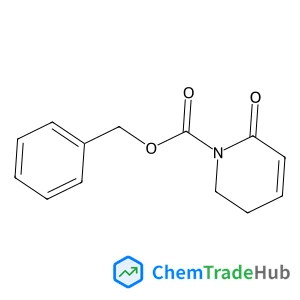
Benzyl 6-oxo-3,6-dihydro-1(2H)-pyridinecarboxylate
CAS Number:
725746-35-0
Molecular Formula:
C13H13NO3
![N-{[(2-Methyl-2-propanyl)oxy]carbonyl}-L-methionylglycine structure](https://static.chemtradehub.com/structs/234/23446-03-9-e1e5.webp "N-{[(2-Methyl-2-propanyl)oxy]carbonyl}-L-methionylglycine structure")
N-{[(2-Methyl-2-propanyl)oxy]carbonyl}-L-methionylglycine
CAS Number:
23446-03-9
Molecular Formula:
C12H22N2O5S
Recommended Suppliers






Disclaimer
This page provides academic journal information for reference and research purposes only. We are not affiliated with any journal publishers and do not handle publication submissions. For publication-related inquiries, please contact the respective journal publishers directly.
If you notice any inaccuracies in the information displayed, please contact us at support@chemtradehub.com. We will promptly review and address your concerns.