












Advances in the integration of quantum dots with various nanomaterials for biomedical and environmental applications
Literature Information
Publication Date
2018-04-14
DOI
10.1039/C8AN00222C
Impact Factor
4.616
Authors
Lin Cui, Chen-chen Li, Bo Tang, Chun-yang Zhang
View Original
Abstract
Quantum dots (QDs) are semiconductor nanocrystals with distinct characteristics of high brightness, large Stokes shift and broad absorption spectra, large molar extinction coefficients, high quantum yield, good photostability and long fluorescence lifetime. The QDs have replaced the conventional fluorophores with wide applications in immunoassays, microarrays, fluorescence imaging, targeted drug delivery and therapy. The integration of QDs with various nanomaterials such as noble metal nanoparticles, carbon allotropes, upconversion nanoparticles (UCNPs), metal oxides and metal–organic frameworks (MOFs) brings new opportunities and possibilities in nanoscience and nanotechnology. In this review, we summarize the recent advances in the integration of QDs with various nanomaterials for biomedical and environmental applications including sensing, bioimaging, theranostics and cancer therapy. We highlight the involved interactions such as fluorescence resonance energy transfer (FRET), plasmon enhanced fluorescence (PEF), and nanometal surface energy transfer (NSET) as well as the synergistic effect resulting from the integration of QDs with nanomaterials. In addition, we discuss the sensing and imaging mechanisms of different strategies and give new insight into the challenges and future direction as well.
Related Literature
Resistive switching on individual V2O5 nanoparticles encapsulated in fluorinated graphene films
Artem I. Ivanov, Victor Ya. Prinz, Irina V. Antonova, Anton K. Gutakovskii
2021-08-19
Paper
DOI: 10.1039/D1CP02930D
Controlled 2H/1T phase transition in MoS2 monolayers by a strong interface with M2C MXenes: a computational study
Zhongxu Wang, Yu Liu, FengYu Li, Jingxiang Zhao
2021-08-25
Paper
DOI: 10.1039/D1CP02648H
Thermal conductivity and electrical resistivity of single copper nanowires
Wei-Tsu Peng, Fu-Ren Chen, Ming-Chang Lu
2021-08-26
Paper
DOI: 10.1039/D1CP02774C
Salt bridge dynamics in protein/DNA recognition: a comparative analysis of Elk1 and ETV6
Tam D. Vo, Amelia L. Schneider
2021-06-07
Paper
DOI: 10.1039/D1CP01568K
Impact of Cu(ii) and Al(iii) on the conformational landscape of amyloidβ1-42
Lorena Roldán-Martín, Francesca Peccati, Mariona Sodupe, Jean-Didier Maréchal
2021-05-10
Paper
DOI: 10.1039/D1CP01561C
Imaging intramolecular hydrogen migration with time- and momentum-resolved photoelectron diffraction
Fukiko Ota, Shigeru Abe, Keisuke Hatada, Kiyoshi Ueda
2021-07-30
Paper
DOI: 10.1039/D1CP02055B
In silico mutational analyses reveal different ligand-binding abilities of double pockets of medaka fish taste receptor type 1 essential for efficient taste recognition
Hayato Aida, Rikuri Morita
2021-08-20
Paper
DOI: 10.1039/D1CP02876F
Bayesian phase difference estimation: a general quantum algorithm for the direct calculation of energy gaps
Chikako Sakai, Kazuo Toyota, Kazunobu Sato, Daisuke Shiomi
2021-09-02
Paper
DOI: 10.1039/D1CP03156B
Bonding of C1 fragments on metal nanoclusters: a search for methane conversion catalysts with swarm intelligence
Mikiya Hori, Yuta Tsuji, Kazunari Yoshizawa
2021-06-01
Paper
DOI: 10.1039/D1CP00345C
You might also like
Compound Q&A
What is the market or research trend for N-(4-Methoxybenzyl)-2-pyridinamine (CAS: 52818-63-0)?
N-(4-Methoxybenzyl)-2-pyridinamine (CAS: 52818-63-0) is increasingly being used ...
52818-63-0N-(4-Methoxybenzyl)-...
Compound Q&A
What precautions should be taken when handling Ethyl 4-(2-chlorophenyl)-1,3-thiazole-2-carboxylate (CAS: 1050507-06-6)?
When handling Ethyl 4-(2-chlorophenyl)-1,3-thiazole-2-carboxylate, appropriate p...
1050507-06-6Ethyl 4-(2-chlorophe...
Compound Q&A
What regulatory guidelines apply to diethyldiselane (CAS: 628-39-7)?
Diethyldiselane (CAS: 628-39-7) is classified under the Globally Harmonized Syst...
628-39-7Diethyldiselane
Compound Q&A
What is the market or research trend for oxocopper (CAS: 12053-18-8)?
The market for oxocopper (CAS: 12053-18-8) is primarily driven by its use in cat...
12053-18-8oxocopper; oxo-(oxoc...
Compound Q&A
What is the market or research trend for 5-{[(2-Methyl-2-propanyl)oxy]carbonyl}-5-azaspiro[2.4]heptane-7-carboxylic acid?
The market for 5-{[(2-Methyl-2-propanyl)oxy]carbonyl}-5-azaspiro[2.4]heptane-7-c...
1268519-54-55-{[(2-Methyl-2-prop...
Compound Q&A
What is 2-(1-Pyrrolidinyl)-4-pyridinamine (CAS: 35981-63-6)?
2-(1-Pyrrolidinyl)-4-pyridinamine is a chemical compound with the CAS number 359...
35981-63-62-(1-Pyrrolidinyl)-4...
Compound Q&A
What are the physical and chemical properties of 2-(3-Pyridinyl)-1-azabicyclo[2.2.2]octane (CAS: 91556-75-1)?
2-(3-Pyridinyl)-1-azabicyclo[2.2.2]octane (CAS: 91556-75-1) is a crystalline sol...
91556-75-12-(3-Pyridinyl)-1-az...
Compound Q&A
How is (S)-Alpha-allyl-proline hydrochloride (CAS: 129704-91-2) typically synthesized?
(S)-Alpha-allyl-proline hydrochloride is usually synthesized via a Wittig reacti...
129704-91-2(S)-Alpha-allyl-prol...
Compound Q&A
What is 3-Methyl-1,2-oxazole-5-carboxylic acid (CAS: 4857-42-5)?
3-Methyl-1,2-oxazole-5-carboxylic acid (CAS: 4857-42-5) is an organic compound w...
4857-42-53-Methyl-1,2-oxazole...
Compound Q&A
How is Lys-SMCC-DM1 (CAS: 1281816-04-3) typically synthesized?
Lys-SMCC-DM1 is synthesized via a multi-step process involving the coupling of S...
1281816-04-3Lys-SMCC-DM1
Source Journal
Analyst

CiteScore:
7.8
Self-citation Rate:
5.6%
Articles per Year:
653
Analyst publishes analytical and bioanalytical research that reports premier fundamental discoveries and inventions, and the applications of those discoveries, unconfined by traditional discipline barriers.
Recommended Compounds
![1-{3-[4-Amino-3-(4-phenoxyphenyl)-1H-pyrazolo[3,4-d]pyrimidin-1-yl]-1-piperidinyl}-2,3-dihydroxy-1-propanone structure](https://static.chemtradehub.com/structs/122/1226872-27-0-e037.webp "1-{3-[4-Amino-3-(4-phenoxyphenyl)-1H-pyrazolo[3,4-d]pyrimidin-1-yl]-1-piperidinyl}-2,3-dihydroxy-1-propanone structure")
1-{3-[4-Amino-3-(4-phenoxyphenyl)-1H-pyrazolo[3,4-d]pyrimidin-1-yl]-1-piperidinyl}-2,3-dihydroxy-1-propanone
CAS Number:
1226872-27-0
Molecular Formula:
C25H26N6O4
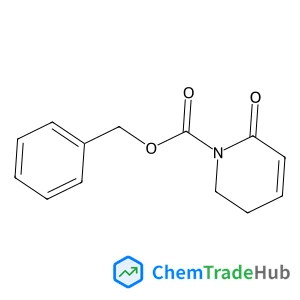
Benzyl 6-oxo-3,6-dihydro-1(2H)-pyridinecarboxylate
CAS Number:
725746-35-0
Molecular Formula:
C13H13NO3
Recommended Suppliers





Disclaimer
This page provides academic journal information for reference and research purposes only. We are not affiliated with any journal publishers and do not handle publication submissions. For publication-related inquiries, please contact the respective journal publishers directly.
If you notice any inaccuracies in the information displayed, please contact us at support@chemtradehub.com. We will promptly review and address your concerns.