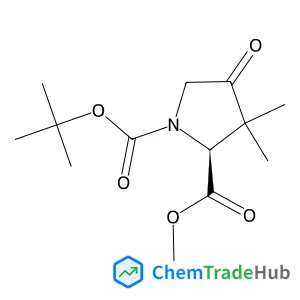
2-Methyl 1-(2-methyl-2-propanyl) (2S)-3,3-dimethyl-4-oxo-1,2-pyrrolidinedicarboxylate
CAS Number:
478698-30-5
Molecular Formula:
C13H21NO5
Atiweena Krittayavathananon, Peerapan Dittanet, Pinit Kidkhunthod, Montree Sawangphruk
Herein, hybrid energy storages (HESs) of battery-type Ni(OH)2 and supercapacitor-type electrochemically reduced graphene oxide (ERGO) were fabricated using potassium ferricyanide (K3Fe(CN)6) as a redox additive in KOH electrolyte for high specific energy and power applications. The as-fabricated HES of Ni(OH)2//ERGO in a single coin cell (CR2016) size in 4 mM K3[Fe(CN)]6 in 1 M KOH provides a wide working voltage up to 1.6 V and exhibits a maximum specific energy of 85 W h kg−1 at the specific power of 726 W kg−1 with a high capacity retention over 88% after 10 000 cycles, while the HES in 1 M KOH provides a lower maximum specific energy of 61 W h kg−1. A Fe(CN)63−/Fe(CN)64− redox couple has a great electrochemical reversibility in nature since Fe(CN)63− can obtain electrons from Ni(OH)2 through the reduction process and Fe(CN)64− can donate electrons to NiOOH for the oxidation process. The HES reported herein may be practically used for high energy applications.
Na Ai, Xiao Wang, Jian Pei, Xiaobo Wan
DOI: 10.1039/C5PY01488C
Ze Zhang, Zi-Bin Tan, Chun-Yan Hong, De-Cheng Wu, Ye-Zi You
DOI: 10.1039/C5PY01758K
Xiang Ling, Yan Shen, Runing Sun, Mengze Zhang, Chang Li, Jinyin Mao, Jing Xing, Chunmeng Sun, Jiasheng Tu
DOI: 10.1039/C4PY01592D
Alexander Ilchev, Rueben Pfukwa, Lebohang Hlalele, Marica Smit, Bert Klumperman
DOI: 10.1039/C5PY01293G
Shampa R. Samanta, Vasiliki Nikolaou, Shauni Keller, Michael J. Monteiro, Daniela A. Wilson, David M. Haddleton, Virgil Percec
DOI: 10.1039/C4PY01748J
Qingxing Xu, Julian M. W. Chan, James L. Hedrick, Yi Yan Yang
DOI: 10.1039/C4PY01455C
William Guerin, Marion Helou, Martine Slawinski, Jean-Michel Brusson, Jean-François Carpentier, Sophie M. Guillaume
DOI: 10.1039/C4PY01660B
Panayiotis Bilalis, Leto-A. Tziveleka, Spyridon Varlas, Hermis Iatrou
DOI: 10.1039/C5PY01841B
Cheng-Bin Nie, Tian-You Zhou, Qiao-Yan Qi, Jie Fu, Xiao-Zhong Wang, Liyan Dai, Yingqi Chen, Xin Zhao
DOI: 10.1039/C4PY01669F
2-(2-Chloroacetamido)-3-phenylpropanoic acid (CAS: 7765-11-9) is generally consi...
2-(Benzyloxy)-5-bromobenzoic acid can be handled safely if appropriate precautio...
(4-Methyl-1,2,5-oxadiazol-3-yl)methanamine hydrochloride is a chemical compound ...
2-(5-Hexylthiophen-2-yl)-4,4,5,5-tetramethyl-1,3,2-dioxaborolane (CAS: 917985-54...
While 4-(8-Methyl-9H-1,3-dioxolo[4,5-h][2,3]benzodiazepin-5-yl)benzenamine (CAS:...
The market for tert-butyl 3-hydroxy-4,5,7,8-tetrahydro-2H-pyrazolo[3,4-d]azepine...
Waste containing 3,5-Diamino-1H-pyrazole-4-carbonitrile (CAS: 6844-58-2) should ...
(6-Fluoro-3-pyridinyl)boronic acid can be synthesized through the reaction of 6-...
Dibenzyl carbonimidoylbiscarbamate (CAS: 10065-79-9) finds applications in vario...
The market for (beta,beta,2,3,4,5,6-~2~H_7_)Phenylalanine (CAS: 74228-83-4) is g...
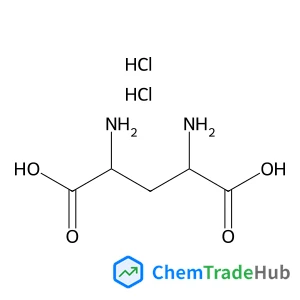
![2-Methyl-2-propanyl 4-oxo-3,9-diazabicyclo[4.2.1]nonane-9-carboxylate structure](https://static.chemtradehub.com/structs/131/1312456-05-5-9a15.webp "2-Methyl-2-propanyl 4-oxo-3,9-diazabicyclo[4.2.1]nonane-9-carboxylate structure")