












pH-Sensitive nanogates based on poly(l-histidine) for controlled drug release from mesoporous silica nanoparticles
Literature Information
Publication Date
2016-01-06
DOI
10.1039/C5PY01841B
Impact Factor
5.582
Authors
Panayiotis Bilalis, Leto-A. Tziveleka, Spyridon Varlas, Hermis Iatrou
View Original
Abstract
The design and synthesis of novel poly(L-histidine)-grafted mesoporous silica nanoparticles (MSNs) by a surface-initiated ring-opening polymerization process (ROP) is reported. Using (3-aminopropyl)triethoxysilane (APTES) to introduce primary amino groups onto the MSN outer surface that work as ROP initiators, the nanoparticles were decorated with a uniform pH-sensitive poly(L-histidine) (PHis) shell. The method applied for the MSN functionalization, guaranteed that PHis chains were not grafted inside the MSNs' nanochannels. Successful grafting of the PHis chains was confirmed by FT-IR spectroscopy, TEM and TGA, while the controlled character of the polymerization was monitored by SEC analysis. Dynamic light scattering (DLS) and zeta potential analysis were used to reveal the pH-responsive nature of the polypeptide-gated MSNs. The role of the grafted PHis chains as pH-sensitive nanogates for the MSN pores was verified by drug loading and release studies, using the model anticancer drug doxorubicin (DOX). DOX was efficiently loaded within the nanochannels of the hybrid MSN@PHis nanostructures (approximately 90%), and was released in a relatively controlled pH-triggered manner. Overall, the described materials are promising candidates as nanocarriers for potential drug delivery applications.
Related Literature
Understanding the microstructure of particle dispersion in confined copolymer nanocomposites
Wenliang Wang, Chen Zhang, Zhongjie Du, Jianguo Mi
2015-09-14
Paper
DOI: 10.1039/C5CP03915K
Surface-enhanced IR absorption spectroscopy of the KcsA potassium channel upon application of an electric field
Akira Yamakata, Hirofumi Shimizu, Shigetoshi Oiki
2015-06-23
Perspective
DOI: 10.1039/C5CP02681D
Dynamic interface tension of a smectic liquid crystal in anionic surfactant solutions
Kirsten Harth, Larissa M. Shepherd, James Honaker, Ralf Stannarius
2015-09-09
Paper
DOI: 10.1039/C5CP04193G
Magneto-electronic properties of multilayer graphenes
Chiun-Yan Lin, Jhao-Ying Wu, Yih-Jon Ou, Yu-Huang Chiu, Ming-Fa Lin
2015-09-09
Perspective
DOI: 10.1039/C5CP05013H
A detailed study of cholinium chloride and levulinic acid deep eutectic solvent system for CO2 capture via experimental and molecular simulation approaches
Ruh Ullah, Mert Atilhan, Baraa Anaya, Majeda Khraisheh, Gregorio García, Ahmed ElKhattat, Mohammad Tariq, Santiago Aparicio
2015-06-30
Paper
DOI: 10.1039/C5CP03364K
Tandem mass spectrometry and infrared spectroscopy as a tool to identify peptide oxidized residues
2015-08-10
Paper
DOI: 10.1039/C5CP03223G
Glycosaminoglycans are potential pharmacological targets for classic DNA minor groove binder drugs berenil and pentamidine
2015-08-26
Communication
DOI: 10.1039/C5CP03153B
Surface- and tip-enhanced resonant Raman scattering from CdSe nanocrystals
E. Sheremet, R. D. Rodriguez, T. Weiss, M. Nesterov, O. D. Gordan, L. L. Sveshnikova, T. A. Duda, V. A. Gridchin, V. M. Dzhagan, M. Hietschold, D. R. T. Zahn
2014-12-22
Paper
DOI: 10.1039/C4CP05087H
The charge/discharge mechanism and electrochemical performance of CuV2O6 as a new anode material for Li-ion batteries
Jianjun Ma, Jicheng Zhang
2015-07-29
Paper
DOI: 10.1039/C5CP03435C
You might also like
Compound Q&A
Is 2-(2-chloroacetamido)-3-phenylpropanoic acid (CAS: 7765-11-9) safe?
2-(2-Chloroacetamido)-3-phenylpropanoic acid (CAS: 7765-11-9) is generally consi...
7765-11-92-(2-chloroacetamido...
Compound Q&A
Is 2-(Benzyloxy)-5-bromobenzoic acid (CAS: 62176-31-2) safe?
2-(Benzyloxy)-5-bromobenzoic acid can be handled safely if appropriate precautio...
62176-31-22-(Benzyloxy)-5-brom...
Compound Q&A
What is (4-Methyl-1,2,5-oxadiazol-3-yl)methanamine hydrochloride (CAS: 1159825-48-5)?
(4-Methyl-1,2,5-oxadiazol-3-yl)methanamine hydrochloride is a chemical compound ...
1159825-48-5(4-Methyl-1,2,5-oxad...
Compound Q&A
What is 2-(5-Hexylthiophen-2-yl)-4,4,5,5-tetramethyl-1,3,2-dioxaborolane (CAS: 917985-54-7)?
2-(5-Hexylthiophen-2-yl)-4,4,5,5-tetramethyl-1,3,2-dioxaborolane (CAS: 917985-54...
917985-54-72-(5-Hexylthiophen-2...
Compound Q&A
Are there alternatives to 4-(8-Methyl-9H-1,3-dioxolo[4,5-h][2,3]benzodiazepin-5-yl)benzenamine (CAS: 102771-26-6) in synthesis?
While 4-(8-Methyl-9H-1,3-dioxolo[4,5-h][2,3]benzodiazepin-5-yl)benzenamine (CAS:...
102771-26-64-(8-Methyl-9H-1,3-d...
Compound Q&A
What is the market or research trend for tert-butyl 3-hydroxy-4,5,7,8-tetrahydro-2H-pyrazolo[3,4-d]azepine-6-carboxylate (CAS: 851376-80-2)?
The market for tert-butyl 3-hydroxy-4,5,7,8-tetrahydro-2H-pyrazolo[3,4-d]azepine...
851376-80-2tert-butyl 3-hydroxy...
Compound Q&A
How should waste containing 3,5-Diamino-1H-pyrazole-4-carbonitrile (CAS: 6844-58-2) be handled?
Waste containing 3,5-Diamino-1H-pyrazole-4-carbonitrile (CAS: 6844-58-2) should ...
6844-58-23,5-Diamino-1H-pyraz...
Compound Q&A
How is (6-Fluoro-3-pyridinyl)boronic acid (CAS: 351019-18-6) typically synthesized?
(6-Fluoro-3-pyridinyl)boronic acid can be synthesized through the reaction of 6-...
351019-18-6(6-Fluoro-3-pyridiny...
Compound Q&A
What industries use Dibenzyl carbonimidoylbiscarbamate (CAS: 10065-79-9)?
Dibenzyl carbonimidoylbiscarbamate (CAS: 10065-79-9) finds applications in vario...
10065-79-9Dibenzyl carbonimido...
Compound Q&A
What is the market or research trend for (beta,beta,2,3,4,5,6-~2~H_7_)Phenylalanine (CAS: 74228-83-4)?
The market for (beta,beta,2,3,4,5,6-~2~H_7_)Phenylalanine (CAS: 74228-83-4) is g...
74228-83-4(beta,beta,2,3,4,5,6...
Source Journal
Polymer Chemistry

CiteScore:
8.6
Self-citation Rate:
7.3%
Articles per Year:
457
Polymer Chemistry welcomes submissions in all areas of polymer science that have a strong focus on macromolecular chemistry. Manuscripts may cover a broad range of fields, yet no direct application focus is required.
Recommended Compounds
![(4-Methyl-1H-benzo[d]imidazol-2-yl)methanamine structure](https://static.chemtradehub.com/structs/933/933756-31-1-7b0b.webp "(4-Methyl-1H-benzo[d]imidazol-2-yl)methanamine structure")
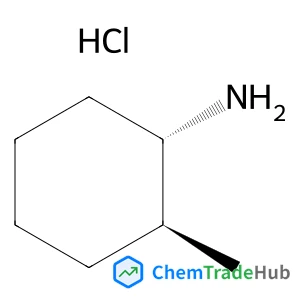
(1R,2R)-2-Methylcyclohexanamine hydrochloride (1:1)
CAS Number:
39558-31-1
Molecular Formula:
C7H16ClN
Recommended Suppliers




Disclaimer
This page provides academic journal information for reference and research purposes only. We are not affiliated with any journal publishers and do not handle publication submissions. For publication-related inquiries, please contact the respective journal publishers directly.
If you notice any inaccuracies in the information displayed, please contact us at support@chemtradehub.com. We will promptly review and address your concerns.