












![6,6-Dimethylbicyclo[3.1.1]hept-2-ene-2-carbaldehyde structure](https://static.chemtradehub.com/structs/564/564-94-3-e746.webp "6,6-Dimethylbicyclo[3.1.1]hept-2-ene-2-carbaldehyde structure")
Synthesis of a sequence-controlled in-chain alkynyl/tertiary amino dual-functionalized terpolymer via living anionic polymerization
Literature Information
Publication Date
2017-11-29
DOI
10.1039/C7PY01837A
Impact Factor
5.582
Authors
Lincan Yang, Hongwei Ma, Li Han, Xinyu Hao, Pibo Liu, Heyu Shen, Yang Li
View Original
Abstract
The alkynyl-functionalized 1,1-diphenylethylene (DPE) derivative DPE-yne was incorporated into a polymer chain through living anionic polymerization (LAP). An unanticipated coupling reaction occurred and could be restrained by extra feeding of DPE derivatives. Investigating the mechanism of the side coupling indicated that excess P-SLi coupled with the DPE-yne units in the chain when the feed of DPE-yne was insufficient. Although the use of excess DPE-yne can effectively restrain the side coupling during the copolymerization, these conditions afford only an alternating polymer sequence. For the diversity of sequence structure and multi-functionalization, another DPE derivative, DPE-NMe2, was introduced into the polymerization, and the use of an appropriate amount of DPE-NMe2 effectively inhibited the side coupling. Additionally, two functional groups (alkynes and amines) can be incorporated into polymer chains, and their sequence distribution was investigated. The in situ1H NMR method was applied to monitor the chain propagation during the terpolymerization in real time. The in situ1H NMR results showed that the entire sequence is a gradient structure with compositional drift from a predominant St-(DPE-yne) fraction initially to a St-(DPE-NMe2) fraction finally, and the sequence between them is a gradual transition fraction. Consistent with the special sequence distribution in the polymer chain, the terpolymerization kinetic was investigated, and the apparent kinetic constants for each monomer were obtained. The corresponding reactivity ratios (rSt) were also calculated. The rSt-Dyne and rSt-Dnme were simulated as 0.08 and 5.8 during the terpolymerization, respectively. The terpolymerization investigated here not only inhibited the side coupling reaction but also allowed the introduction of a third functional monomer; moreover, its sequence structure shows potentially novel and intriguing properties that could further the applications of functionalized polymers.
Related Literature
The first SERRS multiplexing from labelled oligonucleotides in a microfluidics lab-on-a-chip
Frances T. Docherty, Paul B. Monaghan, Ruth Keir, Duncan Graham, W. Ewen Smith, J. M. Cooper
2003-11-14
Communication
DOI: 10.1039/B311589E
Enzymatic hydrogen atom abstraction from polyunsaturated fatty acids
Chris M. McGinley, Wilfred A. van der Donk
2003-11-03
Focus
DOI: 10.1039/B311008G
Photoinduced Ba2+ release and thermal rebinding by an azacrown ether linked by an alkynyl pyridine to a (bpy)Re(CO)3 group
Jared D. Lewis, John N. Moore
2003-10-22
Communication
DOI: 10.1039/B309436G
Tuning molecular orientation with STM at the solid/liquid interface
Qing-Min Xu, Li-Jun Wan, Chen Wang, Chun-Li Bai, Bing Dai, Jin-Long Yang
2003-10-17
Communication
DOI: 10.1039/B308155A
Enantioselective total synthesis of (−)-heliannuol A
Hidetoshi Kishuku, Mitsuru Shindo, Kozo Shishido
2003-01-09
Communication
DOI: 10.1039/B211227B
Formation of nickel-thiolate aggregates via reaction with CH2Cl2
Qiang Wang, Andrew C. Marr, Alexander J. Blake, Claire Wilson, Martin Schröder
2003-10-20
Communication
DOI: 10.1039/B309523A
Helical templating of polyiodide networks at a binuclear metallo complex
Caitlin J. Horn, Alexander J. Blake, Neil R. Champness, Alessandra Garau, Vito Lippolis, Claire Wilson, Martin Schröder
2003-01-14
Communication
DOI: 10.1039/B211743F
First synthesis of an amythiamicin pyridine cluster
Mark C. Bagley, James W. Dale, Robert L. Jenkins, Justin Bower
2003-11-25
Communication
DOI: 10.1039/B310944E
You might also like
Compound Q&A
What precautions should be taken when handling lithium chloride hydrate (1:1:1) (CAS: 16712-20-2)?
When handling lithium chloride hydrate (1:1:1) (CAS: 16712-20-2), it is importan...
16712-20-2Lithium chloride hyd...
Compound Q&A
Is 4-(4H-1,2,4-Triazol-4-yl)piperidine (CAS: 690261-92-8) safe?
4-(4H-1,2,4-Triazol-4-yl)piperidine is generally considered safe for use in phar...
690261-92-84-(4H-1,2,4-Triazol-...
Compound Q&A
How should waste containing 1,3-Thiazole-2-carboxamide (CAS: 16733-85-0) be handled?
Waste containing 1,3-Thiazole-2-carboxamide (CAS: 16733-85-0) should be collecte...
16733-85-01,3-Thiazole-2-carbo...
Compound Q&A
What regulatory guidelines apply to 5-(Difluoromethyl)-2-fluorobenzonitrile (CAS: 934175-58-3)?
5-(Difluoromethyl)-2-fluorobenzonitrile (CAS: 934175-58-3) is subject to regulat...
934175-58-35-(Difluoromethyl)-2...
Compound Q&A
How is Methyl 3-acetamido-2-thiophenecarboxylate (CAS: 22288-79-5) typically synthesized?
Methyl 3-acetamido-2-thiophenecarboxylate can be synthesized by the reaction of ...
22288-79-5Methyl 3-acetamido-2...
Compound Q&A
What is 4-Isoquinolinecarbonitrile (CAS: 34846-65-6)?
4-Isoquinolinecarbonitrile is a chemical compound with the CAS number 34846-65-6...
34846-65-64-Isoquinolinecarbon...
Compound Q&A
How should Methyl 1H-1,2,3-triazole-4-carboxylate (CAS: 877309-59-6) be stored?
Store Methyl 1H-1,2,3-triazole-4-carboxylate (CAS: 877309-59-6) in a cool, dry p...
877309-59-6Methyl 1H-1,2,3-tria...
Compound Q&A
What regulatory guidelines apply to 6-Bromo[1,3]thiazolo[5,4-b]pyridin-2-amine (CAS: 1160791-13-8)?
6-Bromo[1,3]thiazolo[5,4-b]pyridin-2-amine (CAS: 1160791-13-8) is subject to the...
1160791-13-86-Bromo[1,3]thiazolo...
Compound Q&A
Is (2S,3S)-2-Ammonio-3-(3,4-dihydroxyphenyl)-3-hydroxypropanoate (CAS: 23651-95-8) safe?
(2S,3S)-2-Ammonio-3-(3,4-dihydroxyphenyl)-3-hydroxypropanoate (CAS: 23651-95-8) ...
23651-95-8(2S,3S)-2-Ammonio-3-...
Compound Q&A
What are the physical and chemical properties of 7-bromo-3-methyl-3,4-dihydroquinazolin-4-one (CAS: 1293987-84-4)?
7-Bromo-3-methyl-3,4-dihydroquinazolin-4-one is a solid with a crystalline form....
1293987-84-47-bromo-3-methyl-3,4...
Source Journal
Polymer Chemistry

CiteScore:
8.6
Self-citation Rate:
7.3%
Articles per Year:
457
Polymer Chemistry welcomes submissions in all areas of polymer science that have a strong focus on macromolecular chemistry. Manuscripts may cover a broad range of fields, yet no direct application focus is required.
Recommended Compounds
![1-[4-(4-Methyl-1H-imidazol-1-yl)phenyl]ethanone structure](https://static.chemtradehub.com/structs/142/142161-53-3-7f55.webp "1-[4-(4-Methyl-1H-imidazol-1-yl)phenyl]ethanone structure")
![Benzeneacetic acid, 2-bromo-α-[[(1,1-dimethylethoxy)carbonyl]amino]-, (αS)- structure](https://static.chemtradehub.com/structs/122/1228547-87-2-f296.webp "Benzeneacetic acid, 2-bromo-α-[[(1,1-dimethylethoxy)carbonyl]amino]-, (αS)- structure")
Benzeneacetic acid, 2-bromo-α-[[(1,1-dimethylethoxy)carbonyl]amino]-, (αS)-
CAS Number:
1228547-87-2
Molecular Formula:
C13H16BrNO4
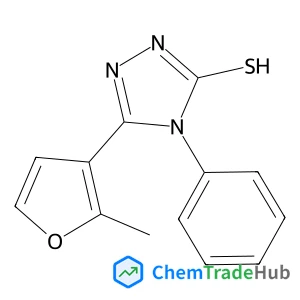
5-(2-Methyl-3-furyl)-4-phenyl-2,4-dihydro-3H-1,2,4-triazole-3-thione
CAS Number:
346464-59-3
Molecular Formula:
C13H11N3OS
Recommended Suppliers






Disclaimer
This page provides academic journal information for reference and research purposes only. We are not affiliated with any journal publishers and do not handle publication submissions. For publication-related inquiries, please contact the respective journal publishers directly.
If you notice any inaccuracies in the information displayed, please contact us at support@chemtradehub.com. We will promptly review and address your concerns.