


One-pot and gram-scale synthesis of biodegradable polyglycerols under ambient conditions: nanocarriers for intradermal drug delivery
Literature Information
Publication Date
2017-11-21
DOI
10.1039/C7PY01470H
Impact Factor
5.582
Authors
Zhaoxu Tu, Sarah Hedtrich, Ali Nemati Kharat, Rainer Haag
View Original
Abstract
Hyperbranched polyglycerols (hPGs) have a variety of biomedical applications due to their unique physicochemical properties such as biocompatibility and multi-functionality. However, their lack of biodegradability under physiological conditions hampers their in vivo applications. Therefore, the development of straightforward methods for the synthesis of biodegradable hyperbranched polyglycerols is of great importance. In this work, caprolactone segments were incorporated into the backbone of polyglycerols by a one-pot, ring-opening copolymerization of glycidol and ε-caprolactone under ambient conditions. While the synthesized polyglycerols were susceptible to enzymatic cleavage, they were stable under neutral and acidic conditions. In spite of their high cellular uptake that was proven by laser scanning confocal microscopy (LSCM), the MTT assay did not show a significant toxicity against HaCaT cells up to 1000 μg ml−1. The biodegradability and biocompatibility of the synthesized polymers together with their ability to form nanoparticles in aqueous solutions and loading of hydrophobic guest molecules encourage us to evaluate their application as intradermal delivery systems. Ex vivo skin penetration tests showed that the synthesized polymers enhanced the Nile red penetration into the skin upon enzymatic degradation. While polymers stayed at the superficial stratum corneum, the released cargo penetrated into the deeper layers of the skin.
Recommended Journals

Journal of Medicinal Chemistry

Russian Chemical Reviews

Proceedings of the National Academy of Sciences of the United States of America

Kinetics and Catalysis

Journal of Heterocyclic Chemistry

Helvetica Chimica Acta

Science

Pharmacological Reviews

Molecular Pharmacology

Organic Preparations and Procedures International
Related Literature
An EPR/ENDOR study of the reduction products of symmetrical isomers of dipyridylacetylene
Paper
DOI: 10.1039/A902689D
Van der Waals energy contour map describing the orthorhombic hydrocarbon chain packing of symmetry Pbnm
Günter Förster, Annette Meister, Alfred Blume
2000-08-02
Paper
DOI: 10.1039/B003278F
n-Alkyl alcohols at the water/vapour and water/benzene interfaces: a study on phase transfer energies
Luca Frediani, Christian S. Pomelli, Jacopo Tomasi
2000-08-15
Paper
DOI: 10.1039/B004330N
Free electron transfer from several phenols to radical cations of non-polar solvents
Mahalaxmi R. Ganapathi, Ralf Hermann, Sergei Naumov, Ortwin Brede
2000-10-06
Paper
DOI: 10.1039/B005864P
Excess electrons in lithium–ethylamine solutions—density, electrical conductivity and EPR studies
Paper
DOI: 10.1039/A900683D
Infrared spectroscopic studies of the low temperature interconversion of sulfuric acid hydrates
Karen L. Nash, K. Jessica Sully, Andrew B. Horn
2000-10-10
Paper
DOI: 10.1039/B005531J
You might also like
Compound Q&A
What precautions should be taken when handling 4-(2-Furylmethyl)thiomorpholine 1,1-dioxide (CAS: 79206-94-3)?
When handling 4-(2-Furylmethyl)thiomorpholine 1,1-dioxide (CAS: 79206-94-3), it ...
79206-94-34-(2-Furylmethyl)thi...
Compound Q&A
What precautions should be taken when handling 4-Chloro-N-[2-(4-morpholinyl)ethyl]benzamide (CAS: 71320-77-9)?
When handling 4-Chloro-N-[2-(4-morpholinyl)ethyl]benzamide (CAS: 71320-77-9), it...
71320-77-94-Chloro-N-[2-(4-mor...
Compound Q&A
How should waste containing 2-[2-(2-Methoxyethoxy)ethoxy]ethyl 4-methylbenzenesulfonate (CAS: 62921-74-8) be handled?
Waste containing this compound (CAS: 62921-74-8) should be handled according to ...
62921-74-82-[2-(2-Methoxyethox...
Compound Q&A
How should waste containing (S)-Methyl 2-amino-3-cyclohexylpropanoate be handled?
Waste containing (S)-Methyl 2-amino-3-cyclohexylpropanoate should be collected i...
40056-18-6(S)-Methyl 2-amino-3...
Compound Q&A
How is 5-({4-[(2S,4R)-4-Hydroxy-2-methyltetrahydro-2H-pyran-4-yl]-2-thienyl}sulfanyl)-1-methyl-1,3-dihydro-2H-indol-2-one (CAS: 166882-70-8) typically synthesized?
This compound can be synthesized using a multi-step process involving the conjug...
166882-70-85-({4-[(2S,4R)-4-Hyd...
Compound Q&A
Are there alternatives to (2E)-3-(3,4-Dichlorophenyl)acrylic acid (CAS: 7312-27-8) in synthesis?
There are several alternatives to (2E)-3-(3,4-Dichlorophenyl)acrylic acid in syn...
7312-27-8(2E)-3-(3,4-Dichloro...
Compound Q&A
How should Ethyl 6-(2-nitrophenyl)imidazo[2,1-b][1,3]thiazole-3-carboxylate (CAS: 925437-84-9) be stored?
Ethyl 6-(2-nitrophenyl)imidazo[2,1-b][1,3]thiazole-3-carboxylate (CAS: 925437-84...
925437-84-9Ethyl 6-(2-nitrophen...
Compound Q&A
How should waste containing 2-(1,3-Thiazol-2-yl)ethanamine (CAS: 18453-07-1) be handled?
Waste containing 2-(1,3-Thiazol-2-yl)ethanamine (CAS: 18453-07-1) should be coll...
18453-07-12-(1,3-Thiazol-2-yl)...
Compound Q&A
How is Methyl 5-iodo-2-methylbenzoate (CAS: 103440-54-6) typically synthesized?
Methyl 5-iodo-2-methylbenzoate can be synthesized through the iodination of meth...
103440-54-6Methyl 5-iodo-2-meth...
Compound Q&A
How is 5-Chloro[1,2,4]triazolo[1,5-a]pyridine (CAS: 1427399-34-5) typically synthesized?
5-Chloro[1,2,4]triazolo[1,5-a]pyridine is commonly synthesized via the condensat...
1427399-34-55-Chloro[1,2,4]triaz...
Source Journal
Polymer Chemistry

CiteScore:
8.6
Self-citation Rate:
7.3%
Articles per Year:
457
Polymer Chemistry welcomes submissions in all areas of polymer science that have a strong focus on macromolecular chemistry. Manuscripts may cover a broad range of fields, yet no direct application focus is required.
Recommended Compounds
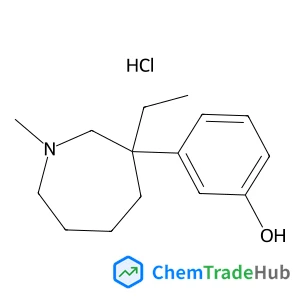
3-(3-Ethyl-1-methyl-3-azepanyl)phenol hydrochloride (1:1)
CAS Number:
59263-76-2
Molecular Formula:
C15H24ClNO

![[4-(Heptyloxy)phenyl]boronic acid structure](https://static.chemtradehub.com/structs/136/136370-19-9-ad33.webp "[4-(Heptyloxy)phenyl]boronic acid structure")

Recommended Suppliers




Disclaimer
This page provides academic journal information for reference and research purposes only. We are not affiliated with any journal publishers and do not handle publication submissions. For publication-related inquiries, please contact the respective journal publishers directly.
If you notice any inaccuracies in the information displayed, please contact us at support@chemtradehub.com. We will promptly review and address your concerns.